Roundup
The Best Hot Tub Chemicals
One product per job rather than a shelf of overlapping bottles, with the two most commonly wasted purchases named.
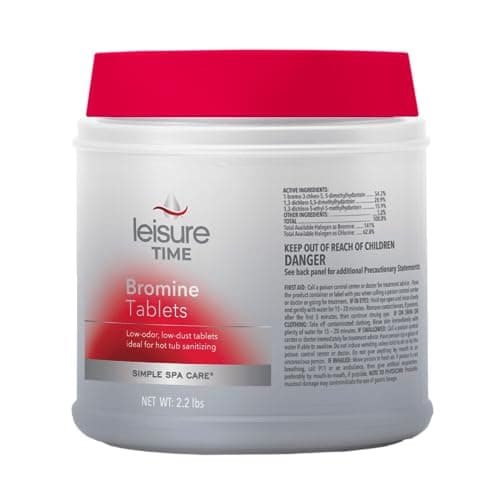
Top pick: Leisure Time Brominating Tablets
Start here
Six products cover almost everything. The rest of the shelf is either situational or solving a problem you can measure your way out of.
Everything in this section
Roundup
One product per job rather than a shelf of overlapping bottles, with the two most commonly wasted purchases named.
Top pick: Leisure Time Brominating Tablets

Roundup
Six total alkalinity increasers ranked on cost per pound and label clarity, including the pool-size container that does the same job for less and the bulk option that only makes sense for some people.
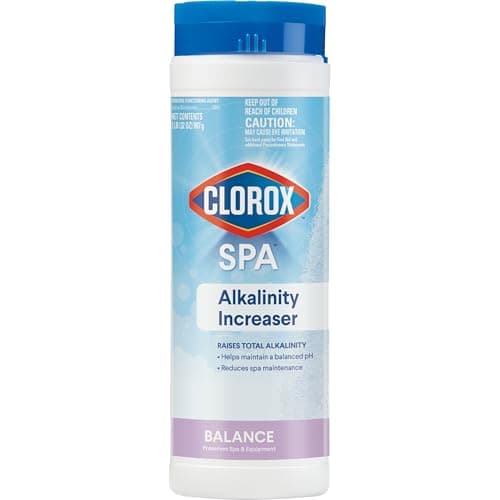
Top pick: Clorox Pool&Spa Alkalinity Increaser, 2 lb
Roundup
Six pH increasers ranked on cost per pound and label clarity, plus the diagnostic that tells you whether you need soda ash at all.
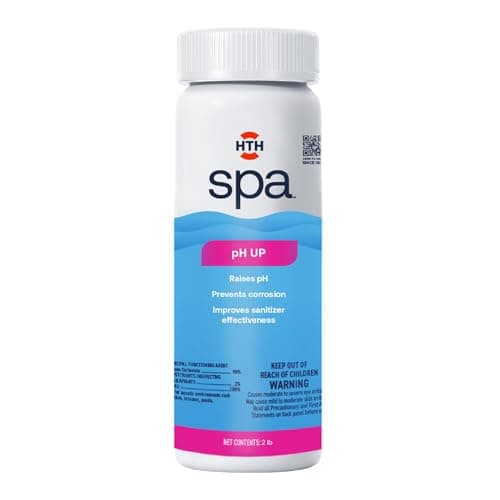
Top pick: HTH Spa 86133R pH Up, 2 lb
Roundup
Dry acid compared on cost per pound and label clarity, with the technique that lets one product lower alkalinity without dragging pH down with it.
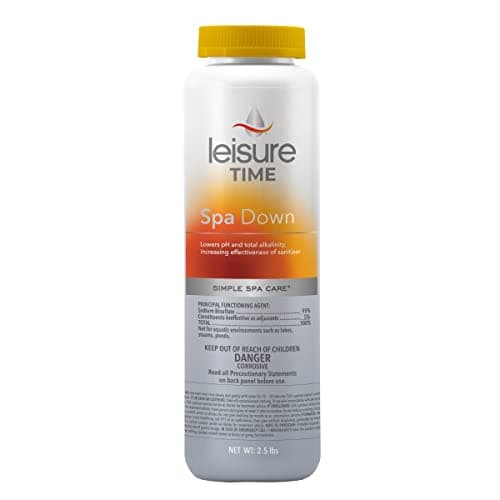
Top pick: Leisure Time 22338A Spa Down, 2.5 lb

Roundup
Calcium chloride in granular and liquid form, compared on cost per pound and on which format avoids leaving undissolved granules on the shell.
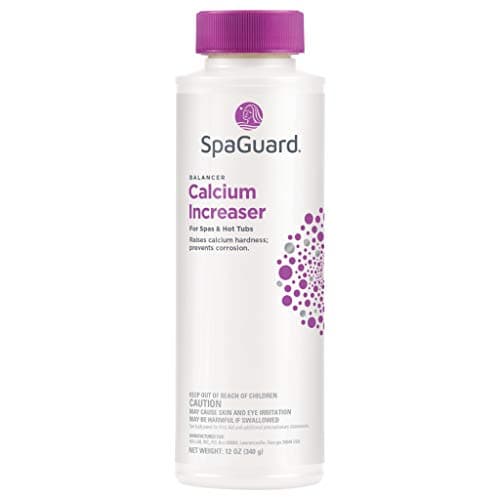
Top pick: SpaGuard Calcium Hardness Increaser
Comparison
Why granular bromine holds a reading on a fresh fill when tablets will not, what a bromide bank is, and which format suits regular versus occasional soaking.
Roundup
Four drop-in salt chlorine generators compared on published cell life, maintenance and controls, plus the salt test that keeps the heater safe.
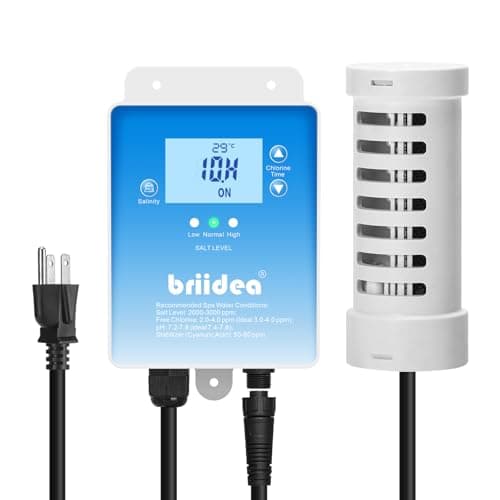
Top pick: Briidea salt chlorine generator
Roundup
What an inflatable actually needs, why the dose on the bottle is written for a bigger tub, and six kits and chemicals that suit a small vinyl tub.
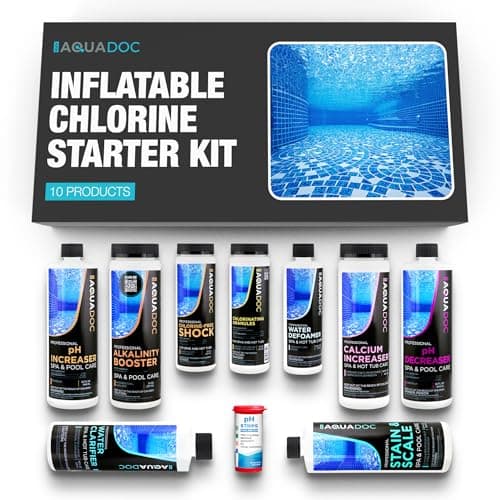
Top pick: AquaDoc inflatable hot tub chemical kit, chlorine
Roundup
Five bromine tablets ranked on cost per pound and pack size, because the active ingredient is identical across the category.
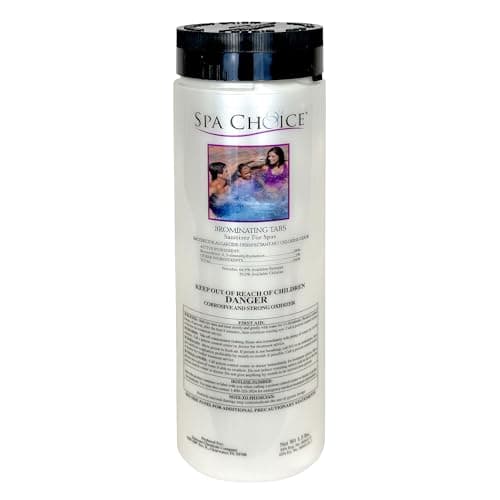
Top pick: SpaChoice Premium Bromine Tablets, 1.5 lb
Comparison
Why dichlor granules are the right chlorine for a hot tub, why trichlor tablets are not, and the one tablet that is genuinely fine.
Roundup
Mineral sticks and cartridge systems ranked on whether they fit your tub, what they cost to keep running, and how honest the marketing is.
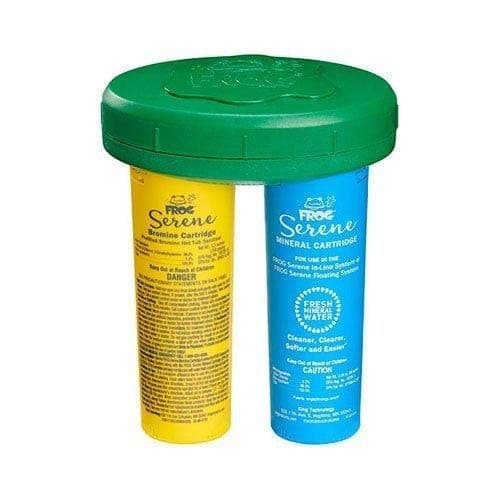
Top pick: FROG Serene floating sanitizing system
Roundup
What an ozonator actually does, how to tell yours has failed, and the universal replacements that are genuinely sold today.
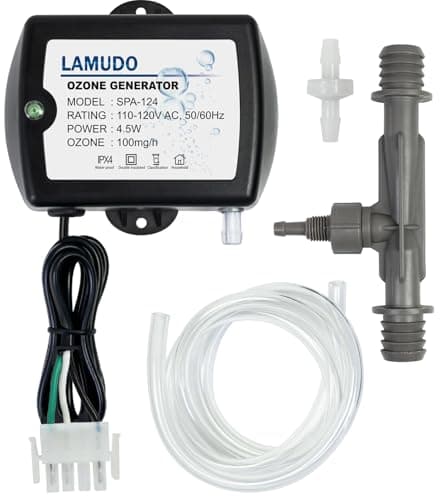
Top pick: Lamudo ozone generator with venturi injector
Roundup
Six floaters compared on dose control, whether they drift into the skimmer, and build quality. Plus why loose tablets bleach acrylic.
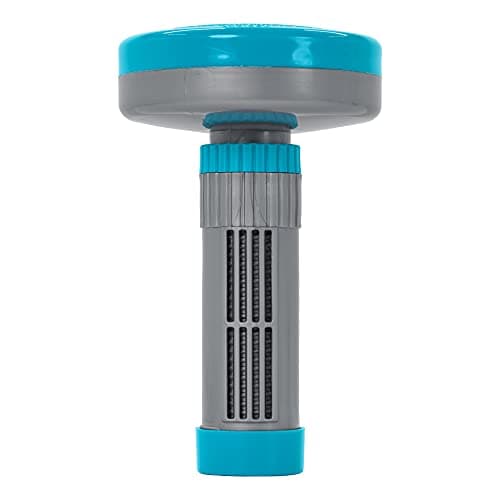
Top pick: U.S. Pool Supply floating dispenser, 13-setting
Roundup
Five products that genuinely help, ranked by how much difference each makes. The honest answer is mostly better chemistry, not special chemistry.
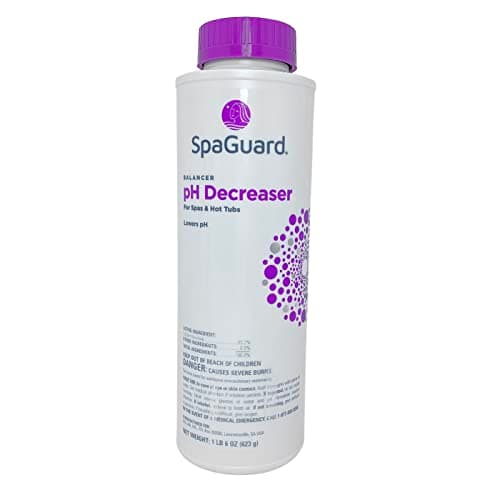
Top pick: SpaGuard Spa pH Decreaser
Guide
Target ranges with the CDC citation, why hot tubs need more than pools, and the four readings you can get with what each one means.
Roundup
Four kits compared, plus the one component that makes a bromine kit genuinely worth buying over separate bottles.
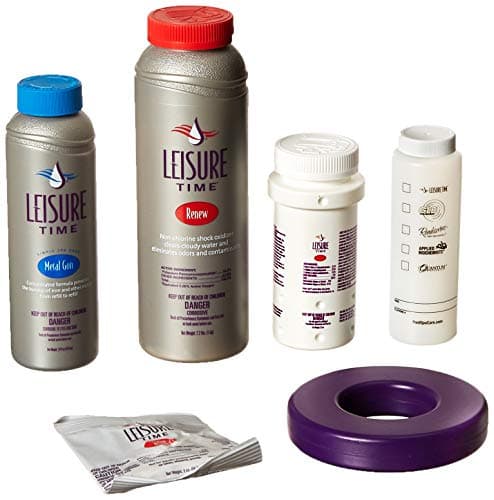
Top pick: Leisure Time Spa Bromine Start-Up Kit
Roundup
Strips for the weekly check, titration for the arguments. Which to own, and the two habits that make strips far more reliable.
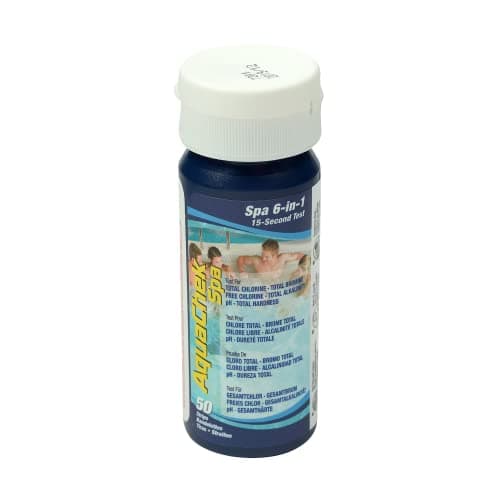
Top pick: AquaChek Spa 6-in-1 Test Strips
Comparison
The verdict in the first 40 words, then the cost, stability, skin-feel and switching detail behind it.
Comparison
What a salt system actually does, what minerals actually do, and the honest cost comparison against tablets.
Guide
The five-item list, the order to add them in, and the four purchases most new owners make for no reason.
Reference
Target ranges with citations, a volume worksheet, and why we do not publish a universal dose-per-gallon table.
Guide
Which of the four combinations you have, and the specific fix for each. Alkalinity before pH, always.
Guide
Which of the two shocks you need, the wait times, and why a bromine tub gets a second benefit for free.
Guide
Soft water is corrosive, hard water scales, and the correction only goes one way. Test at fill and dose to the bottom of the range.
Orientation
A hot tub needs fewer chemicals than the shelf in a spa store suggests. Six products cover almost every situation a normal owner will meet: a sanitizer, a shock, something to raise pH, something to lower it, an alkalinity increaser, and a way to test. Everything else is either situational, seasonal, or solving a problem that a fifteen-second test would tell you that you do not have.
The reason this category feels complicated is that the products are sold as solutions to symptoms rather than as adjustments to numbers. Once you think of it as four dials you are keeping inside a range, the shopping list collapses. Those dials are sanitizer level, pH, total alkalinity and calcium hardness, and they interact in a specific direction that determines the order you adjust them in.
Total alkalinity first, then pH, then sanitizer, then shock. Alkalinity is the buffer that holds pH steady, so adjusting pH while alkalinity is out of range means the pH will simply drift back. If you have ever added acid three weekends in a row and watched pH climb again each time, that is what was happening: you were treating the symptom of a low buffer.
Calcium hardness sits slightly outside that sequence because it only moves in one direction. There is no calcium reducer, so the only way down from an over-corrected reading is a partial drain. Test it at fill, correct it once, and leave it alone for the rest of the water cycle.
Everything else on this page is a detail. The sanitizer choice determines your weekly routine, your ongoing cost, how the water smells and feels, and how forgiving the tub is when you go away for a fortnight. Bromine holds up better at 104F and keeps a residual for days; chlorine acts faster, clears faster and gives you a fresher-feeling tub, at the cost of needing more attention. The full comparison gives the verdict in the first paragraph rather than the last.
What is worth saying here is that neither is wrong, and switching later is not a disaster but does mean draining. Decide once, deliberately, based on how often you use the tub rather than on which bottle the dealer put in the box.
Every target range on this site carries a citation at the point of use. The CDC gives pH 7.2 to 7.8 for pools and hot tubs, and at least 3 ppm free chlorine specifically in hot tubs, which is higher than the pool figure because heat consumes chlorine faster and bather load per gallon is far greater. Those numbers are free to look up, which is part of why we cite them rather than an industry standard sitting behind a paywall.
It is also worth naming a mistake that circulates in this niche: at least one national retailer cites an inground swimming pool standard as its authority on spa water. It is the wrong document for the vessel. Where an industry consensus standard is the right reference for a spa, it is the water-quality standard for public pools and hot tubs, and we name it as such.
If you have just filled a tub and own nothing, buy a start-up kit for your chosen sanitizer plus a pack of test strips, and stop there. Kits are not the cheapest route once your cupboard is stocked, but on a first fill they include the one component people otherwise miss: on a bromine tub, the sodium bromide bank that has to exist before tablets will hold any residual at all. Then read what you actually need before your second purchase, because that is where the money starts getting wasted.