Buyer's guide
Hot Tub Ozonators
The most misunderstood component in a hot tub. It reduces how much sanitizer you need, it leaves nothing behind in the water, and it dies without telling you.
By Scooter M. · Published · How we pick

How this page is funded: the buy buttons below are Amazon affiliate links. If you buy through one we earn a commission at no extra cost to you. It does not change what we recommend, and where the better answer is a retailer we earn nothing from, we say so. The full version.
The short answer
Top pick
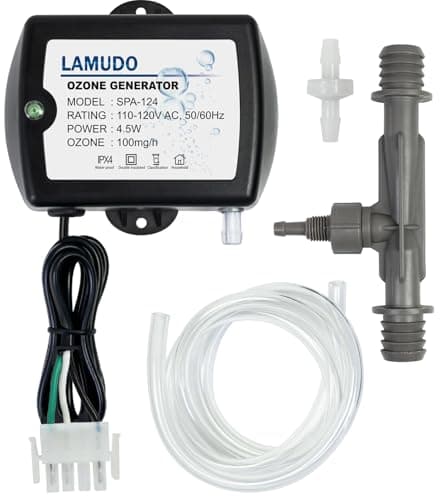
Lamudo ozone generator with venturi injector
The generator plus the parts that actually deliver the gas. Buy this one if anything downstream is old.
Quick picks
Tap a row to jump to the full write-up. Prices come from the live price layer, never from memory.
| # | Product | Best for | Score | Price |
|---|---|---|---|---|
| 1 | Lamudo ozone generator with venturi injectorThe generator plus the parts that actually deliver the gas. Buy this one if anything downstream is old. | A first install, or perished tubing | 7.8out of 10 | $58.99 · View on Amazon#ad how this is funded · price as of October 18, 2026 |
| 2 | 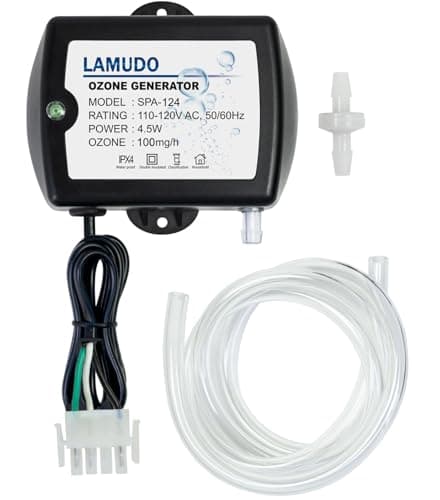 Lamudo ozone generator for hot tubs and cold plungesA compact unit sold with the check valve and tubing, and marketed for cold plunges too. Lamudo ozone generator for hot tubs and cold plungesA compact unit sold with the check valve and tubing, and marketed for cold plunges too. | Tight equipment bays and cold plunges | 7.5out of 10 | $48.99 · View on Amazon#ad how this is funded · price as of October 18, 2026 |
| 3 | No imageHigh-output HCD-55 pattern ozonatorListings claim several times the output of the standard unit. Treat that number with suspicion. | Larger volumes, with a caveat | 6.8out of 10 | Check price on Amazon →#ad how this is funded |
| 4 | 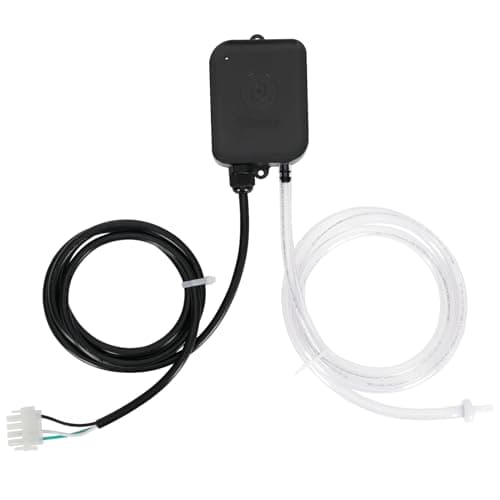 HCD-55 pattern spa ozonator, 110VSold as a direct HCD-55 replacement, which is the clearest fit statement in a category full of vague ones. HCD-55 pattern spa ozonator, 110VSold as a direct HCD-55 replacement, which is the clearest fit statement in a category full of vague ones. | A straight HCD-55 swap on a 110V tub | 6.6out of 10 | $35.99 · View on Amazon |
| 5 | 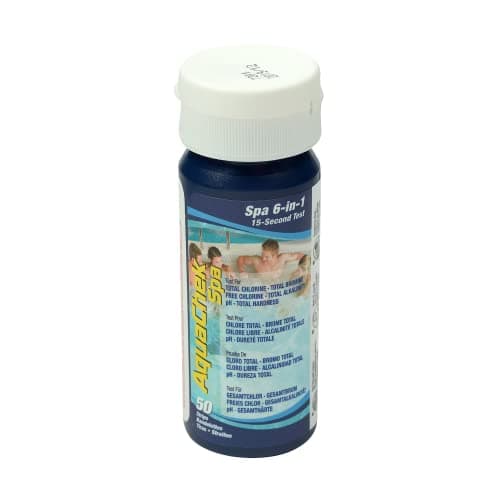 AquaChek Spa 6-in-1 Test StripsSix readings in fifteen seconds. Not precise, but precise enough to catch drift early. AquaChek Spa 6-in-1 Test StripsSix readings in fifteen seconds. Not precise, but precise enough to catch drift early. | The weekly check | 8.4out of 10 | $13.17 · View on Amazon |
Scores are our own, from the published scoring method on how we pick. They are an editorial judgment of published specifications, not a test result, and they are deliberately kept out of the page’s structured data.
An ozonator generates ozone and injects it into the water as it passes through the plumbing. The ozone oxidizes contaminants on contact and then breaks back down into oxygen within minutes. That last part is the whole story: ozone leaves no residual in the tub.
So it reduces how much chlorine or bromine you get through, sometimes substantially. It does not replace them, and any listing implying otherwise is selling you a tub with no disinfectant in it, which is the condition the CDC’s hot tub guidance exists to prevent.[source]
Where ozone works, and where it does not
This is the distinction that decides everything else on the page. Ozone does its work inside the pipework, in the moments after injection, on the water passing through at that instant. It is not working in the shell where you are sitting.
| Job | Ozonator | Chlorine or bromine |
|---|---|---|
| Oxidizes contaminants | Yes, strongly, at the injection point | Yes, throughout the water |
| Leaves a measurable residual | No — breaks down within minutes | Yes, this is the point |
| Protects the water you are sitting in | No | Yes |
| Reduces sanitizer consumption | Yes, often noticeably | n/a |
| Reduces chloramine formation | Yes, by oxidizing organics first | No, chlorine is half the reaction |
| Works while the pump is off | No — needs circulation | Yes |
| Needed for public health compliance | No, it is supplemental | Yes, a residual is the requirement |
Read down the columns and the same pattern appears as with enzymes and with mineral cartridges: a supplemental system that lowers demand, sold as though it removes the requirement. It does not. The targets do not move because you have an ozonator: pH 7.2 to 7.8, at least 3 ppm free chlorine or 4 to 8 ppm bromine.[source][source]
How to tell yours has died
This is the practical reason most people end up on a page like this. Ozonators fail silently: no warning light, no error code, no change you would notice on the day. Most owners discover it months later by inference.
- Sanitizer demand climbs for no reason. You are dosing more than you were a year ago, with the same bather load and the same water. This is usually the first real signal.
- Look for bubbles at the injection point with the circulation running. A working ozonator produces a steady fine stream of tiny bubbles from one jet or fitting, usually the lowest one. No bubbles is a strong hint, though it can equally be a blocked injector or perished tubing rather than a dead generator.
- Check the tubing and check valve. Both perish, both are cheap, and a collapsed check valve is a more common failure than the generator itself. Inspect before you buy anything.
- Note the age. Suppliers of the better OEM units quoted service lives measured in a handful of years. If yours came with the tub and the tub is older than that, assume nothing.
Deliberately not on that list: smelling the tub to check for ozone. Ozone is a respiratory irritant and the gas is supposed to go into the water, not into your face. Do not put your nose over the injector or the equipment bay to test it.
The four things that decide which one to buy
| Criterion | Why it decides it | What to check |
|---|---|---|
| Connector | The wrong plug makes every other specification irrelevant. This rules candidates in or out before anything else. | Most spa packs use a four-pin AMP plug. Yours may not. |
| Voltage | Tubs run 120V or 240V and getting it wrong destroys the unit. | Prefer a dual-voltage unit; confirm against your pack |
| Volume rating | A small generator on a swim spa is doing very little; an oversized one in a tiny bay is not doing more good. | Match the stated gallon range to your tub |
| What is in the box | The generator is useless without an intact check valve, injector and tubing, and those perish on the same timescale. | Kit versus bare generator |
Note what is not a criterion here: the headline output figure. That deserves its own section.
Why we do not rank on the milligram number
Ozone output in this category is quoted in milligrams per hour, and those figures come from supplier listings rather than from any independent testing. There is no third party auditing them, and the numbers behave accordingly — you will find units sold under a designation that names one output while the listing advertises several times that figure.
We have listed one of those below precisely because you will meet it, and marked the claim as a claim. Our scoring treats spec transparency as a criterion in its own right, which is why the highest advertised output on this page does not rank first. That is a deliberate choice and it is the honest one: we cannot verify these figures, so we are not going to rank on them.
A note on the unit your tub probably came with
Many tubs shipped with a corona-discharge unit from one of the established OEM suppliers, and those are the ones people search for by model number when they fail. Sourcing for at least one widely-fitted model has become unreliable, with suppliers listing it as discontinued and the replaceable internal component no longer distributed.
We are not featuring it as a pick for that reason. If you find current stock from a supplier you trust, buying the same model you already have is the lowest-risk swap available. If you cannot, the universal corona-discharge replacements below are what the aftermarket has converged on, and the connector is what matters more than the badge.
Corona discharge or UV?
Two technologies get sold as spa ozone. Corona discharge passes air through an electrical field and is what almost every current aftermarket unit uses. UV units generate ozone with a lamp, run at lower output, and the lamp degrades on a schedule.
For a replacement, corona discharge is the practical default: it is what is stocked, it is what the universal kits are, and it does not have a lamp to replace. Genuine UV-C sterilizer systems — as opposed to UV ozone generators — are a different product again, are usually OEM-specific, and are outside what a universal aftermarket part can address.
Fitting one, and the safety points that matter
- Power off at the breaker before touching anything in the equipment bay. Not the control panel.
- Fit the check valve, and fit it the right way round. Its job is to stop water running back into the generator, which kills it. This is the single most common installation mistake.
- Mount the generator above the water line where the instructions call for it, so gravity is working with the check valve rather than against it.
- Do not run the tub uncovered with a strong ozone smell present. Ozone is a respiratory irritant. It belongs dissolved in the water, and a smell means it is reaching the air instead.
- If you are not confident in the bay, stop. This is low-voltage-adjacent work next to a heater and a pump, and a spa technician doing it once is cheaper than the alternative.
What an ozonator will not fix
Biofilm. Growth inside the pipework is protected from oxidation and is not reached at the concentrations an ozonator produces. That needs a purge, a drain and a wipe — see hot tub biofilm.
A sanitizer you are not maintaining. Lower demand is not no demand. Keep testing weekly, per chlorine and bromine levels.
Old water. Ozone does not remove dissolved solids or accumulated cyanuric acid, and neither leaves except by draining. See how often to change hot tub water.
Bad pH. Chlorine loses effectiveness as pH climbs regardless of what else is fitted, so pH and alkalinity stay the first thing to correct.
Is it worth replacing at all?
Honestly, sometimes not. If your tub is coming up on a water change, if the cover is failing, or if the filter is finished, every one of those will do more for your water than a new ozonator, and the ozonator can wait a cycle.
It is worth doing when sanitizer consumption has clearly risen, when you are running a heavy bather load and want the demand reduction, or when the unit is already out of the bay for another job. It is not worth doing in the hope of using fewer chemicals overall — you will still be testing weekly and still holding a residual, and if that is the outcome you wanted, the honest answer is that no equipment on the market delivers it.
On prices, and on what these scores are
Replacement ozonators sit in the mid range of hot tub spending — more than a season of chemicals, well under a cover. We publish no figures, because our live price layer is not switched on for this site yet and a remembered number is worse than none; every button reads “Check price”. The reasoning is on how we pick.
The scores below are an editorial judgment of published specifications, connector coverage, kit completeness and how transparent the listing is about what it can actually substantiate. We have not tested these units, we do not own them, and there is no rating markup anywhere in this page’s structured data. Every specification is the supplier’s own published claim, attributed as such.
Every pick, in full
The picks in detail
Specifications below are the manufacturer’s own published figures, attributed as such. We have not tested these units and the scores are an editorial judgment of published data against the published method, not a test result.
#1 · Best for a first install, or perished tubing
Lamudo ozone generator with venturi injector
Lamudo · scored 7.8/10
The generator plus the parts that actually deliver the gas. Buy this one if anything downstream is old.
An ozonator is only as good as the plumbing that gets the gas into the water. The injector creates the suction that pulls ozone in, the check valve stops water running back into the generator, and the tubing has to be intact. All three perish, and all three are cheap.
If you are retrofitting rather than replacing, buy the kit. If you are replacing a working installation where only the generator has died, the kit is money spent on parts you already have.
What the maker states
- Type
- Corona discharge (CD)
- Includes
- Venturi injector and tubing, per the listing
- Connector
- AMP-4 plug
- Voltage
- 110V, per the listing
How it scored
- Fit coverage
- 7.5
- Availability
- 8.0
- Value
- 8.0
- Spec transparency
- 5.5
- Kit completeness
- 9.0
Skip this one if: your injector, check valve and tubing are sound. Then you are paying for spares you already have working.
#2 · Best for tight equipment bays and cold plunges
Lamudo ozone generator for hot tubs and cold plunges
Lamudo · scored 7.5/10
A compact unit sold with the check valve and tubing, and marketed for cold plunges too.
Equipment bays on smaller tubs are genuinely cramped, and a physically smaller generator is sometimes the difference between a swap you can do yourself and one you cannot. The included check valve is the detail that matters most here.
The cold plunge marketing is worth reading past. It tells you the unit is small and low-output, which is right for a small volume and wrong for a large one.
What the maker states
- Type
- Ozone generator, compact format
- Includes
- Check valve and tubing, per the listing
- Connector
- AMP-4 plug
- Also marketed for
- Cold plunge tubs
How it scored
- Fit coverage
- 7.0
- Availability
- 8.0
- Value
- 8.0
- Spec transparency
- 5.5
- Kit completeness
- 8.5
Skip this one if: you have a large swim spa. A compact generator on a big volume is the wrong end of the range.
#3 · Best for larger volumes, with a caveat
High-output HCD-55 pattern ozonator
Generic (HCD-55 pattern) · scored 6.8/10
Listings claim several times the output of the standard unit. Treat that number with suspicion.
We are listing this because it is what a shopper will meet, not because we can stand behind the number on the box. A unit carrying the HCD-55 designation while advertising several times that output is exactly the spec inflation this category is known for, and there is no independent testing to check it against.
If you have a swim spa or a large volume, more capable equipment is a reasonable thing to want. Buy it from a seller with a returns policy, and judge it on whether your water improves rather than on the milligram figure.
What the maker states
- Type
- Corona discharge (CD)
- Claimed output
- 200-300 mg/hr per the listing — supplier claim, not verified
- Connector
- AMP-4 plug
- Voltage
- 120V / 240V, per the listing
How it scored
- Fit coverage
- 8.0
- Availability
- 8.0
- Value
- 7.5
- Spec transparency
- 3.5
- Kit completeness
- 6.5
Skip this one if: you are buying on the headline output figure alone. A part named after a 55 mg/h unit while advertising 200-300 mg/h is a claim nobody is auditing, and more ozone is not automatically better in a small enclosed bay.
#4 · Best for a straight hcd-55 swap on a 110v tub
HCD-55 pattern spa ozonator, 110V
Generic (HCD-55 pattern) · scored 6.6/10
Sold as a direct HCD-55 replacement, which is the clearest fit statement in a category full of vague ones.
If the unit you are pulling out is an HCD-55, this is the lowest-drama swap available, because the listing is sold on exactly that: a direct replacement for that pattern rather than a generic ozone generator you have to cross-reference yourself.
Three honest limits. It states 110V, so it is not the part for a 240V tub. It is the generator alone, not a kit, so a perished check valve or injector is a separate purchase. And the listing publishes no output rating, no connector spec and no volume rating, which is why it scores poorly on spec transparency despite being the on-pattern choice.
What the maker states
- Type
- Corona discharge (CD)
- Replaces
- HCD-55, described as a direct replacement, per the listing
- Voltage
- 110V, per the listing
- Listed for
- Hot tubs and swim spas, per the listing
How it scored
- Fit coverage
- 7.0
- Availability
- 8.0
- Value
- 8.0
- Spec transparency
- 5.0
- Kit completeness
- 5.0
Skip this one if: your tub runs on 240V. This listing states 110V, and the page warns for good reason that getting supply voltage wrong destroys the unit.
#5 · Best for the weekly check
AquaChek Spa 6-in-1 Test Strips
AquaChek · scored 8.4/10
Six readings in fifteen seconds. Not precise, but precise enough to catch drift early.
Strips get an unfair reputation because people compare them to a reagent kit and call them inaccurate. That is the wrong comparison. The right one is against not testing at all, which is what happens when the routine takes ten minutes. A strip you actually use weekly beats a reference kit in a cupboard.
Two habits make strips far more reliable: keep the container sealed and out of the humid room the tub is in, and read them in daylight rather than under a yellow bulb. Most strip complaints trace back to one of those two.
What the maker states
- Reads
- Hardness, total chlorine, free chlorine, bromine, pH, alkalinity
- Method
- Dip-and-read colorimetric strip
- Time
- Seconds, per the label
- Storage
- Sealed container, away from humidity
How it scored
- Accuracy
- 6.5
- Speed
- 10.0
- Parameters covered
- 9.0
- Cost per test
- 9.0
- Availability
- 9.5
Skip this one if: you need an exact free chlorine number to diagnose a problem. Strips read in color bands; a drop-based kit reads in numbers.
Questions people actually ask
Frequently asked questions
Does a hot tub ozonator replace chlorine or bromine?
No. Ozone oxidizes contaminants at the injection point and then breaks back down into oxygen within minutes, so it leaves no residual in the tub. It reduces how much sanitizer you get through, sometimes substantially, but the water you sit in still needs a measurable residual.
How do I know if my hot tub ozonator is working?
Look for a steady stream of fine bubbles at one fitting with the circulation running, and watch your sanitizer demand: a clear rise with the same bather load is usually the first real signal. Check the tubing and check valve too, since a collapsed check valve is a more common failure than the generator. Do not try to smell for ozone.
How long does a hot tub ozonator last?
Suppliers of the better OEM units quoted service lives measured in a handful of years. If yours came with the tub and the tub is older than that, do not assume it is still producing. They fail silently, with no warning light and no error code.
Are hot tub ozonators universal?
The aftermarket has converged on universal corona-discharge units, but the connector decides fit before anything else. Most spa packs use a four-pin AMP plug and many replacements ship with one, though not every tub uses it. Check the plug and the voltage before the output rating.
Is ozone in a hot tub safe?
Ozone is a respiratory irritant and is meant to dissolve into the water rather than reach the air. Fit the check valve correctly, mount the generator as the instructions require, and do not deliberately sniff the injector or the equipment bay to test it. A strong ozone smell means gas is escaping rather than dissolving.
Where the numbers come from
Sources
- CDC, Controlling Legionella in Hot Tubs - the primary reference for the health and disinfection guidance quoted here
- CDC, Model Aquatic Health Code (2023, 4th edition) - the source for the pH 7.2-7.8 range and the hot-tub disinfectant levels quoted on this site
- CDC, Preventing Hot Tub Rash - the source for the 4-8 ppm bromine figure, the prevention steps, and the guidance on when to see a healthcare provider
Read next
Related on Float & Filter
- Salt water vs mineral vs traditional sanitizing
Where ozone sits against the other supplemental systems.
- Hot tub chlorine and bromine levels
The residual an ozonator lowers demand for, and never replaces.
- Hot tub enzymes vs chlorine
The same supplemental-versus-sanitizer distinction, on the chemistry side.
- Hot tub biofilm
The thing in the plumbing an ozonator does not reach.
- Hot tub salt water systems
The system that does make chlorine, despite being sold as chemical-free.