Guide
Flushing Hot Tub Plumbing Lines
The product goes into a full tub, not an empty one. Everything else about this job follows from that.
By Scooter M. · Published · How we pick
How this page is funded: the buy buttons below are Amazon affiliate links. If you buy through one we earn a commission at no extra cost to you. It does not change what we recommend, and where the better answer is a retailer we earn nothing from, we say so. The full version.
A line flush removes the biofilm layer from the inside of a hot tub’s pipework. It is done on a full tub, immediately before a water change, and the single most common mistake is draining first, which leaves the product nothing to circulate through.
Why the pipework needs this at all
There is a lot more plumbing in a hot tub than the visible jets suggest: manifolds, air lines, branch runs to individual jets, and sections that only see flow on certain pump settings. Those low-flow sections are where growth establishes, and they are exactly where normal sanitizer levels reach least.
The consequence is a tub that consumes sanitizer for no visible reason and smells musty a few seconds after the jets start, while a water sample tests perfectly. The diagnosis is on hot tub biofilm.
The procedure
- Start with a full tub at normal temperature. Warm water helps the product work; do not drain anything yet.
- Remove the filter cartridge. It will catch what comes loose. On a first purge, plan to replace it rather than clean it.
- Add the purge product at the label dose for your actual volume. Under-dosing is the second most common mistake after draining first.
- Run every jet, on every setting. Cycle through pump speeds and jet groups so flow reaches every branch, including ones that normally sit still.
- Open the air controls too. Air lines are plumbing and they grow the same layer. This is the step most people miss.
- Let it circulate for the stated time, commonly an hour or more. Check on it; on a neglected tub the surface can foam heavily.
- Skim off anything floating before draining, so it does not settle back onto the shell.
- Power off at the breaker, then drain completely.
- Wipe every reachable surface while the tub is empty: shell, waterline, jet faces, filter housing, cover underside.
- Refill with a clean cartridge fitted, through the filter housing to avoid an airlock.
- Rebalance from scratch, following first chemicals after a refill.
What you should expect to see
| Tub history | What comes out | What to do next |
|---|---|---|
| Never purged, several years old | Heavy gray or brown scum, visible flakes | Purge again on the fresh fill |
| Purged once, a year ago | Noticeable film and some flakes | Move to purging at every water change |
| Purged at every water change | Almost nothing | Nothing. That is the goal. |
| Second purge on a fresh fill | Much less than the first | If not, the first purge missed branches |
Rescue purge or routine purge?
They are different products at different prices. A rescue-grade gel or purge is for a tub with unknown or neglected history; a routine liquid flush is for a maintained tub at every water change. Buying the routine product for a rescue job is the usual reason people conclude purging does not work. The split is on the line flush cleaner roundup.
How often
Every water change, which for most tubs is roughly quarterly. At that cadence it adds an hour to a job you were doing anyway and produces almost nothing visible, which is the entire point. The interval for your tub comes from how often to change hot tub water.
Safety notes
- Nobody gets in during a purge. Obvious, and worth saying.
- Do not mix purge products with anything else. One product, one job.
- Power off before draining. A heater run dry is an expensive lesson.
- Think about where the drained water goes. It is carrying everything the purge released.
The reason all of this matters, rather than being fastidiousness, is that biofilm protects organisms from disinfectant and consumes the residual you are trying to maintain — and maintaining that residual is the core of the CDC’s guidance on hot tubs.[source] The water chemistry targets are unchanged: pH 7.2 to 7.8 and the published sanitizer level.[source]
What fixes it
The products for this job
Named because they do the specific job this page describes, not because they are the only options. Specifications are the manufacturer’s published figures.
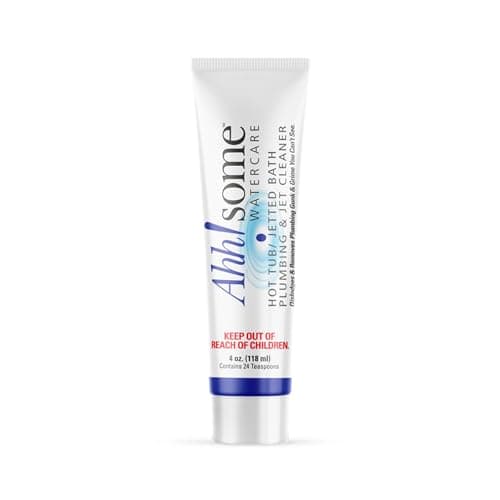
#1 · Best for a first purge on a tub with history
Ahh-Some Hot Tub Cleaner
Ahh-Some · scored 8.5/10
Pulls biofilm out of the plumbing in a way that is genuinely alarming to watch.
Biofilm lives on the inside of the pipework, not in the water, which is why a tub can test perfectly and still smell. A purge product circulates through the plumbing and lifts that layer off, and on a tub that has never had one done the result is visibly unpleasant and very convincing.
Plan the whole job in one session: purge, run the jets for the stated time, drain, wipe the shell and the waterline, then refill. Doing the purge and leaving the water in defeats the entire point.
What the maker states
- Type
- Gel plumbing purge
- Used
- Before draining, with jets running
- Contact time
- Per the label
- After use
- Drain, wipe the shell, refill
How it scored
- Biofilm removal
- 9.5
- Ease of use
- 7.5
- Value
- 8.5
- Odor
- 7.0
- Availability
- 8.5
Skip this one if: you cannot drain afterwards. This is a pre-drain product: what comes out has to go somewhere, and it is not staying in your water.
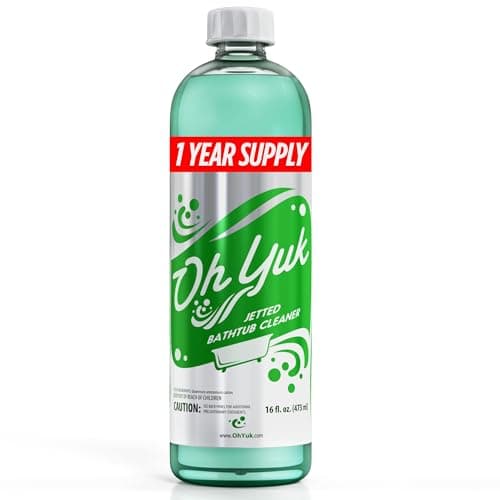
#2 · Best for a gentler routine purge
Oh Yuk Jetted Tub Cleaner
Oh Yuk · scored 8.3/10
Liquid rather than gel, easier to dose, and pleasant enough to use every water change.
The realistic way to keep plumbing clean is to purge at every water change rather than heroically once a year. A liquid that measures easily and does not need much thought is the one you will actually use on schedule.
It is also the sensible choice on a tub you have owned from new and purged regularly, where there is maintenance to do rather than damage to undo.
What the maker states
- Type
- Liquid plumbing cleaner
- Used
- Before draining, with jets running
- Contact time
- Per the label
- After use
- Drain and refill
How it scored
- Biofilm removal
- 8.0
- Ease of use
- 9.0
- Value
- 8.0
- Odor
- 8.5
- Availability
- 9.0
Skip this one if: the tub has years of neglect behind it. A first purge wants the more aggressive option.
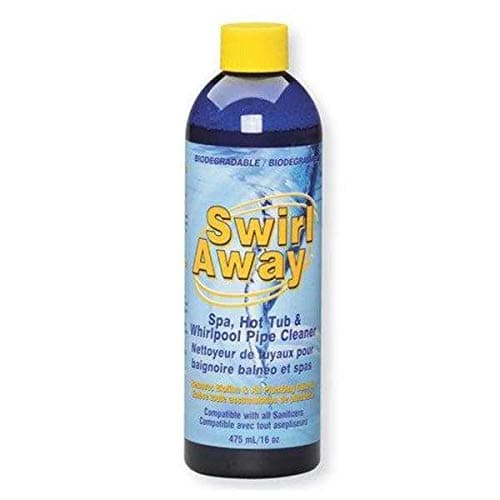
#3 · Best for a cheap regular flush
Swirl Away Spa Plumbing Cleaner
Swirl Away · scored 8.0/10
Inexpensive, widely available, and fine for scheduled maintenance.
Price is the argument. A flush product cheap enough that you use it every single water change beats a better one you ration to once a year.
Expect maintenance-grade results rather than rescue-grade. That is the correct expectation for a product at this price.
What the maker states
- Type
- Liquid plumbing cleaner
- Used
- Before draining
- Contact time
- Per the label
- Sold as
- Single-use and multi-use bottles
How it scored
- Biofilm removal
- 7.0
- Ease of use
- 9.0
- Value
- 9.0
- Odor
- 8.0
- Availability
- 8.5
Skip this one if: you are trying to fix a smell that has survived a previous flush.
Questions people actually ask
Frequently asked questions
How do you flush hot tub lines?
On a full tub at normal temperature: remove the cartridge, add a purge product at the label dose, run every jet on every setting and open the air controls, let it circulate for the stated time, skim anything floating, then power off, drain, wipe every surface and refill with a clean cartridge.
Do you flush hot tub lines with the tub full or empty?
Full. The product needs water to circulate through the plumbing. Draining first is the single most common mistake and it leaves the purge nothing to work with.
How long should a hot tub line flush run?
For the time the product label states, commonly an hour or more, with every jet and every air control cycled through during that period. Check on it: on a neglected tub the surface can foam heavily.
Do I need to flush the lines every time I change the water?
Yes, and it is much easier that way. A routine purge at every water change adds an hour to a job you are already doing and produces almost nothing visible. Saving it for once a year turns it into a rescue job needing a stronger product.
Where the numbers come from
Sources
- CDC, Controlling Legionella in Hot Tubs - the primary reference for the health and disinfection guidance quoted here
- CDC, Model Aquatic Health Code (2023, 4th edition) - the source for the pH 7.2-7.8 range and the hot-tub disinfectant levels quoted on this site
- PHTA, Find a Standard - the index confirming which ANSI standard actually covers water quality in public pools and hot tubs or spas
Read next
Related on Float & Filter
- Hot tub biofilm
How to confirm you need this before doing it.
- The best hot tub line flush cleaners
Rescue-grade versus routine-grade products.
- Draining and refilling a hot tub
The rest of the job, after the purge.
- When to replace a hot tub filter
A first purge usually finishes the cartridge in the tub.