Comparison
Bromine Granules vs Tablets for a Hot Tub
Tablets are the low-effort default and they take days to come good on a fresh fill. Granules work the moment they hit the water and ask you to dose after every soak. That trade is the whole decision.
By Scooter M. · Published · How we pick
How this page is funded: the buy buttons below are Amazon affiliate links. If you buy through one we earn a commission at no extra cost to you. It does not change what we recommend, and where the better answer is a retailer we earn nothing from, we say so. The full version.
The short answer. Bromine tablets are the low-effort option: load a floater, let it dissolve, adjust the vents once a week. Bromine granules are the responsive option: measure a dose in after bathers get out, and the reading comes up within minutes.
The decision is not about which chemical is better — both deliver bromine to the same targets. It is about a startup problem that catches out almost everyone who fills a tub and drops tablets in expecting a reading that evening.
The difference that actually matters
Bromine tablets are typically bromochlorodimethylhydantoin. They release bromine into the water, but the system only works properly once there is a reservoir of bromide ion in the water for the oxidizer to reactivate. On a freshly filled tub that reservoir does not exist, so tablets alone leave you chasing a reading for days — which is why our bromine tablets page keeps saying to establish a bromide bank first, usually with sodium bromide.
Granular bromine does not have that problem. SpaGuard’s label states the product needs no pre-treatments or activators to begin working, and describes it as dual-acting — both sanitizer and oxidizer. In practice that means a fresh fill can be brought to a reading the same afternoon rather than over a weekend.
That is the honest headline difference between the two formats, and it is the reason to keep granules in the cupboard even if tablets are your routine.
Side by side
| Granules | Tablets | |
|---|---|---|
| Speed to a reading | Minutes. No activator needed, per the SpaGuard label | Days on a fresh fill, until a bromide bank is established |
| Effort | Measure and dose after use | Load a floater, adjust vents weekly |
| Control | High. You decide the dose each time | Low. The floater decides, slowly |
| pH effect | Stated pH neutral on the SpaGuard label | Mildly acidic over time on most tablet chemistries |
| Suits | Irregular use, fresh fills, recovering a tub | Regular use, steady bather load, hands-off owners |
| Weak point | Requires you to test and dose | Overshoots and undershoots between adjustments |
The pH point, stated carefully
SpaGuard’s granular bromine label says it is pH neutral and will not affect pH or alkalinity. That matters because pH drift is the background chore of hot tub ownership, and because sanitizer effectiveness falls as pH climbs — the reason guidance pairs a residual with a pH band rather than quoting one alone.[source]
Two cautions. First, that claim is on the SpaGuard label specifically and we do not extend it to every granular bromine product; the Clorox Pool&Spa granules listing makes no such statement, so test pH after your first few doses rather than assuming. Second, pH neutral does not mean pH stable — aeration, bather load and fill water all move pH regardless of the sanitizer. Keep pH and alkalinity in the routine either way.
The targets do not change
Whichever format you use, the numbers you are aiming at are the same: pH 7.2 to 7.8, and 4 to 8 ppm bromine.[source] Granules get you there faster, tablets get you there with less thought, and neither changes where “there” is. Our sanitizer levels page covers the targets in full, and the dosage chart covers how much of what to add.
Which one suits how you actually use the tub
Use it most days, with a predictable bather load? Tablets. A floater matches a steady demand well, and the daily effort is close to zero. Keep granules on hand for refills and for the week the reading crashes after a party.
Use it once a week, or unpredictably? Granules. A floater dissolving steadily into a tub nobody is using overshoots, and the same floater cannot keep up with four people on a Saturday. Dosing to actual use is both cheaper and more accurate.
Just refilled? Granules, whatever your normal routine is. This is the situation the format exists for.
Struggling to hold any reading at all? Read the bromine tablets page first — on a tablet system this is usually a missing bromide bank rather than a product fault, and a booster fixes it more cheaply than switching formats does.
Dosing granules without overshooting
The SpaGuard label gives 1 teaspoon per 200 gallons, which for a typical 350 to 400 gallon tub is roughly two teaspoons per dose. That is a small amount, and the most common mistake is treating a granular product like shock and pouring in a scoopful.
- Measure. Use a dedicated spoon, not an eyeball.
- Dose with the jets running, briefly, so it disperses rather than settling on the shell.
- Dose after use, not before. The demand you are meeting is the load bathers just added.
- Test before you get in, not after you dose. A high bromine reading means waiting, not soaking.
You still shock separately. A dual-acting granular sanitizer reduces how much combined bromine accumulates but does not replace the weekly oxidizer — see shocking a hot tub.
Cost, in honest terms
Per soak, the two formats land in similar territory, and the container size matters more than the format does. A small tub of granules is the expensive way to buy them; the 2 lb size brings the cost per dose down substantially. Tablets follow the same pattern.
Do not buy the large container of granules to save money before you know the routine suits you. Granular dosing asks for a test-and-dose habit, and if you decide in a month that you would rather load a floater and forget it, you have two pounds of the wrong product.
On prices, and on what these scores are
Bromine in either format is an ordinary recurring spa cost rather than a large purchase. Every button reads the live price where our price layer has one; anything we cannot verify, we do not print — the reasoning is on how we pick.
The scores are an editorial judgment of published label claims, dosing clarity, container economics and availability, against our published method. We have not tested these products, we make no performance claims beyond what the labels state, and there is no rating markup in this page’s structured data.
The honest summary
If you soak regularly and want the tub to look after itself, tablets in a floater remain the right default. If your use is irregular, or you have just refilled, granules are better and it is not close — they hold a reading the same day where tablets need a bromide bank established first.
The setup most people end up happiest with is both: tablets for the baseline, a tub of granules on the shelf for fresh fills, heavy nights and the times the reading has gone. They are the same sanitizer delivered two ways, so there is no conflict in running both.
What fixes it
The products for this job
Named because they do the specific job this page describes, not because they are the only options. Specifications are the manufacturer’s published figures.
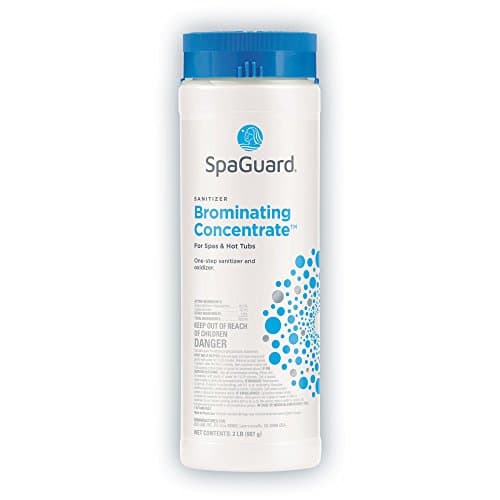
#1 · Best for anyone already sure granules suit them
SpaGuard Brominating Concentrate, 2 lb
SpaGuard · scored 8.7/10
The same product in the size that makes the per-dose cost sensible.
Identical chemistry to the small tub, at a materially better price per ounce. If granules are your routine rather than an experiment, this is the size to buy, and a sealed container keeps for a long time in a cool dry place.
Do not buy the large size to save money on something you have not committed to. Granular bromine asks for a test-and-dose habit, and if you discover in a month that you would rather drop tablets in a floater, you have two pounds of the wrong product.
What the maker states
- Size
- 2 lb, per the listing
- Dose
- 1 tsp per 200 gallons, per the label
- pH
- pH neutral, per the label
- Action
- Dual-acting sanitizer and oxidizer, per the label
How it scored
- Ease of dosing
- 8.0
- Speed to a reading
- 9.5
- pH impact
- 9.5
- Value
- 8.5
- Availability
- 8.0
Skip this one if: you have not tried granules yet. Buy the small tub first and find out whether the dosing rhythm suits you.
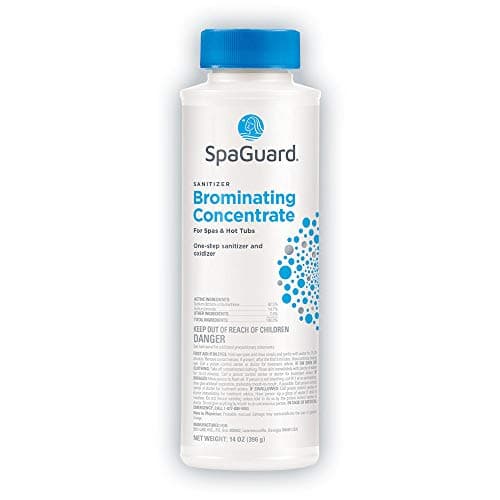
#2 · Best for most people switching from tablets
SpaGuard Brominating Concentrate, 14 oz
SpaGuard · scored 8.5/10
A pH-neutral granular bromine that, per its own label, needs no pre-treatment or activator to start working.
The label makes two claims that matter and both are the reason to choose granules over tablets. It is pH neutral, so it does not drag pH down the way trichlor does and does not need constant correcting. And it needs no activator, which means a freshly filled tub holds a reading the same day rather than after a bromide bank has been built.
The cost is dosing frequency. Granules go in after bather load rather than dissolving steadily in a floater, so this suits someone who tests and doses rather than someone who wants the tub to look after itself for a week. The 14 oz tub is also the expensive way to buy it per ounce.
What the maker states
- Dose
- 1 tsp per 200 gallons, per the label
- pH
- pH neutral, will not affect pH or alkalinity, per the label
- Activation
- No pre-treatments or activators needed, per the label
- Action
- Dual-acting sanitizer and oxidizer, per the label
How it scored
- Ease of dosing
- 8.0
- Speed to a reading
- 9.5
- pH impact
- 9.5
- Value
- 7.0
- Availability
- 8.5
Skip this one if: you want to dose once a week. Granules are dosed after use, which is more often than a floater.
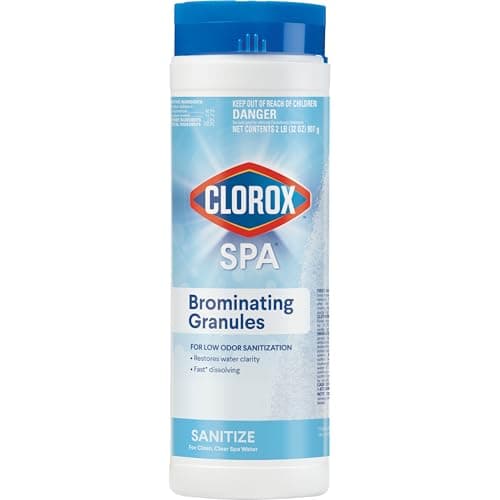
#3 · Best for a widely stocked alternative
Clorox Pool&Spa Spa Brominating Granules, 2 lb
Clorox Pool&Spa · scored 8.2/10
Fast-dissolving granular bromine from a brand you can usually find locally when you run out.
Availability is a real feature for a product you dose after every soak. This is a brand carried by general retailers rather than spa dealers, so running out on a Saturday is less of a problem than with a dealer-channel product.
It scores lower than the SpaGuard granules for one honest reason: its listing does not carry the pH-neutral or no-activator statements, and we do not assume claims a label has not made. Test pH after your first few doses rather than taking neutrality for granted.
What the maker states
- Size
- 2 lb, per the listing
- Dissolving
- Fast dissolving, per the listing
- Odor
- Low odor, per the listing
- Type
- Granular bromine for spas
How it scored
- Ease of dosing
- 8.0
- Speed to a reading
- 8.5
- pH impact
- 7.5
- Value
- 8.5
- Availability
- 9.0
Skip this one if: you want the explicit pH-neutral and no-activator wording. This listing does not make those claims.
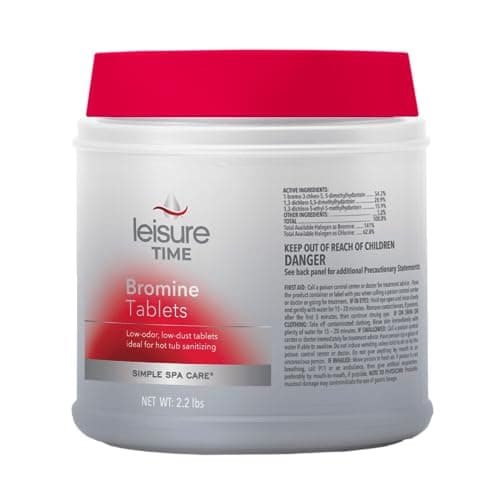
#4 · Best for set-and-forget sanitizing
Leisure Time Brominating Tablets
Leisure Time · scored 8.7/10
The default sanitizer for most tubs, and the one that survives 104F best.
Bromine is the chemistry most hot tubs are set up around, and the reason is thermal: bromine keeps working at spa temperatures where chlorine burns off fast. In a floating dispenser the tablets dissolve slowly and hold a residual for days rather than hours, so a tub used twice a week does not need daily attention.
Two things to know before you buy. Bromine tablets alone will not sanitize a brand-new fill, because you need a bromide bank established first, which is what a sodium bromide starter or a bromine startup kit is for. And bromine is not destroyed by shocking: a non-chlorine shock reactivates spent bromide back into free bromine, which is why bromine owners can shock weekly without a chemistry penalty.
What the maker states
- Chemistry
- 1-inch bromine tablets (BCDMH)
- Delivery
- Floating dispenser or in-line feeder
- Target residual
- 3-8 ppm bromine, per the label
- Needs a bromide bank
- Yes, on a fresh fill
How it scored
- Stability at 104F
- 9.5
- Ease of dosing
- 9.0
- Odor and skin feel
- 7.0
- Cost per month
- 7.5
- Availability
- 9.5
Skip this one if: you want the sanitizer gone within an hour of getting out, or bromine bothers your skin. Bromine holds a residual for days, which is the point, but it also means you cannot flip to a fresh-feeling tub on demand the way a dichlor user can.
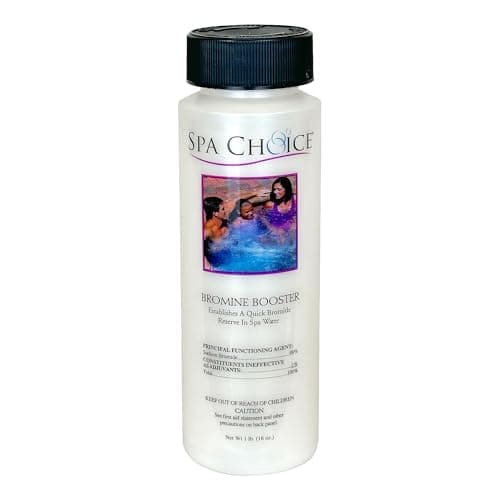
#5 · Best for the step people skip on a fresh fill
SpaChoice Bromine Booster (sodium bromide), 1 lb
SpaChoice · scored 8.2/10
Not a tablet. This is the sodium bromide bank that has to exist before tablets hold any residual at all.
This is the single most common reason a new bromine tub will not hold a reading. Bromine tablets do not work in fresh water on their own; they need a reservoir of bromide ions in the water that the shock then activates. Without that bank, you can float tablets for a week and test zero.
It scores low on 'how often you need it' deliberately, because you genuinely do not: once per fill. That is not a criticism, but you should know you are buying a product you will use three or four times a year at most.
What the maker states
- Form
- Sodium bromide granules
- Job
- Establishes the bromide bank on a fresh fill
- When
- Once, at start-up, then after each water change
- Pack size
- 1 lb, per the listing
How it scored
- Does a job nothing else does
- 9.5
- Cost
- 8.5
- Availability
- 8.0
- Label clarity
- 7.5
- How often you need it
- 5.0
Skip this one if: your tub is already running bromine and holding a reading. This is a start-up product for fresh water, not a weekly one.
Questions people actually ask
Frequently asked questions
Are bromine granules better than tablets?
Neither is better in general; they suit different patterns of use. Granules act immediately and let you dose to actual bather load, which suits irregular use and fresh fills. Tablets dissolve steadily in a floater with almost no effort, which suits regular use.
Do bromine granules need an activator?
SpaGuard’s brominating concentrate label states it needs no pre-treatments or activators to begin working. That is the practical difference from tablets, which on a fresh fill will not hold a reading until a bromide bank has been established.
How much bromine granules for a hot tub?
The SpaGuard label gives 1 teaspoon per 200 gallons, so roughly two teaspoons for a typical 350 to 400 gallon tub. Measure it rather than estimating, dose after bathers get out, and test before anyone gets back in.
Do bromine granules affect pH?
The SpaGuard label describes its granules as pH neutral and says they will not affect pH or alkalinity. Other brands do not all make that claim, so test pH after your first few doses rather than assuming it holds for whatever you bought.
Can you use bromine granules and tablets together?
Yes. They deliver the same sanitizer in two ways, so many owners run tablets in a floater for the baseline and keep granules for fresh fills, heavy use and recovering a low reading. Test rather than stacking doses blind.
Where the numbers come from
Sources
Read next
Related on Float & Filter
- The best hot tub bromine tablets
The tablet side of this comparison, including the bromide bank problem.
- Bromine vs chlorine
The prior decision: which sanitizer, before which format.
- Chlorine tablets vs granules
The same format question on the chlorine side, with a different answer.
- Hot tub chlorine and bromine levels
The targets both formats are aiming at.
- The best floating dispensers
What tablets go in, if the tablet route is yours.