Roundup
The Best Hot Tub Calcium Hardness Increasers
Nobody buys this until something goes wrong, because soft water looks perfect. It is the one water problem that damages the tub while the water still looks great.
By Scooter M. · Published · How we pick

How this page is funded: the buy buttons below are Amazon affiliate links. If you buy through one we earn a commission at no extra cost to you. It does not change what we recommend, and where the better answer is a retailer we earn nothing from, we say so. The full version.
The short answer
Top pick
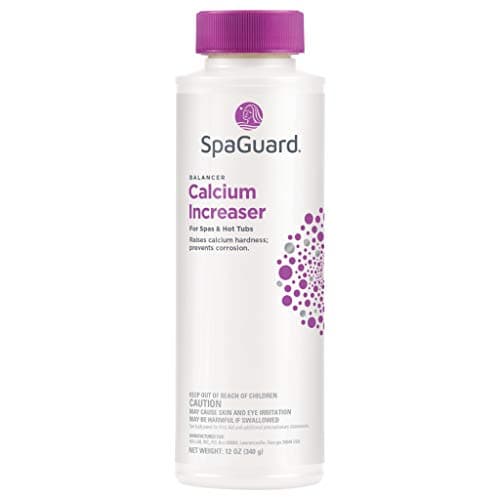
SpaGuard Calcium Hardness Increaser
Only buy this if a test says you need it. Plenty of municipal water does not.
Quick picks
Tap a row to jump to the full write-up. Prices come from the live price layer, never from memory.
| # | Product | Best for | Score | Price |
|---|---|---|---|---|
| 1 | SpaGuard Calcium Hardness IncreaserOnly buy this if a test says you need it. Plenty of municipal water does not. | Soft or well water | 8.4out of 10 | $8.99 · View on Amazon |
| 2 | 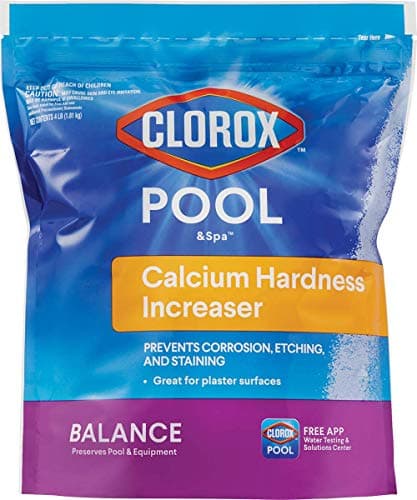 Clorox Pool&Spa Pool Calcium Hardness Increaser, 4 lbFour pounds of the same compound for close to what a 12 oz spa tub costs. Clorox Pool&Spa Pool Calcium Hardness Increaser, 4 lbFour pounds of the same compound for close to what a 12 oz spa tub costs. | Best value per pound | 7.6out of 10 | $12.54 · View on Amazon#ad how this is funded · price as of October 18, 2026 |
| 3 | 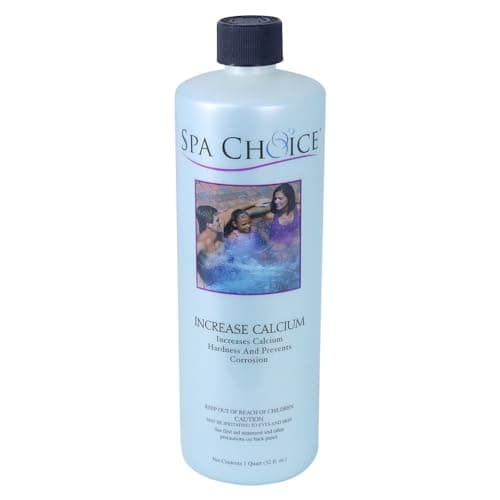 SpaChoice Premium Liquid Calcium Hardness Increaser, 1 quartA liquid rather than a powder, which sidesteps the granules-on-the-shell problem entirely. SpaChoice Premium Liquid Calcium Hardness Increaser, 1 quartA liquid rather than a powder, which sidesteps the granules-on-the-shell problem entirely. | Avoiding undissolved granules | 7.4out of 10 | $13.80 · View on Amazon#ad how this is funded · price as of October 18, 2026 |
| 4 | 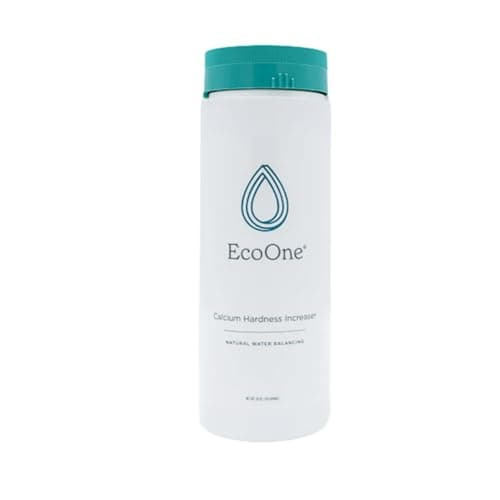 EcoOne Spa Calcium Hardness IncreaserStates calcium chloride on the listing, which is what every product in this category is. EcoOne Spa Calcium Hardness IncreaserStates calcium chloride on the listing, which is what every product in this category is. | Knowing the chemical by name | 7.6out of 10 | $22.99 · View on Amazon#ad how this is funded · price as of October 18, 2026 |
| 5 | 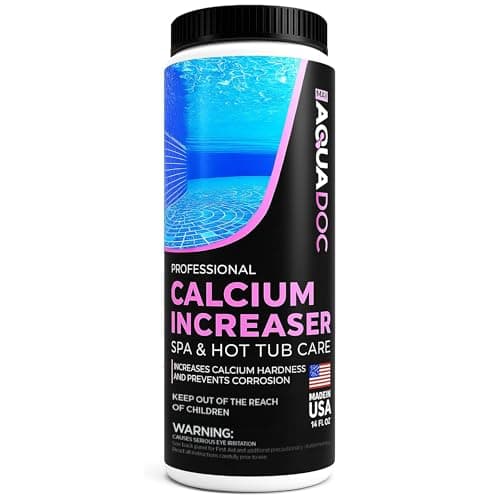 AquaDoc Spa Calcium Hardness Increaser, 14 ozA hot-tub-labeled container in a size that suits correcting one fill rather than ten. AquaDoc Spa Calcium Hardness Increaser, 14 ozA hot-tub-labeled container in a size that suits correcting one fill rather than ten. | A small spa-labeled container | 7.4out of 10 | $18.99 · View on Amazon#ad how this is funded · price as of October 18, 2026 |
Scores are our own, from the published scoring method on how we pick. They are an editorial judgment of published specifications, not a test result, and they are deliberately kept out of the page’s structured data.
The verdict, up front. Calcium hardness increaser is calcium chloride. As with the rest of the balancing aisle, the products are the same compound in different containers, so the real choices are how much you buy, and whether you buy it as a powder or a liquid.
What makes this category different is why you need it. High calcium deposits scale, which is visible and annoying. Low calcium does the opposite: soft water is aggressive, and it pulls minerals out of whatever it can reach — heater elements, metal fittings, grout, and the surfaces themselves.
That damage happens while the water looks flawless, which is why almost nobody tests hardness until a fitting fails. If you are on softened or well water, this is the number you are most likely ignoring.
How we judged these
| Criterion | Why it matters | What we looked at |
|---|---|---|
| Value per pound | Spa containers in this category are unusually small, so the premium over a pool container is unusually large. | Live price against stated container size |
| Label clarity | A listing that names calcium chloride lets you price the whole aisle honestly instead of by branding. | Whether the chemical and the use are stated |
| Form | Granules can sit on an acrylic shell before dissolving, which is where spotting and etching start. Liquid cannot. | Powder or liquid, and what that costs you |
| Dosing guidance | Hardness moves slowly and forgives small doses, but a pool table still needs scaling to a few hundred gallons. | Whether stated dosing matches spa volumes |
| Availability | Mostly a refill-day purchase, so being able to get it locally matters less than for sanitizer, but it still counts. | Whether the product is reliably stocked |
Do you actually need this?
Test before you buy, because unlike most balancing chemicals this one is genuinely unnecessary for a lot of people. Industry guidance puts spa calcium hardness in a range rather than at a point, and hard fill water frequently arrives above it already.[source]
- Softened water. A household softener replaces calcium with sodium, so water from a softened tap is close to zero hardness and will need correcting on every fill. This is the classic case.
- Soft municipal supply or rainwater-fed wells. Also commonly low. Test rather than assume.
- Hard municipal supply. Usually already at or above range. Adding calcium here causes the problem it is meant to prevent.
The full diagnostic, including what low hardness does to a shell over time, is on hot tub calcium hardness. If you are filling from a well, read filling a hot tub from a well first, because metals complicate the picture.
The granule mistake
Calcium chloride has two properties that matter at the tub side, and neither is on most labels.
First, it is slow to dissolve compared with most spa chemicals. Granules scattered across the surface sink and sit on the acrylic, and calcium chloride concentrated against a shell is a recognized cause of spotting and dull patches. Always pre-dissolve it in a bucket of tub water and pour that in with the jets running.
Second, it is exothermic — it gives off heat as it dissolves. Add the granules to the water, never water to the granules, and do not do it in a sealed container. A bucket of hot water is a surprise nobody needs.
The liquid option on this page exists precisely to sidestep both issues. You pay for shipping water, and in exchange nothing undissolved ever touches the shell.
Once it is in, it stays in
This is the asymmetry that should make you cautious. There is no calcium reducer for a hot tub. Nothing in a bottle takes hardness back out, and the only real correction is partial or full dilution with softer water — which means draining.
So the dosing advice is the opposite of aggressive: add a small amount, circulate, retest, and creep up on the range. Overshooting alkalinity is tedious; overshooting hardness means a drain and refill you did not plan.
Hardness, pH and scale are one system
Calcium does not act alone. High hardness with high pH is what deposits scale on a heater; the same hardness at a controlled pH often causes no trouble at all. If you are dosing calcium and fighting scale in the same month, the pH side is where to look — see pH and alkalinity decreasers and descalers and scale control.
Equally, low hardness plus low pH is the aggressive combination that does the most damage fastest. Correct both, and correct alkalinity before either.
What this will not do
- Sanitize. Hardness is a balance number, not a disinfectant.
- Stop foam. Soft water foams more readily, but the cure for foam is a water change, not calcium — see hot tub foam.
- Remove existing etching. Damage to a shell from aggressive water is permanent. This prevents more of it.
- Help a hard-water tub. If hardness is already high, this is the last thing you should add.
On prices, and on what these scores are
Calcium hardness increaser is cheap in absolute terms, and the gap between a 12 oz spa container and a 4 lb pool container is one of the widest per-pound spreads in the whole balancing aisle. Every button reads the live price where our price layer has one; anything we cannot verify, we do not print — the reasoning is on how we pick.
The scores are an editorial judgment of stated container size against live price, label clarity, product form and dosing guidance, against our published method. We have not tested these products, we make no performance claims beyond what the labels state, and there is no rating markup in this page’s structured data.
The honest summary
Test first. If your fill water is hard, buy nothing. If it is softened or genuinely soft, a small spa-labeled container corrects a fill and stores easily, and the pool-size container is far better value if you will be doing it on every refill.
Whatever you buy, pre-dissolve it in a bucket, add granules to water rather than water to granules, and creep up on the range. There is no product that takes calcium back out.
Every pick, in full
The picks in detail
Specifications below are the manufacturer’s own published figures, attributed as such. We have not tested these units and the scores are an editorial judgment of published data against the published method, not a test result.
#1 · Best for soft or well water
SpaGuard Calcium Hardness Increaser
SpaGuard · scored 8.4/10
Only buy this if a test says you need it. Plenty of municipal water does not.
Soft water is aggressive. With too little calcium in it, water pulls calcium out of whatever it can reach, which in a hot tub means grout, heater components and seals. That is the real reason a hardness floor exists, and it is why this is worth owning if your fill water is soft.
It only moves one way. There is no calcium reducer, so the only route down from an over-corrected hardness reading is a partial or full drain. Test first, dose to the bottom of the range, and leave it there.
What the maker states
- Chemistry
- Calcium chloride
- Typical target
- 150-250 ppm in an acrylic spa
- Dissolving
- Exothermic, add slowly per the label
- Removable by
- Draining only
How it scored
- Predictability
- 8.5
- Ease of dosing
- 8.0
- Container size fit
- 8.5
- Cost per month
- 9.0
- Availability
- 8.5
Skip this one if: you have not measured your calcium hardness. Adding calcium you do not need is the quickest route to scale on the heater element, and there is no calcium reducer.
#2 · Best for best value per pound
Clorox Pool&Spa Pool Calcium Hardness Increaser, 4 lb
Clorox Pool&Spa · scored 7.6/10
Four pounds of the same compound for close to what a 12 oz spa tub costs.
The value pick, on the same logic as the other pool-size containers we recommend: calcium chloride is calcium chloride, and the spa premium here is unusually large because spa containers in this category are unusually small.
Calcium hardness moves slowly and forgives small doses, which makes this a safer pool-container recommendation than dry acid is. You still have to scale the dose down from pool volumes, and you still add the granules to the water rather than the other way round.
What the maker states
- Size
- 4 lb, per the listing
- Labeled for
- Swimming pools, per the listing
- Claim
- Prevents corrosion, etching and staining, per the listing
- Job
- Raises calcium hardness
How it scored
- Label clarity
- 6.0
- Dosing guidance
- 5.0
- Value per pound
- 9.5
- Availability
- 9.0
- Container practicality
- 7.5
Skip this one if: you want spa-scale dosing printed on the container.
#3 · Best for avoiding undissolved granules
SpaChoice Premium Liquid Calcium Hardness Increaser, 1 quart
SpaChoice · scored 7.4/10
A liquid rather than a powder, which sidesteps the granules-on-the-shell problem entirely.
The genuine argument for liquid is that granular calcium chloride can sit on an acrylic shell before it dissolves, and that is where etching and spotting start. A liquid disperses immediately and removes that failure mode.
You pay for the water you are shipping. Per unit of calcium delivered this is the most expensive option here, so it makes most sense for someone who has had a bad experience with granules rather than as a default.
What the maker states
- Form
- Liquid, per the listing
- Size
- 1 quart, per the listing
- Labeled for
- Hot tubs, per the listing
- Job
- Raises calcium hardness
How it scored
- Label clarity
- 8.0
- Dosing guidance
- 8.0
- Value per pound
- 5.5
- Availability
- 7.0
- Container practicality
- 8.5
Skip this one if: you want the most calcium for your money. Liquid is a more expensive way to buy it.
#4 · Best for knowing the chemical by name
EcoOne Spa Calcium Hardness Increaser
EcoOne · scored 7.6/10
States calcium chloride on the listing, which is what every product in this category is.
Naming calcium chloride on the front is useful, because it lets you price this category honestly against every other container of the same compound rather than against branding.
It is not the cheapest and there is no published evidence it performs differently from any other calcium chloride product. A word of caution that applies to all of them: calcium chloride gives off heat as it dissolves, so add it to water rather than adding water to it.
What the maker states
- Chemical
- Calcium chloride, per the listing
- Job
- Spa total hardness increaser, per the listing
- Labeled for
- Spa use, per the listing
- Form
- Granular
How it scored
- Label clarity
- 9.0
- Dosing guidance
- 7.5
- Value per pound
- 6.0
- Availability
- 7.5
- Container practicality
- 8.0
Skip this one if: you are buying on price. This is above the cheapest spa options per ounce.
#5 · Best for a small spa-labeled container
AquaDoc Spa Calcium Hardness Increaser, 14 oz
AquaDoc · scored 7.4/10
A hot-tub-labeled container in a size that suits correcting one fill rather than ten.
Spa-labeled with spa-scale dosing, in a container small enough to store easily. If you correct hardness once after a refill and then forget about it, the size is right.
On a soft-water supply you will be dosing every fill and this becomes an expensive way to buy calcium chloride. Anyone in that position should be looking at the larger containers on this page.
What the maker states
- Size
- 14 oz, per the listing
- Labeled for
- Hot tubs, per the listing
- Job
- Raises calcium hardness
- Form
- Granular
How it scored
- Label clarity
- 8.0
- Dosing guidance
- 8.0
- Value per pound
- 5.0
- Availability
- 7.5
- Container practicality
- 8.5
Skip this one if: you are on soft water permanently. You will get through this quickly and pay for it.
Questions people actually ask
Frequently asked questions
What is a hot tub calcium hardness increaser made of?
Calcium chloride. Every product in this category is the same compound in a different container, sold as granules or as a liquid, so the sensible comparison is cost per pound and which form suits you.
Do I need to add calcium to my hot tub?
Only if your fill water is soft. Water from a household softener is close to zero hardness and needs correcting every fill; hard municipal water is often already above range and needs nothing. Test before buying, because adding calcium to hard water causes scale.
What does low calcium hardness do to a hot tub?
Soft water is aggressive and pulls minerals from whatever it touches — heater elements, metal fittings and the shell surface. The damage is gradual and the water looks perfectly clear the whole time, which is why hardness is the balance number most owners never test.
How do you lower calcium hardness in a hot tub?
By diluting with softer water, which in practice means a partial or full drain and refill. There is no chemical that removes calcium from spa water, and that asymmetry is why you should creep up on the target rather than dose in one go.
Should calcium increaser be pre-dissolved?
Yes. Calcium chloride dissolves slowly, and granules that settle on an acrylic shell can cause spotting and dull patches. Dissolve it in a bucket of tub water first and pour that in with the jets running. Add the granules to the water rather than water to the granules, because it gives off heat as it dissolves.
Where the numbers come from
Sources
Read next
Related on Float & Filter
- Hot tub calcium hardness
The diagnosis, and what soft water does to a shell over time.
- The best hot tub descalers and scale control
The opposite problem, and what to do when calcium is already too high.
- The best hot tub alkalinity increasers
The number to correct before you touch hardness or pH.
- Filling a hot tub from a well
Where hardness and metals complicate each other.
- The best test kits and strips
Hardness is the number most spa strips read least reliably.