Roundup
The Best Hot Tub pH and Alkalinity Decreasers
These are sold as two products and they are one chemical. Sodium bisulfate lowers pH and total alkalinity together; how you add it decides which one moves further.
By Scooter M. · Published · How we pick
How this page is funded: the buy buttons below are Amazon affiliate links. If you buy through one we earn a commission at no extra cost to you. It does not change what we recommend, and where the better answer is a retailer we earn nothing from, we say so. The full version.
The short answer
Top pick
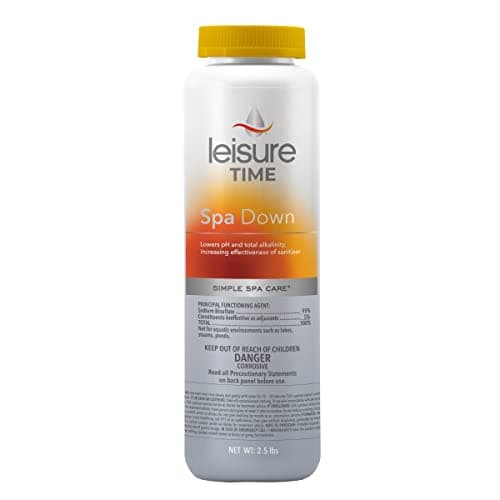
Leisure Time 22338A Spa Down, 2.5 lb
A spa-labeled 2.5 lb container from the brand most spa dealers stock, at a sensible price per pound.
Quick picks
Tap a row to jump to the full write-up. Prices come from the live price layer, never from memory.
| # | Product | Best for | Score | Price |
|---|---|---|---|---|
| 1 | Leisure Time 22338A Spa Down, 2.5 lbA spa-labeled 2.5 lb container from the brand most spa dealers stock, at a sensible price per pound. | Most hot tub owners | 8.4out of 10 | $14.04 · View on Amazon |
| 2 | 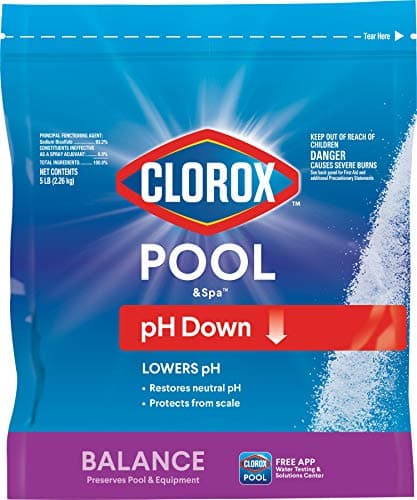 Clorox Pool&Spa Pool pH Down, 5 lbThe cheapest way to buy dry acid here by a wide margin, in a pool-labeled container. Clorox Pool&Spa Pool pH Down, 5 lbThe cheapest way to buy dry acid here by a wide margin, in a pool-labeled container. | Best value per pound | 7.6out of 10 | $9.44 · View on Amazon#ad how this is funded · price as of October 17, 2026 |
| 3 | 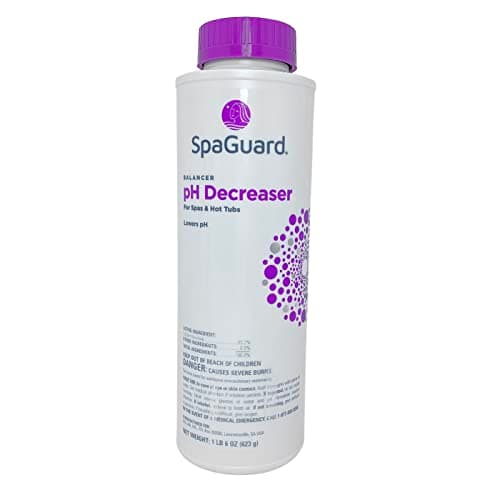 SpaGuard Spa pH DecreaserDry acid in a spa-sized container with spa-scale dosing on the label. That is the whole trick. SpaGuard Spa pH DecreaserDry acid in a spa-sized container with spa-scale dosing on the label. That is the whole trick. | Bringing high pH down | 8.5out of 10 | $11.99 · View on Amazon |
| 4 | 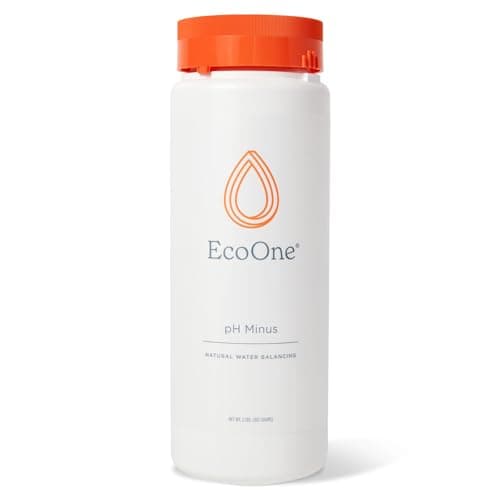 EcoOne pH Minus alkalinity decreaserThe one listing here that names alkalinity rather than pH, which is a useful reminder that they are the same job. EcoOne pH Minus alkalinity decreaserThe one listing here that names alkalinity rather than pH, which is a useful reminder that they are the same job. | When alkalinity is the number you are lowering | 7.6out of 10 | $18.99 · View on Amazon#ad how this is funded · price as of October 17, 2026 |
| 5 | 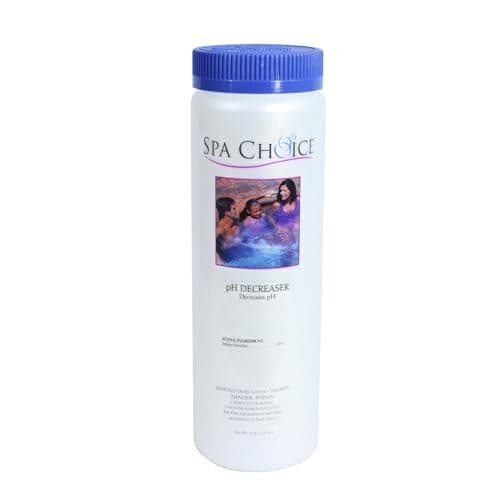 SpaChoice Premium pH Decreaser, 2.5 lbA hot-tub-labeled 2.5 lb container, worth knowing about when the better-known brands are out. SpaChoice Premium pH Decreaser, 2.5 lbA hot-tub-labeled 2.5 lb container, worth knowing about when the better-known brands are out. | A spa-sized second source | 7.5out of 10 | $17.06 · View on Amazon |
| 6 | 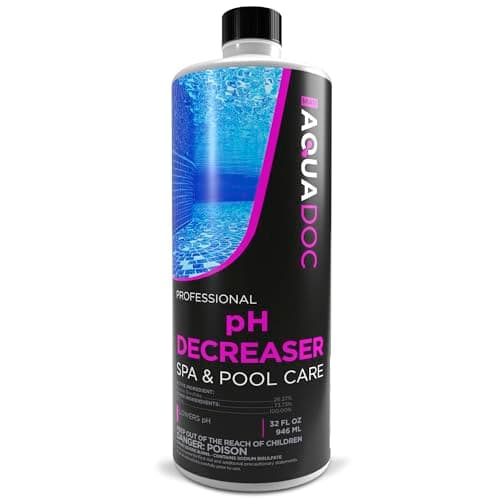 AquaDoc Spa pH Decreaser, 32 ozNames sodium bisulfate on the listing, which is the honest description of every product on this page. AquaDoc Spa pH Decreaser, 32 ozNames sodium bisulfate on the listing, which is the honest description of every product on this page. | Knowing the chemical by name | 7.5out of 10 | $23.99 · View on Amazon#ad how this is funded · price as of October 17, 2026 |
Scores are our own, from the published scoring method on how we pick. They are an editorial judgment of published specifications, not a test result, and they are deliberately kept out of the page’s structured data.
The verdict, up front. Search for a hot tub pH decreaser and you get one set of products. Search for an alkalinity decreaser and you get a near-identical set, sometimes the same bottles with different words on the front. That is not a coincidence: both are dry acid — sodium bisulfate.
One chemical, two jobs. Add it normally and pH drops sharply while alkalinity drops a little. Add it in a concentrated slug and then aerate hard, and alkalinity comes down while pH rebounds. Same product, different technique.
So this page covers both queries honestly, ranks the containers on cost per pound and label clarity, and then explains the technique that decides which number you actually move. Diagnosis of which number is wrong lives on hot tub pH and total alkalinity.
How we judged these
| Criterion | Why it matters | What we looked at |
|---|---|---|
| Value per pound | The compound is constant across the category, so price per pound is the criterion that genuinely separates these. | Live price against stated container size |
| Label clarity | A label naming sodium bisulfate lets you compare the whole aisle. One naming alkalinity tells you the maker understands what it sells. | Whether the chemical and the target number are stated |
| Dosing guidance | Dry acid moves pH fast, and acidic water is worse than alkaline water. Spa-scale dosing matters more here than anywhere. | Whether stated dosing matches spa volumes |
| Availability | High pH is the most common hot tub reading out of range, so this is a product you reach for often. | Whether the product is reliably stocked |
| Container practicality | Dry acid is hygroscopic and cakes solid if stored damp. A resealable container in a dry cupboard keeps working. | Size and format against realistic home storage |
Lowering pH, or lowering alkalinity: the technique
This is the part almost nothing else in the aisle explains, and it is why one product answers two different searches.
To lower pH. Pre-dissolve a small dose in a bucket of tub water, pour it in with the jets running, circulate, and retest after a full cycle. pH comes down; alkalinity drifts down slightly with it. That is the normal case.
To lower alkalinity without losing pH. Add a larger dose to one spot in the tub rather than distributing it, let it work, then aerate hard — jets on full, blower on if you have one, cover off. Aeration drives pH back up while alkalinity stays down. Repeat over several sessions rather than trying to do it in one.
The second method takes patience and is the standard approach to a high alkalinity reading. What it is not is a different product, so do not pay a premium for a bottle labeled alkalinity decreaser when a cheaper one labeled pH decreaser contains the same thing.
The targets
pH belongs between 7.2 and 7.8.[source] Total alkalinity has an industry consensus range of 80 to 120 ppm and is not itself a CDC figure.[source]
High pH is the direction hot tubs drift naturally, because aeration pushes it up every time the jets run. That is worth knowing before you buy: you will use more of this than of pH increaser, and a tub that needs acid weekly is usually a tub with alkalinity above range rather than a tub with a pH fault.
Why overshooting matters more in this direction
Alkaline water is uncomfortable and makes chlorine less effective. Acidic water attacks things. Below about pH 7 you are working on heater elements, pump seals and the metal fittings inside the plumbing, and that damage does not announce itself until something fails.
- Start at half the label dose. You can always add more; taking acid back out means adding alkali and bouncing.
- Always pre-dissolve. Dry acid granules sitting on an acrylic shell are a documented way to etch it.
- Never add acid and anything else in the same pass. Dose one product, circulate, test, then consider the next.
- Keep it away from chlorine products in storage. Acid and oxidizers should not share a shelf, let alone a spill.
The pool-container question, with a caveat
The same dry acid is sold in pool-size containers at a fraction of the price per pound, and we include one as the value pick. We are more hesitant recommending it here than on the alkalinity increaser page, and the reason is the asymmetry above: overshooting alkalinity is tedious, while overshooting acid is corrosive.
If you take the pool container, treat its dosing table as a starting point to divide down heavily, and never eyeball a scoop. If that sounds like a step you might skip, the spa-labeled container is worth its premium.
Where this sits in the routine
Balance before sanitize, always. Correct alkalinity, then pH, then look at the sanitizer residual — the order is set out in first chemicals after a refill. Dosing acid into a tub you are about to shock is how people end up chasing three numbers at once.
On hard fill water, persistent high pH plus high calcium is the combination that deposits scale, and acid alone is not the answer to that — see descalers and scale control.
What this will not do
- Sanitize. Dry acid is a balancer, not a disinfectant.
- Clear the water. Cloudiness has other causes — cloudy water.
- Lower calcium hardness. That is a separate number and acid does not remove calcium; only dilution does.
- Fix a tub that needs acid weekly. That is an alkalinity problem wearing a pH costume.
On prices, and on what these scores are
Dry acid is inexpensive in every format, and the spread across this page is a few dollars per container but several times over per pound. Every button reads the live price where our price layer has one; anything we cannot verify, we do not print — the reasoning is on how we pick.
The scores are an editorial judgment of stated container size against live price, label clarity, dosing guidance and storage practicality, against our published method. We have not tested these products, we make no performance claims beyond what the labels state, and there is no rating markup in this page’s structured data.
The honest summary
Buy one product, not two. A spa-labeled container of dry acid handles both a high pH reading and a high alkalinity reading; the difference is whether you distribute the dose and leave it, or concentrate it and then aerate.
The mid-size spa tub is the sensible default for most people. Take the pool container only if you will genuinely scale the dose down, and treat any bottle sold specifically as an alkalinity decreaser as the same chemical with different marketing — useful, but not worth a premium.
Every pick, in full
The picks in detail
Specifications below are the manufacturer’s own published figures, attributed as such. We have not tested these units and the scores are an editorial judgment of published data against the published method, not a test result.
#1 · Best for most hot tub owners
Leisure Time 22338A Spa Down, 2.5 lb
Leisure Time · scored 8.4/10
A spa-labeled 2.5 lb container from the brand most spa dealers stock, at a sensible price per pound.
The default recommendation for most people: a spa-labeled container, spa-scale dosing on the back, a size that lasts without dominating a shelf, and wide availability through both dealers and general retail.
Nothing here is special chemistry and we would not pretend otherwise. You are paying a modest premium over a pool container for a label that matches your water volume, which for a product that moves pH quickly is a defensible thing to pay for.
What the maker states
- Part
- 22338A, per the listing
- Size
- 2.5 lb, per the listing
- Labeled for
- Spa use, per the listing
- Job
- Lowers pH
How it scored
- Label clarity
- 8.5
- Dosing guidance
- 8.5
- Value per pound
- 8.0
- Availability
- 8.5
- Container practicality
- 8.5
Skip this one if: you only need to nudge pH once. A 22 oz container is plenty and costs a third of this.
#2 · Best for best value per pound
Clorox Pool&Spa Pool pH Down, 5 lb
Clorox Pool&Spa · scored 7.6/10
The cheapest way to buy dry acid here by a wide margin, in a pool-labeled container.
Five pounds for less than most 2.5 lb spa containers cost. It is the same dry acid doing the same job, and if you are comfortable converting a pool dose to a spa volume the saving is substantial.
We are more cautious recommending the pool container here than we were on the alkalinity page, and the reason is real: dry acid moves pH quickly and overshooting into acidic water is worse than overshooting alkalinity. Add a fraction of what the pool table says, circulate, and retest before the next dose.
What the maker states
- Size
- 5 lb, per the listing
- Labeled for
- Swimming pools, per the listing
- Job
- Lowers pH, per the listing
- Claim
- Protects against eye and skin irritation, per the listing
How it scored
- Label clarity
- 6.0
- Dosing guidance
- 5.0
- Value per pound
- 9.5
- Availability
- 9.0
- Container practicality
- 7.5
Skip this one if: you will not scale the dose. Dry acid moves pH fast and a pool table will have you overshooting.
#3 · Best for bringing high ph down
SpaGuard Spa pH Decreaser
SpaGuard · scored 8.5/10
Dry acid in a spa-sized container with spa-scale dosing on the label. That is the whole trick.
Dry acid is dry acid. What you are buying is a container sized for a 350-gallon tub rather than a 20,000-gallon pool, and a label with spa-scale dosing on it. That sounds trivial until you have tried to measure a pool dose into a hot tub.
Add it with the jets running and the cover off, then retest after a full circulation cycle rather than immediately. A pH reading taken thirty seconds after dosing means nothing, and the second dose people add because the first appeared not to work is how tubs end up at pH 6.8.
What the maker states
- Chemistry
- Sodium bisulfate (dry acid)
- Target
- CDC gives pH 7.2-7.8 for pools and hot tubs
- Side effect
- Lowers total alkalinity as well
- Dose
- By tub volume, per the label
How it scored
- Predictability
- 8.5
- Ease of dosing
- 8.5
- Container size fit
- 9.0
- Cost per month
- 8.5
- Availability
- 9.0
Skip this one if: your total alkalinity is also high. Chasing pH while TA is out of range means you will be back next week. Fix alkalinity first, then pH.
#4 · Best for when alkalinity is the number you are lowering
EcoOne pH Minus alkalinity decreaser
EcoOne · scored 7.6/10
The one listing here that names alkalinity rather than pH, which is a useful reminder that they are the same job.
This listing is the clearest illustration of the point this page is built on. It is sold as an alkalinity decreaser where the others are sold as pH decreasers, and they are the same category of product. What differs is how you add it, not what is in the tub.
Because it is marketed on the alkalinity side it can read as a specialist product, and it is not one. Use the aeration technique described on this page if alkalinity is what you are trying to move, and expect pH to come down first whatever the front of the container says.
What the maker states
- Job
- Water alkalinity decreaser, per the listing
- Labeled for
- Hot tub and pool application, per the listing
- Note
- Chlorine-free, per the listing
- Form
- Granular
How it scored
- Label clarity
- 8.5
- Dosing guidance
- 7.5
- Value per pound
- 6.5
- Availability
- 7.5
- Container practicality
- 8.0
Skip this one if: you expect it to lower alkalinity without touching pH. Nothing does that on its own.
#5 · Best for a spa-sized second source
SpaChoice Premium pH Decreaser, 2.5 lb
SpaChoice · scored 7.5/10
A hot-tub-labeled 2.5 lb container, worth knowing about when the better-known brands are out.
Same size and same job as the category default, from a brand that turns up widely in the spa aisle. A second source matters more than brand loyalty for a chemical you may need at short notice.
Premium on the listing is a marketing word rather than a stated grade, and this sits above the cheapest spa options on price per pound. Buy on availability and price, not on the adjective.
What the maker states
- Size
- 2.5 lb, per the listing
- Labeled for
- Hot tubs, per the listing
- Origin
- Made in USA, per the listing
- Job
- Lowers pH
How it scored
- Label clarity
- 8.0
- Dosing guidance
- 7.5
- Value per pound
- 6.5
- Availability
- 7.5
- Container practicality
- 8.5
Skip this one if: another spa container is cheaper on the day. There is nothing published to separate them.
#6 · Best for knowing the chemical by name
AquaDoc Spa pH Decreaser, 32 oz
AquaDoc · scored 7.5/10
Names sodium bisulfate on the listing, which is the honest description of every product on this page.
The listing states the chemical outright, and once you know every pH decreaser here is sodium bisulfate you can shop the whole category on price per pound. That clarity is genuinely worth something in an aisle that mostly sells adjectives.
It is the weakest value on the page. Thirty-two ounces is a small container at a price that buys several pounds elsewhere, so treat this as the transparent option rather than the economical one.
What the maker states
- Chemical
- Sodium bisulfate, per the listing
- Size
- 32 oz, per the listing
- Labeled for
- Hot tubs, per the listing
- Job
- Lowers pH, per the listing
How it scored
- Label clarity
- 9.0
- Dosing guidance
- 8.0
- Value per pound
- 5.0
- Availability
- 7.5
- Container practicality
- 8.5
Skip this one if: value per pound matters. This is the most expensive way to buy dry acid here.
Questions people actually ask
Frequently asked questions
Is pH decreaser the same as alkalinity decreaser?
In practice yes. Both are dry acid, sodium bisulfate. What differs is technique: distribute the dose and pH falls most, or concentrate the dose and then aerate hard and alkalinity falls while pH rebounds. One container does both jobs.
How do you lower alkalinity in a hot tub without lowering pH?
Add dry acid to one spot rather than distributing it, let it work, then aerate hard with the jets on full and the cover off. Aeration drives pH back up while total alkalinity stays down. It takes several sessions; there is no single-dose version of this.
Why does my hot tub pH keep rising?
Aeration. Every time the jets run, carbon dioxide comes out of the water and pH climbs, which is why hot tubs drift upward far more often than down. If it rises very fast, total alkalinity is probably above the 80 to 120 ppm range and should be brought down first.
Can you use pool pH down in a hot tub?
It is the same sodium bisulfate and costs much less per pound. Be more careful than you would be with alkalinity increaser: the dosing table is written for pool volumes, dry acid moves pH fast, and acidic water corrodes heater elements and fittings. Scale the dose down heavily and always pre-dissolve.
What happens if you add too much pH decreaser?
pH drops below the 7.2 to 7.8 range and the water becomes corrosive to heater elements, seals and metal fittings. That damage is gradual and invisible until something fails, which is why the guidance here is to start at half the label dose and retest rather than correct in one go.
Where the numbers come from
Sources
Read next
Related on Float & Filter
- Hot tub pH and total alkalinity
Which number is actually wrong, and the order to correct them in.
- The best hot tub pH increasers
The opposite direction, and what to reach for if you overshoot.
- The best hot tub alkalinity increasers
For the far more common problem of alkalinity below range.
- The best hot tub descalers and scale control
What high pH on hard water eventually deposits.
- First chemicals after a refill
Where balancing sits in the order of operations.