Roundup
The Best Hot Tub Chemicals for Sensitive Skin
Most skin complaints in a hot tub are a pH problem or a chloramine problem wearing a sanitizer costume. Fix those and the shopping list gets short.
By Scooter M. · Published · How we pick
How this page is funded: the buy buttons below are Amazon affiliate links. If you buy through one we earn a commission at no extra cost to you. It does not change what we recommend, and where the better answer is a retailer we earn nothing from, we say so. The full version.
The short answer
Top pick
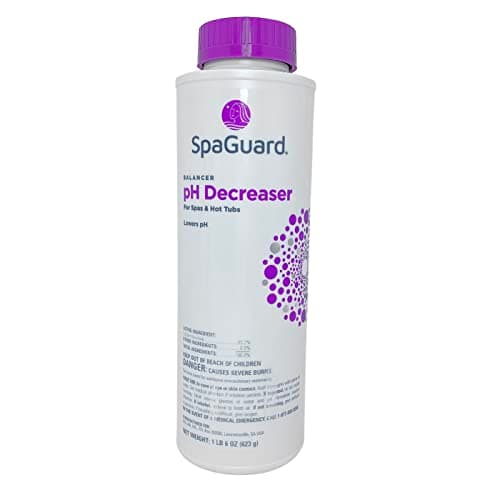
SpaGuard Spa pH Decreaser
Dry acid in a spa-sized container with spa-scale dosing on the label. That is the whole trick.
Quick picks
Tap a row to jump to the full write-up. Prices come from the live price layer, never from memory.
| # | Product | Best for | Score | Price |
|---|---|---|---|---|
| 1 | SpaGuard Spa pH DecreaserDry acid in a spa-sized container with spa-scale dosing on the label. That is the whole trick. | Bringing high pH down | 8.5out of 10 | $11.99 · View on Amazon |
| 2 | 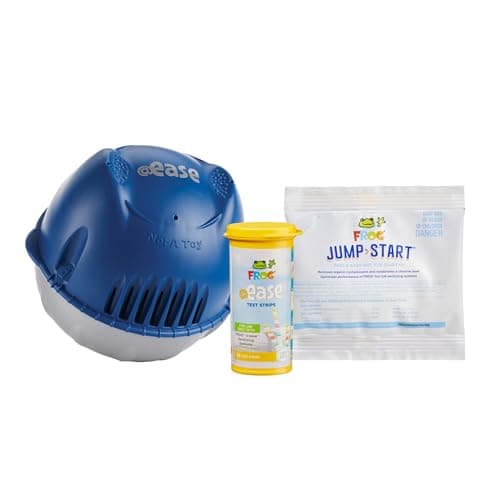 FROG @ease Floating Sanitizing SystemBuys a genuinely hands-off month, at the cost of proprietary refills. FROG @ease Floating Sanitizing SystemBuys a genuinely hands-off month, at the cost of proprietary refills. | Lowest weekly effort | 8.3out of 10 | $59.95 · View on Amazon#ad how this is funded · price as of October 17, 2026 |
| 3 | 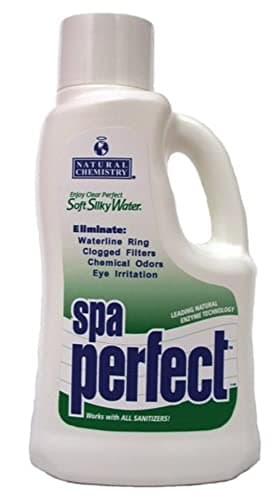 Natural Chemistry Spa PerfectEnzymes eat the oils that make foam and scum lines. Slower than defoamer, and actually a fix. Natural Chemistry Spa PerfectEnzymes eat the oils that make foam and scum lines. Slower than defoamer, and actually a fix. | Treating the cause of foam and scum | 7.6out of 10 | $31.19 · View on Amazon#ad how this is funded · price as of October 17, 2026 |
| 4 | 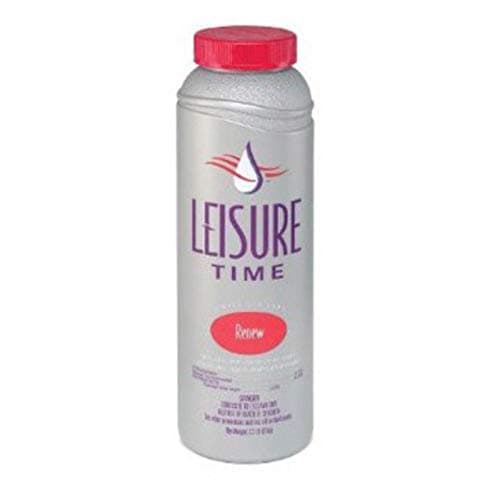 Leisure Time Renew Non-Chlorine ShockThe shock you can use and get back in the water quickly. Oxidizes; does not sanitize. Leisure Time Renew Non-Chlorine ShockThe shock you can use and get back in the water quickly. Oxidizes; does not sanitize. | The weekly oxidize | 8.6out of 10 | $29.74 · View on Amazon#ad how this is funded · price as of October 17, 2026 |
| 5 | 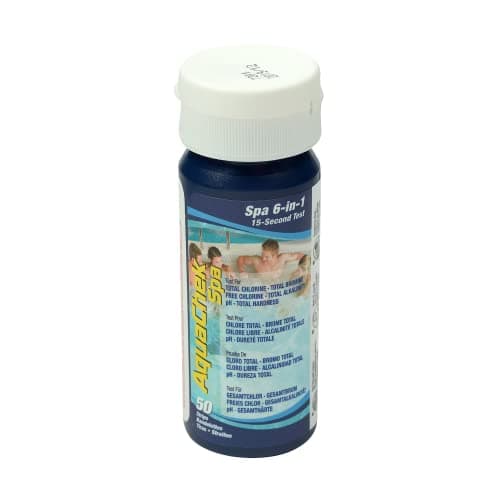 AquaChek Spa 6-in-1 Test StripsSix readings in fifteen seconds. Not precise, but precise enough to catch drift early. AquaChek Spa 6-in-1 Test StripsSix readings in fifteen seconds. Not precise, but precise enough to catch drift early. | The weekly check | 8.4out of 10 | $11.99 · View on Amazon |
Scores are our own, from the published scoring method on how we pick. They are an editorial judgment of published specifications, not a test result, and they are deliberately kept out of the page’s structured data.
If you come out of your tub itchy, tight-skinned or smelling strongly of chemicals, the most likely cause is not the sanitizer you chose. It is pH sitting outside the comfortable range, or a build-up of chloramines that means you have too little effective sanitizer rather than too much.
That matters commercially, because the products marketed for sensitive skin are mostly not the products that fix it. The ranking below is ordered by how much difference each one actually makes, which puts a two-dollar pH adjuster above everything with “gentle” on the label.
One thing this page will not do is tell you what is wrong with your skin. Persistent rash, spots or anything that does not settle is a question for a doctor, not a website — there is a separate page on hot tub rash and itchy skin that sets out where that line is.
Fix these three before buying anything
1. pH, first and by a distance
Human tear fluid and skin sit slightly on the alkaline side of neutral, and water far from that range stings. The CDC’s published target for pools and hot tubs is 7.2 to 7.8,[source] and the top of that band is comfortable for most people while anything above it starts to feel dry and anything well below it stings.
High pH has a second effect that compounds the first: chlorine becomes measurably less effective as pH climbs, so a high-pH tub can read an adequate sanitizer level while behaving like an under-sanitized one, and produce exactly the smell and the irritation people blame on “too many chemicals”. The mechanics are on pH and total alkalinity.
2. Chloramines, not chlorine
That heavy chemical smell is combined chlorine — spent chlorine bound to organics — and it is an irritant. It means the tub needs shocking, not less sanitizer. Adding more dichlor without shocking makes more of it, which is why the instinct to “cut back on chemicals” usually makes the problem worse. See shocking a hot tub.
3. The organic load itself
Chloramines form when sanitizer meets body oils, lotions, deodorant and detergent from swimwear. Less of that going in means fewer of them forming. A rinse before getting in and swimwear rinsed in plain water rather than washed in detergent are free, and between them they do more than any bottle on this page.
What actually goes on the shopping list
Once those three are handled, the products that genuinely help are the ones below. Three of the five are not marketed for sensitive skin at all, which is rather the point.
- A pH adjuster, because pH is the single biggest lever on how the water feels.
- A mineral or low-output sanitizer system, which lets you hold a lower steady sanitizer level rather than dosing in spikes.
- An enzyme, which continuously digests the oils that become chloramines.
- A non-chlorine shock, so the weekly oxidize does not itself add chlorine.
- Test strips, because none of the above is manageable blind.
What we would steer you away from
Fragrances and aromatherapy products. They add organic load to water whose whole problem is organic load, and scented products are a common irritant in their own right.
Anything sold as a total replacement for sanitizer. A tub with no residual is not a gentle tub, it is an unsanitized one, and that is a health question rather than a comfort one.[source]
Switching sanitizer as a first move. People who react to bromine often do better on chlorine and vice versa, and that is a real effect worth trying — but only after pH and chloramines have been ruled out, because switching means draining and it is a lot of work to discover the problem followed you. The trade-offs are on bromine vs chlorine.
Very soft water. Water with almost no calcium in it feels slick and can be drying, and it is aggressive toward the tub as well. If your fill water is softened, check hardness against the 150 to 250 ppm range for an acrylic spa[source] before assuming the sanitizer is at fault. See calcium hardness.
A routine for a sensitive household
- Everyone rinses before getting in. No exceptions, no products.
- Swimwear rinsed in plain water, never washed in detergent.
- Test weekly and hold pH near the upper half of the CDC band rather than letting it wander.
- Dose an enzyme weekly so organics never accumulate.
- Non-chlorine shock weekly, and after any busy session.
- Shower after a soak. Sitting in warm water for an hour and then not rinsing off is its own cause of dry, itchy skin, independent of chemistry.
- Change the water on schedule. Old water carries accumulated by-products that no amount of dosing removes — how often to change hot tub water has the interval.
On prices, and on what these scores are
Everything here sits in the ordinary spa-chemistry price bracket; the mineral system is the one meaningful ongoing cost, because the refill cartridges are proprietary. We publish no figures, because the live price layer is not switched on for this site and a remembered number is worse than none. Every button reads “Check price”.
Scores are an editorial judgment of published specifications and of how much each product moves the specific problem this page is about, made against the published method. We have not tested these products, we make no medical claim about any of them, and there is no rating markup in this page’s structured data.
Every pick, in full
The picks in detail
Specifications below are the manufacturer’s own published figures, attributed as such. We have not tested these units and the scores are an editorial judgment of published data against the published method, not a test result.
#1 · Best for bringing high ph down
SpaGuard Spa pH Decreaser
SpaGuard · scored 8.5/10
Dry acid in a spa-sized container with spa-scale dosing on the label. That is the whole trick.
Dry acid is dry acid. What you are buying is a container sized for a 350-gallon tub rather than a 20,000-gallon pool, and a label with spa-scale dosing on it. That sounds trivial until you have tried to measure a pool dose into a hot tub.
Add it with the jets running and the cover off, then retest after a full circulation cycle rather than immediately. A pH reading taken thirty seconds after dosing means nothing, and the second dose people add because the first appeared not to work is how tubs end up at pH 6.8.
What the maker states
- Chemistry
- Sodium bisulfate (dry acid)
- Target
- CDC gives pH 7.2-7.8 for pools and hot tubs
- Side effect
- Lowers total alkalinity as well
- Dose
- By tub volume, per the label
How it scored
- Predictability
- 8.5
- Ease of dosing
- 8.5
- Container size fit
- 9.0
- Cost per month
- 8.5
- Availability
- 9.0
Skip this one if: your total alkalinity is also high. Chasing pH while TA is out of range means you will be back next week. Fix alkalinity first, then pH.
#2 · Best for lowest weekly effort
FROG @ease Floating Sanitizing System
King Technology · scored 8.3/10
Buys a genuinely hands-off month, at the cost of proprietary refills.
This is the option for people who want the tub to be a tub rather than a chemistry project. A mineral cartridge sits alongside a self-regulating chlorine cartridge, and the maker states the pair holds sanitizer for weeks rather than days. The weekly job shrinks to testing and the occasional shock.
The honest counterweight is cost and lock-in. Refill cartridges are proprietary and priced accordingly, so across a year this is meaningfully more expensive than tablets. If your objection to hot tub care is the time, that trade is worth making. If your objection is the money, it is not.
What the maker states
- Chemistry
- SmartChlor chlorine plus a mineral cartridge
- Cartridge life
- Maker states up to 3-4 weeks per SmartChlor cartridge
- Delivery
- Floating holder, no feeder required
- Refills
- Proprietary
How it scored
- Stability at 104F
- 8.0
- Ease of dosing
- 9.8
- Odor and skin feel
- 9.0
- Cost per month
- 5.5
- Availability
- 8.5
Skip this one if: you resent proprietary cartridges. The holder only accepts the maker's own refills, so you are committed to one supply chain for as long as you run it.
#3 · Best for treating the cause of foam and scum
Natural Chemistry Spa Perfect
Natural Chemistry · scored 7.6/10
Enzymes eat the oils that make foam and scum lines. Slower than defoamer, and actually a fix.
Foam, scum lines and that dull film on the waterline are all the same problem: organic load the sanitizer has not oxidized. Enzymes work continuously on that load, which is why a tub dosed weekly develops far less of a scum line.
The trade-off is patience and running cost. This is a weekly maintenance product, so budget for it as a monthly cost rather than a one-off purchase.
What the maker states
- Type
- Enzyme concentrate
- Targets
- Body oils, lotions, organic residue
- Dosing
- Weekly, per the label
- Compatible with
- Chlorine and bromine, per the maker
How it scored
- Immediate effect
- 3.0
- Duration
- 8.5
- Treats the cause
- 8.5
- Value
- 7.0
- Availability
- 8.5
Skip this one if: you want an instant result. Enzymes work across days, not seconds, and they will not clear a foaming tub before guests arrive.
#4 · Best for the weekly oxidize
Leisure Time Renew Non-Chlorine Shock
Leisure Time · scored 8.6/10
The shock you can use and get back in the water quickly. Oxidizes; does not sanitize.
Non-chlorine shock does one job well: it oxidizes the organic load a soak leaves behind, which is what turns water dull and gives it that flat, used smell. On a bromine tub it does a second job for free, converting spent bromide back into active bromine.
Understand what it is not. MPS is an oxidizer, not a sanitizer. If the problem is biological rather than organic, this will not fix it and the tub will stay exactly as cloudy as it was.
What the maker states
- Chemistry
- Potassium monopersulfate (MPS)
- Job
- Oxidizes body oils, lotions and sweat
- Reactivates bromine
- Yes, on a bromine tub
- Wait before soaking
- Per the label, typically about 15 minutes
How it scored
- Oxidizing power
- 8.0
- Ease of dosing
- 9.5
- Odor and skin feel
- 9.0
- Cost per month
- 8.0
- Availability
- 9.0
Skip this one if: you are dealing with an actual contamination event. MPS burns off organics, it does not kill what a chlorine shock kills, and reaching for it instead is a common reason a cloudy tub stays cloudy.
#5 · Best for the weekly check
AquaChek Spa 6-in-1 Test Strips
AquaChek · scored 8.4/10
Six readings in fifteen seconds. Not precise, but precise enough to catch drift early.
Strips get an unfair reputation because people compare them to a reagent kit and call them inaccurate. That is the wrong comparison. The right one is against not testing at all, which is what happens when the routine takes ten minutes. A strip you actually use weekly beats a reference kit in a cupboard.
Two habits make strips far more reliable: keep the container sealed and out of the humid room the tub is in, and read them in daylight rather than under a yellow bulb. Most strip complaints trace back to one of those two.
What the maker states
- Reads
- Hardness, total chlorine, free chlorine, bromine, pH, alkalinity
- Method
- Dip-and-read colorimetric strip
- Time
- Seconds, per the label
- Storage
- Sealed container, away from humidity
How it scored
- Accuracy
- 6.5
- Speed
- 10.0
- Parameters covered
- 9.0
- Cost per test
- 9.0
- Availability
- 9.5
Skip this one if: you need an exact free chlorine number to diagnose a problem. Strips read in color bands; a drop-based kit reads in numbers.
Questions people actually ask
Frequently asked questions
Which hot tub sanitizer is best for sensitive skin?
Before changing sanitizer, check pH: the CDC target for pools and hot tubs is 7.2 to 7.8, and water outside that band is the most common cause of stinging or dry skin. If pH is right and a heavy chemical smell remains, that is chloramines and the tub needs shocking rather than less sanitizer. A mineral system that holds a lower steady level helps some people once both are ruled out.
Why does my skin itch after using the hot tub?
Most often pH outside 7.2 to 7.8, or chloramines from sanitizer reacting with body oils and swimwear detergent. Very soft fill water and simply not showering after a long soak are two other common causes. Anything persistent is a question for a doctor rather than a website.
Are there chemical-free hot tub options for sensitive skin?
No. Mineral cartridges, ozone and UV all reduce how much sanitizer you need, but every one of them is designed to run alongside a residual rather than replace it. A tub with no residual is not gentle, it is unsanitized.
Do hot tub fragrances irritate skin?
They can, and they also add organic load to water whose main ongoing problem is organic load, which means more chloramines. In a household where someone reacts to the water, scented products are the first thing to drop.
Where the numbers come from
Sources
- CDC, Model Aquatic Health Code (2023, 4th edition) - the source for the pH 7.2-7.8 range and the hot-tub disinfectant levels quoted on this site
- CDC, Controlling Legionella in Hot Tubs - the primary reference for the health and disinfection guidance quoted here
- PHTA, Find a Standard - the index confirming which ANSI standard actually covers water quality in public pools and hot tubs or spas
Read next
Related on Float & Filter
- Hot tub pH and total alkalinity
The single biggest lever on how the water feels.
- Hot tub rash and itchy skin
Where comfort stops being a chemistry question.
- Shocking a hot tub
What actually clears the chemical smell people blame on excess sanitizer.
- Bromine vs chlorine for a hot tub
Worth trying, but only after pH and chloramines are ruled out.
- The best hot tub mineral sanitizers
Running a lower sanitizer level, which is what most of these buy you.