Diagnostic guide
Hot Tub Biofilm
It lives on the inside of the pipework. That is why the water tests fine, why the smell survives shocking, and why no water treatment reaches it.
By Scooter M. · Published · How we pick
How this page is funded: the buy buttons below are Amazon affiliate links. If you buy through one we earn a commission at no extra cost to you. It does not change what we recommend, and where the better answer is a retailer we earn nothing from, we say so. The full version.
Biofilm is a layer of microbial growth on the inside surfaces of the plumbing. It is not in the water, which is the single most important thing to understand about it: a water sample can test perfectly while the pipework is coated, and nothing you add to the water in normal doses reaches it.
Which of these is you?
- White or gray flakes appear when the jets start
- A musty smell that survives shocking
- Sanitizer disappears for no visible reason
- The shell and waterline feel slippery
Flakes when the jets start
Why this happens. Established biofilm sloughs off in pieces when flow increases. Turning the jets on after a quiet period dislodges fragments that then float in the water, typically white, gray or brownish and slightly slimy rather than crisp.
How to confirm it. They appear at jet startup rather than gradually, and they reappear after you net them out. Flakes that are crisp and white and do not recur are more likely scale or disintegrating filter media.
The fix. A full purge. Netting the flakes out treats the visible fraction of something that is mostly still inside the pipes.
A musty smell that survives shocking
Why this happens. A chemical, chlorine-like smell means chloramines and responds to shocking. A musty, earthy or faintly rotten smell is biological and does not, because the source is not in the water being shocked.
How to confirm it. Shock properly, wait the label time, retest, and smell it again. Chloramine smell goes. A biofilm smell comes back within a day, and is often strongest in the first few seconds after the jets start.
The fix. Purge, drain, wipe, refill. There is no water-side treatment for this.
Sanitizer disappearing for no reason
Why this happens. Biofilm consumes sanitizer. A tub that will not hold a residual despite correct dosing, with no unusual bather load to explain it, is usually feeding something in the pipework.
How to confirm it. Dose to the CDC’s stated level for hot tubs,[source] retest after a full circulation cycle, and retest again the following day. A sharp unexplained drop with the tub unused points at demand rather than at dosing.
The fix. Purge. Continuing to add sanitizer to a tub with an established biofilm is feeding a problem rather than treating it, and it is the case where the CDC’s guidance on maintaining disinfectant in hot tubs matters most.[source]
Slippery shell and waterline
Why this happens. The same growth, on surfaces you can reach. Slippery rather than merely wet is the signature, and it usually means what is on the visible surfaces is also in the pipes.
How to confirm it. Run a finger along the waterline and just below it. If it feels slick, you have your answer.
The fix. Purge and drain, then wipe every reachable surface while the tub is empty. Wiping alone gets the visible fraction and leaves the rest.
The purge procedure
- Do not drain first. A purge product needs water to circulate through the pipework. Draining first defeats the whole exercise.
- Remove the filter cartridge. It will trap what comes loose, and on a first purge it will be beyond saving anyway.
- Add the purge product to the label dose for your volume.
- Run every jet, on every setting, for the stated time. Cycle the air controls too. The point is to get flow through every branch of the plumbing, including the ones that normally sit still.
- Expect the water to look unpleasant. On a tub that has never been purged, it is genuinely alarming, and that is the product working.
- Drain completely.
- Wipe the shell, waterline, jet faces and the cover underside while the tub is empty. This step is not optional: everything the purge released is sitting on those surfaces.
- Refill, and fit a clean cartridge. On a heavy first purge, fit a new one.
- Balance and sanitize from scratch, following first chemicals after a refill.
On a badly affected tub, a second purge on the fresh fill is worth doing. It should come out far cleaner, and if it does not, the first purge only reached the easy parts.
Is hot tub biofilm dangerous?
Biofilm protects the organisms inside it from disinfectant, which is exactly why it matters rather than being merely unpleasant. The CDC’s hot tub guidance is built around maintaining a disinfectant residual, and a tub whose plumbing is consuming that residual is a tub that is not maintaining it.[source] Read the CDC’s own page rather than our summary of it; it is free and it is the authority. If anyone who has used the tub becomes unwell, that is a matter for a doctor.
Stopping it coming back
- Purge at every water change, not once a year. A routine purge on a maintained tub takes an hour and shows almost nothing, which is the point.
- Hold your sanitizer residual consistently. Biofilm establishes during the gaps.
- Run the jets regularly, even when the tub is not being used. Stagnant branches are where it starts.
- Keep the filter clean. A loaded cartridge means less water meeting the sanitizer per cycle.
- Change the water on schedule. How often to change hot tub water works out the interval.
What fixes it
The products for this job
Named because they do the specific job this page describes, not because they are the only options. Specifications are the manufacturer’s published figures.
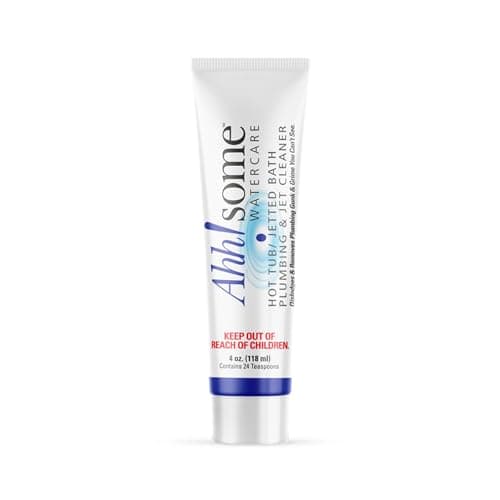
#1 · Best for a first purge on a tub with history
Ahh-Some Hot Tub Cleaner
Ahh-Some · scored 8.5/10
Pulls biofilm out of the plumbing in a way that is genuinely alarming to watch.
Biofilm lives on the inside of the pipework, not in the water, which is why a tub can test perfectly and still smell. A purge product circulates through the plumbing and lifts that layer off, and on a tub that has never had one done the result is visibly unpleasant and very convincing.
Plan the whole job in one session: purge, run the jets for the stated time, drain, wipe the shell and the waterline, then refill. Doing the purge and leaving the water in defeats the entire point.
What the maker states
- Type
- Gel plumbing purge
- Used
- Before draining, with jets running
- Contact time
- Per the label
- After use
- Drain, wipe the shell, refill
How it scored
- Biofilm removal
- 9.5
- Ease of use
- 7.5
- Value
- 8.5
- Odor
- 7.0
- Availability
- 8.5
Skip this one if: you cannot drain afterwards. This is a pre-drain product: what comes out has to go somewhere, and it is not staying in your water.
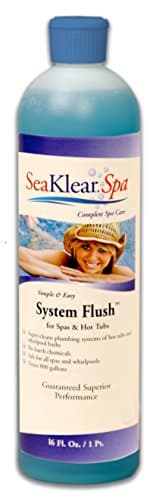
#2 · Best for a serious pre-drain purge
SeaKlear Spa System Flush
SeaKlear · scored 8.2/10
Built for the deep clean rather than the routine one, and priced accordingly.
Purge products are the one category where the aggressive option earns its price, because the thing you are removing is inside pipework you cannot inspect or scrub.
Whatever you use, the sequence is the same: circulate, drain, wipe the shell and the waterline while it is empty, then refill. The wipe step is not optional; everything the purge released is sitting on the shell.
What the maker states
- Type
- Liquid plumbing purge
- Used
- Before draining, with jets running
- Contact time
- Per the label
- After use
- Drain, wipe, refill
How it scored
- Biofilm removal
- 8.5
- Ease of use
- 8.5
- Value
- 7.5
- Odor
- 8.0
- Availability
- 8.0
Skip this one if: you purge at every water change already. Then a cheaper routine product is enough.
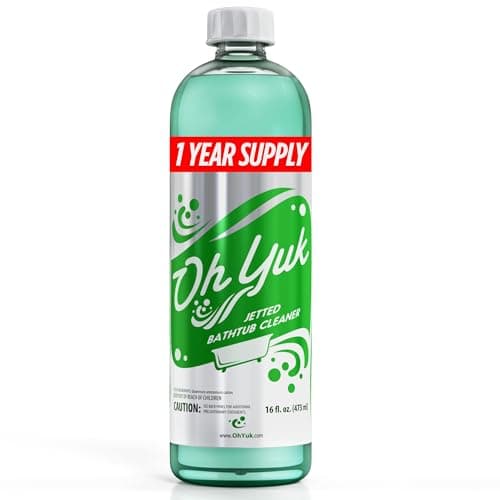
#3 · Best for a gentler routine purge
Oh Yuk Jetted Tub Cleaner
Oh Yuk · scored 8.3/10
Liquid rather than gel, easier to dose, and pleasant enough to use every water change.
The realistic way to keep plumbing clean is to purge at every water change rather than heroically once a year. A liquid that measures easily and does not need much thought is the one you will actually use on schedule.
It is also the sensible choice on a tub you have owned from new and purged regularly, where there is maintenance to do rather than damage to undo.
What the maker states
- Type
- Liquid plumbing cleaner
- Used
- Before draining, with jets running
- Contact time
- Per the label
- After use
- Drain and refill
How it scored
- Biofilm removal
- 8.0
- Ease of use
- 9.0
- Value
- 8.0
- Odor
- 8.5
- Availability
- 9.0
Skip this one if: the tub has years of neglect behind it. A first purge wants the more aggressive option.
Questions people actually ask
Frequently asked questions
Is hot tub biofilm dangerous?
Biofilm protects the organisms within it from disinfectant, which is what makes it a real problem rather than just an unpleasant one. The CDC's hot tub guidance is built around maintaining a disinfectant residual, and a tub whose plumbing is consuming that residual is not maintaining it. Read the CDC page directly, and see a doctor if anyone becomes unwell.
How do you know if a hot tub has biofilm?
Four signs: white or gray slimy flakes appearing when the jets start, a musty smell that survives a proper shock, sanitizer disappearing with no unusual bather load to explain it, and a slippery feel on the shell and waterline.
Can you get rid of biofilm without draining?
No. A purge product circulates through the plumbing and lifts the layer off, and everything it releases then has to leave the tub. That means draining, wiping every reachable surface while it is empty, and refilling.
How often should you flush hot tub plumbing?
At every water change. A routine purge on a maintained tub takes about an hour and produces almost nothing visible, which is exactly the result you want. Saving it for once a year turns it into a rescue job.
Does shock kill biofilm?
Not effectively. Shock acts on what is in the water, and biofilm is a protected layer on the inside surfaces of the plumbing. That is why the musty smell comes back within a day of shocking while a chloramine smell does not.
Where the numbers come from
Sources
- CDC, Controlling Legionella in Hot Tubs - the primary reference for the health and disinfection guidance quoted here
- CDC, Model Aquatic Health Code (2023, 4th edition) - the source for the pH 7.2-7.8 range and the hot-tub disinfectant levels quoted on this site
- PHTA, Find a Standard - the index confirming which ANSI standard actually covers water quality in public pools and hot tubs or spas
Read next
Related on Float & Filter
- Flushing hot tub plumbing lines
The routine version of the purge, done at every water change.
- Draining and refilling a hot tub
The half of the job that happens after the purge.
- Why your hot tub water is cloudy
Biofilm is the branch where the surfaces feel slippery.
- The best hot tub line flush cleaners
Which purge product for a rescue job and which for routine use.
- Hot tub rash and itchy skin
What the CDC publishes, and when to see a doctor.