Guide
Covers for Cold Climates and Snow Load
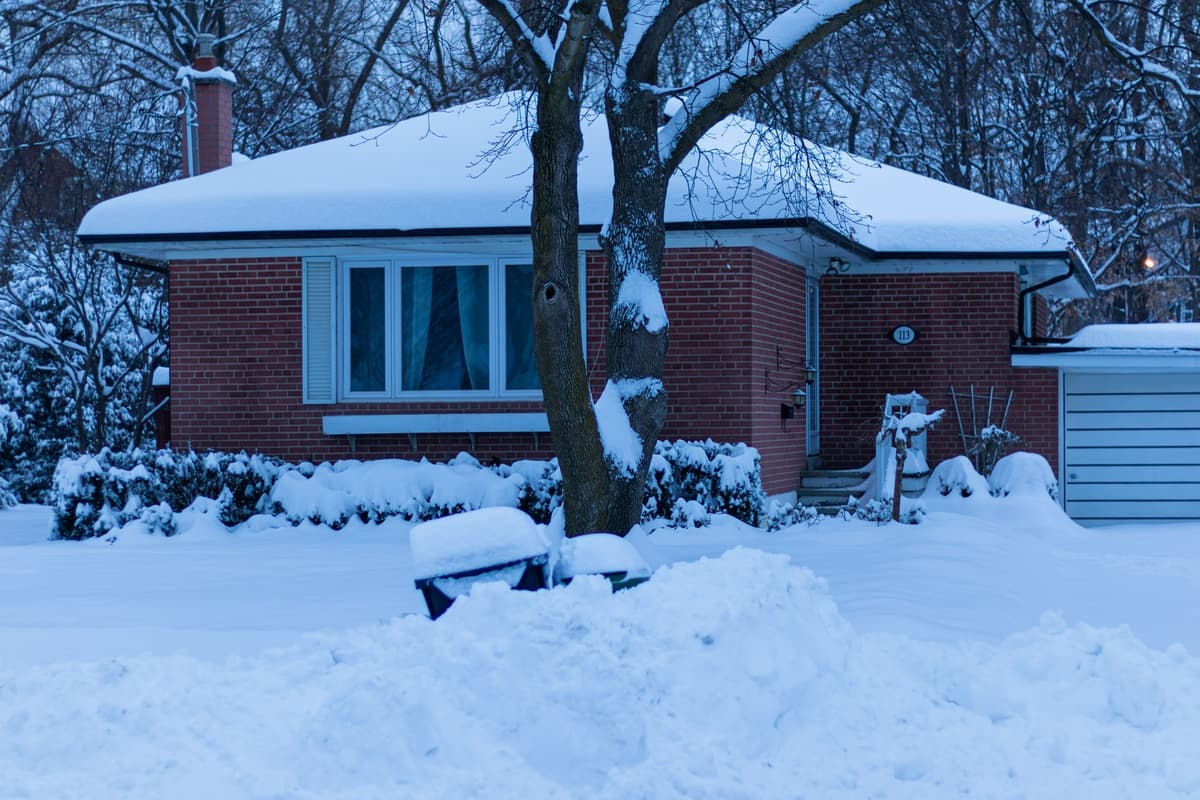
Snow is heavy, wet snow is much heavier, and a cover carrying it is being crushed and soaked at the same time. Clear it, do not test it.
By Scooter M. · Published · How we pick
How this page is funded: the buy buttons below are Amazon affiliate links. If you buy through one we earn a commission at no extra cost to you. It does not change what we recommend, and where the better answer is a retailer we earn nothing from, we say so. The full version.
A hot tub cover in a cold climate is doing two jobs at once: insulating against a much larger temperature difference, and carrying whatever falls on it. Both get harder as the cover ages, and they compound — a cover that has softened is a cover that sags, and a sagging cover collects a pool of meltwater in the middle.
What snow actually does
Weight is the obvious part, and wet snow is dramatically heavier than the fresh dry stuff. But the load is not the only problem. A hot tub is a heat source directly under the snow, so the underside melts while the top stays frozen. That meltwater sits on the vinyl, refreezes at the edges, and works into any crack in the skin.
The result is that a winter of unattended snow does more damage than the same snow on a shed roof would, and the damage is to the foam core rather than to anything visible. Which is why the advice is to clear it rather than to buy a cover rated to survive it.
Clearing it without wrecking it
- Use a broom or a foam snow rake, not a shovel. A shovel edge on vinyl is how you create the crack that lets water into the foam.
- Push, do not chip. Ice bonded to the vinyl should be left to release on its own rather than levered off with anything.
- Do not stand or lean on the cover. Covers are rated for a distributed load, not a point load, and a knee in the middle of a cold cover cracks the foam.
- Clear after each fall rather than letting layers accumulate and compact.
- Watch the middle. A dip that holds meltwater means the foam has already started to go.
Specifications that matter more in the cold
| Specification | Why it matters more in winter |
|---|---|
| Taper | Sheds meltwater and snow instead of holding it in the middle |
| Foam density | Resists deflection under load, and insulates a larger gradient |
| Vapor barrier | The single thing standing between meltwater and the foam |
| Skirt depth | Stops wind driving under the cover and stripping heat |
| Seal against the rim | The gradient is bigger, so any gap costs more |
| Working locks | Wind under a cover is what removes covers |
If you are ordering a replacement for a cold climate, those are the specifications to ask about, and they are more useful questions than headline thickness. Take the measurements from the cover size guide first.
The rest of the winter picture
A thermal blanket under the hard cover earns more in winter than at any other time, because the temperature difference driving evaporation is at its largest. Bubbles down, trimmed to the water line, and out before you get in — the full detail is on thermal blanket vs hard cover.
Keep the tub running rather than turning it off in a freeze. A heated, circulating tub is protecting its own plumbing; a tub switched off in cold weather with water still in it is a burst-pipe risk. If you are genuinely closing it down for the season, that is a full drain and a proper winterization, not simply switching off at the wall.
Chemistry does not stop in winter
A tub used less in winter still needs a sanitizer residual, and cold weather does nothing to remove the need. The CDC’s guidance on controlling Legionella in hot tubs is about maintaining disinfectant, and it applies in February as much as July.[source] Bromine is the more forgiving chemistry for a tub that gets checked less often, which is one more reason it suits seasonal use — see bromine vs chlorine.
Water chemistry targets do not change with the season either: pH 7.2 to 7.8 and the same sanitizer levels.[source]
Condition before winter, not after
The single most useful timing habit in a cold climate is conditioning the cover in autumn. Flexible vinyl handles freeze-thaw far better than vinyl that has spent a summer going chalky, and doing it before the first freeze rather than after the last one is what makes the difference. Products are on the cover care roundup.
What fixes it
The products for this job
Named because they do the specific job this page describes, not because they are the only options. Specifications are the manufacturer’s published figures.
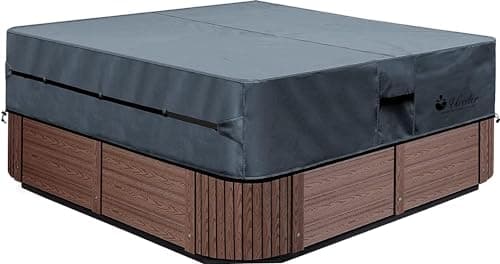
#1 · Best for extending a hard cover's life
Hot tub cover cap
Generic · scored 7.2/10
The cheapest thing on this page and, per dollar, the most effective.
Vinyl hard covers fail two ways: UV cracks the top skin, then water gets into the foam and the cover gets heavy. A cap addresses the first cause, which is what makes it cheap prevention against an expensive replacement.
It buys time; it does not reverse damage. A cover already saturated with water needs a new foam core or a new cover, and no cap will help.
What the maker states
- Type
- Slip-over cap for a hard cover
- Purpose
- Blocks UV and sheds standing water
- Fixing
- Elasticated skirt or straps
- Sizing
- By hard cover dimensions
How it scored
- Weather protection
- 8.0
- Heat retention
- 1.5
- Fit accuracy
- 7.0
- Durability
- 6.5
- Value
- 9.5
Skip this one if: you take the cover off daily. A cap that has to come off and go back on every evening will end up in the corner of the yard by March.
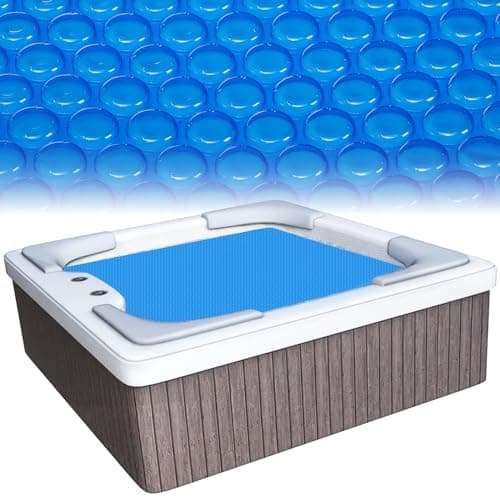
#2 · Best for cutting evaporation
Spa thermal blanket
Generic · scored 7.7/10
Bubbles down. It floats on the water under the hard cover and cuts evaporative loss.
Most of a hot tub's heat leaves as evaporation from the water surface, not through the cover. A floating blanket sits directly on the water and stops that, which is a different mechanism from the hard cover's insulation and is why the two work together rather than competing.
Trim it to the water line, not the tub rim, and pull it out before you get in. Left in place under a soak it wraps around people and jets.
What the maker states
- Type
- Floating bubble blanket
- Orientation
- Bubble side down, against the water
- Sizing
- Cut to fit the water surface
- Replaces
- Nothing. Used under the hard cover.
How it scored
- Heat retention
- 7.5
- Evaporation control
- 9.0
- Chemical saving
- 7.0
- Durability
- 6.0
- Value
- 9.0
Skip this one if: you think it replaces a hard cover. It does not: it has no structural strength and provides no safety barrier.
#3 · Best for actually replacing a dead cover
Custom-fit replacement cover (The Cover Guy)
The Cover Guy · scored 8.5/10
Genuinely not available on Amazon. If you need a real replacement, this is where you go.
This is the honest answer to the most expensive question in the category, and we earn nothing for giving it. Genuinely custom-fit replacement covers are made to order from your measurements, and general marketplaces do not sell them.
Before ordering, read the size guide and take every measurement twice, including the corner radius and the skirt depth. A custom cover made to a wrong number is not returnable in any useful sense.
What the maker states
- Type
- Custom-fit tapered foam cover
- Ordering
- By measured dimensions, radius and skirt
- Lead time
- Made to order
- Our commission
- None. We are not in their affiliate program.
How it scored
- Weather protection
- 9.0
- Heat retention
- 9.5
- Fit accuracy
- 9.5
- Durability
- 8.5
- Value
- 6.0
Skip this one if: your cover is one season old and only looks tired. Conditioning and a cap are far cheaper than a custom cover.
Questions people actually ask
Frequently asked questions
Can you leave snow on a hot tub cover?
No. The weight deflects the foam, and because the tub is a heat source underneath, the snow melts from below and the meltwater sits on the vinyl and refreezes at the edges. Clear it after each fall with a broom or a foam snow rake, never a shovel.
How much snow can a hot tub cover hold?
Covers are rated for a distributed load by their maker, and wet snow is dramatically heavier than dry snow, so the honest answer is that you should clear it rather than test it. Never stand or kneel on a cover: it is a point load, which is a different thing entirely.
Should you turn a hot tub off in winter?
Not while water is still in it. A heated, circulating tub protects its own plumbing, whereas one switched off in a freeze with water inside is a burst-pipe risk. Genuinely closing down for the season means a full drain and proper winterization, not switching off at the wall.
What is the best hot tub cover for a cold climate?
One with a good taper so it sheds meltwater, dense foam, an intact vapor barrier, a deep enough skirt to stop wind driving underneath, and working locks. Those specifications matter more than headline thickness, and they are the right questions to ask a maker.
Where the numbers come from
Sources
Read next
Related on Float & Filter
- Thermal blanket vs hard cover
A blanket earns most in the coldest months.
- The best cover conditioners and cleaners
Condition in autumn, before the first freeze.
- Replace or repair a waterlogged cover
Winter is when a marginal cover finally gives up.
- What hot tub maintenance actually costs
Cold weather is when the cover's condition shows up on the bill.
- Hot tub winter care
The operating side of the same season.
- Hot tub cover locks, clips and wind straps
Keeping the cover on the tub through a winter gale.