Guide
First Chemicals After a Refill
Alkalinity first. Not pH. Getting that one thing right is the difference between a fill that settles and a fill you fight for a fortnight.
By Scooter M. · Published · How we pick
How this page is funded: the buy buttons below are Amazon affiliate links. If you buy through one we earn a commission at no extra cost to you. It does not change what we recommend, and where the better answer is a retailer we earn nothing from, we say so. The full version.
The order is: total alkalinity, then pH, then calcium hardness if it needs it, then sanitizer, then shock. Several product labels will tell you to adjust pH before alkalinity. They are wrong for a reason worth understanding, and following them is why so many fresh fills refuse to settle.
Step 0: let it warm up, and test the raw water
Chemicals dissolve and react differently in cold water, and a reading taken at 60F will not match the same water at 100F. Let the tub reach temperature, then take a full test of the raw fill water before adding anything. That reading is the baseline everything else is relative to, and on well or softened supplies it is often surprising.
Step 1: total alkalinity, to 80-120 ppm
Alkalinity is the buffer that holds pH steady. Adjust pH while alkalinity is out of range and the pH drifts straight back, which is the loop most people spend their first fortnight in.
Add sodium bicarbonate at the label dose for your volume, jets running and cover off. Wait a full circulation cycle, then retest. Raise it in stages rather than in one dose, because bringing alkalinity back down takes acid, aeration and patience.
Step 2: pH, to 7.2-7.8
Now that the buffer is in place, the pH correction will hold. Most fill water sits high, so dry acid is usually the product. Add half the label dose, circulate a full cycle, retest, and repeat rather than dosing heavily once.[source]
If pH is low and alkalinity was low too, do not reach for a pH increaser: raising alkalinity in step 1 usually brings pH up with it. The detail is on pH and total alkalinity.
Step 3: calcium hardness, only if the test says so
Target roughly 150 to 250 ppm in an acrylic spa.[source] If your raw water is already in range, skip this entirely.
If it is low — common on softened supplies — raise it with calcium chloride to the bottom of the range, not the middle, because it will drift up on its own as you top up after evaporation. There is no calcium reducer, so an overshoot means a partial drain. The whole argument is on calcium hardness.
Step 4: establish the sanitizer
On bromine: add the sodium bromide bank first, then activate it with a dose of shock, then start the tablets in a floater. Skipping the bank is the classic first-fill mistake — tablets alone will not build a residual on fresh water, and you will spend a week wondering why the bromine reading stays at zero.
On chlorine: dose dichlor granules to the label for your volume, aiming for at least the 3 ppm free chlorine the CDC specifies for hot tubs.[source] No bank step is needed.
If you are undecided, decide before the fill rather than after — bromine vs chlorine covers it, and switching later means draining again.
Step 5: shock, then wait and test
Shock the fresh fill with the jets running and the cover off for the time the label states. On bromine this also activates the bank. Then retest before anyone gets in, and test rather than relying on a clock: the wait time on the label is a guide, the reading is the answer. Details on shocking a hot tub.
The whole sequence, at a glance
| Step | Target | Wait before the next step |
|---|---|---|
| 0. Warm up and test raw water | Baseline reading | Until at temperature |
| 1. Total alkalinity | 80 - 120 ppm | A full circulation cycle |
| 2. pH | 7.2 - 7.8 | A full circulation cycle |
| 3. Calcium hardness (if needed) | 150 - 250 ppm | A full circulation cycle |
| 4. Sanitizer (bank first on bromine) | Per the label and CDC guidance | A full circulation cycle |
| 5. Shock | Per the label | The label wait, then retest |
Things that go wrong on a fresh fill
- Dosing cold water. Readings will chase you for days.
- Skipping the bromide bank. No residual, no matter how many tablets go in.
- Adjusting pH before alkalinity. The correction unwinds within days.
- Adding several products at once. You cannot tell what did what, and some combinations cloud the water.
- Assuming fill water is neutral. It carries whatever your supply carries, which on a well can be a great deal.
- Not retesting the next day. Fresh fills move as they settle. Check again after 24 hours.
The first week
Test daily for the first few days rather than weekly. A new fill takes a little time to stabilize, and small corrections made early are much easier than large ones made after the first weekend of use. After that, drop back to the weekly rhythm on the maintenance schedule.
The goal throughout is a residual you can hold consistently, which is what the CDC’s hot tub guidance is built around.[source]
What fixes it
The products for this job
Named because they do the specific job this page describes, not because they are the only options. Specifications are the manufacturer’s published figures.
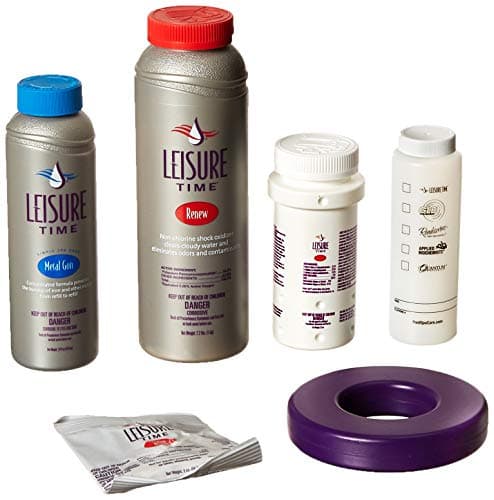
#1 · Best for a first bromine fill
Leisure Time Spa Bromine Start-Up Kit
Leisure Time · scored 8.5/10
The most complete first purchase for a bromine tub, and it includes the bromide bank.
The one genuine reason to buy a kit rather than parts is the bromide bank. A new bromine fill needs sodium bromide established before tablets will hold a residual, and that is exactly the step first-time owners skip when they buy a tub of tablets and nothing else.
Check the pack contents before you buy rather than assuming. Composition varies between retailers, and the difference between a kit with test strips and one without is the difference between using it on day one and placing a second order.
What the maker states
- Chemistry
- Bromine
- Typically includes
- Sodium bromide bank, tablets, shock, balancers
- Covers
- A first fill plus early top-ups, per the label
- Test strips included
- Varies by pack
How it scored
- Completeness
- 9.0
- Instructions
- 8.5
- Cost vs buying separately
- 6.5
- Beginner friendliness
- 9.5
- Availability
- 9.0
Skip this one if: you already own balancers. Kits price the convenience of getting everything at once, and buying the pieces separately is usually cheaper once the staples are on the shelf.
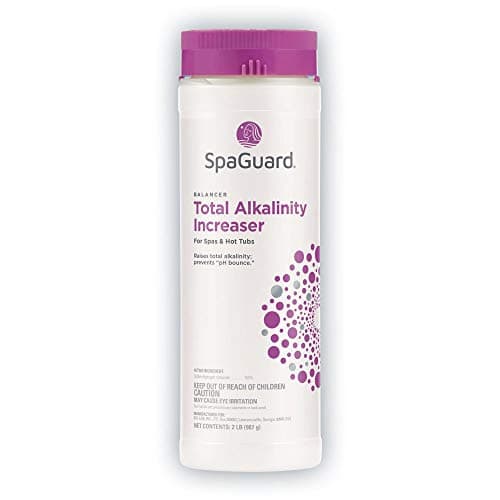
#2 · Best for stopping ph drifting
SpaGuard Total Alkalinity Increaser
SpaGuard · scored 8.9/10
The product most people should buy before they buy any pH adjuster at all.
Total alkalinity is the buffer that stops pH moving. If your pH will not stay put no matter how much acid or soda ash you add, the actual problem is almost always that TA is too low, and this is the fix.
Raise it in stages and retest between them. Bicarbonate is forgiving on the way up and unforgiving on the way down, because the only route back from over-corrected alkalinity is acid plus aeration plus patience.
What the maker states
- Chemistry
- Sodium bicarbonate
- Typical target
- 80-120 ppm total alkalinity
- Effect on pH
- Raises it slightly
- Dose
- By tub volume, per the label
How it scored
- Predictability
- 9.0
- Ease of dosing
- 8.5
- Container size fit
- 9.0
- Cost per month
- 9.0
- Availability
- 9.0
Skip this one if: your alkalinity is already in range. Overshooting TA locks pH high and is genuinely tedious to undo.
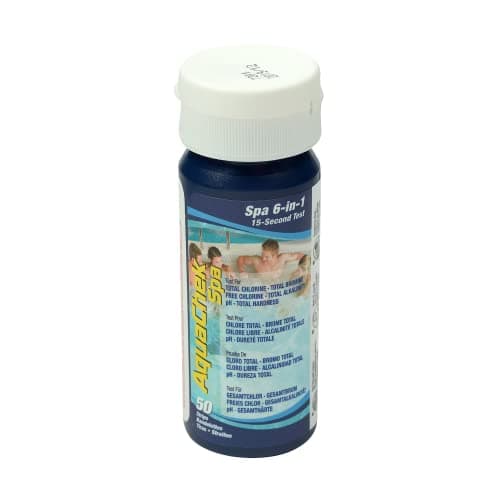
#3 · Best for the weekly check
AquaChek Spa 6-in-1 Test Strips
AquaChek · scored 8.4/10
Six readings in fifteen seconds. Not precise, but precise enough to catch drift early.
Strips get an unfair reputation because people compare them to a reagent kit and call them inaccurate. That is the wrong comparison. The right one is against not testing at all, which is what happens when the routine takes ten minutes. A strip you actually use weekly beats a reference kit in a cupboard.
Two habits make strips far more reliable: keep the container sealed and out of the humid room the tub is in, and read them in daylight rather than under a yellow bulb. Most strip complaints trace back to one of those two.
What the maker states
- Reads
- Hardness, total chlorine, free chlorine, bromine, pH, alkalinity
- Method
- Dip-and-read colorimetric strip
- Time
- Seconds, per the label
- Storage
- Sealed container, away from humidity
How it scored
- Accuracy
- 6.5
- Speed
- 10.0
- Parameters covered
- 9.0
- Cost per test
- 9.0
- Availability
- 9.5
Skip this one if: you need an exact free chlorine number to diagnose a problem. Strips read in color bands; a drop-based kit reads in numbers.
Questions people actually ask
Frequently asked questions
What chemicals do you add first after refilling a hot tub?
Total alkalinity, then pH, then calcium hardness if the test calls for it, then sanitizer, then shock. Alkalinity comes first because it buffers pH: correcting pH while alkalinity is out of range means the pH drifts straight back.
How long after filling a hot tub can you add chemicals?
Wait until the tub has reached temperature. Chemicals dissolve and react differently in cold water, and a reading taken at 60F will not match the same water at 100F.
Why is my bromine reading zero on a new fill?
Almost certainly because there is no bromide bank. Bromine tablets will not build a residual on fresh water until sodium bromide has been added and activated with a dose of shock. It is the classic first-fill mistake and a bromine start-up kit exists specifically to prevent it.
How long after refilling can you use a hot tub?
Once the water is at temperature, balanced, carrying a sanitizer residual, and the post-shock wait on the label has passed. Test rather than timing it: the label wait is a guide and the reading is the answer.
Should you test hot tub water daily after a refill?
For the first few days, yes. A new fill moves as it stabilizes, and small corrections made early are far easier than large ones after the first weekend of use. Then drop back to weekly.
Where the numbers come from
Sources
- CDC, Model Aquatic Health Code (2023, 4th edition) - the source for the pH 7.2-7.8 range and the hot-tub disinfectant levels quoted on this site
- CDC, Preventing Hot Tub Rash - the source for the 4-8 ppm bromine figure, the prevention steps, and the guidance on when to see a healthcare provider
- CDC, Controlling Legionella in Hot Tubs - the primary reference for the health and disinfection guidance quoted here
- PHTA, Find a Standard - the index confirming which ANSI standard actually covers water quality in public pools and hot tubs or spas
Read next
Related on Float & Filter
- Hot tub chemical dosage and levels chart
The quantities for each step above.
- Draining and refilling a hot tub
The job that comes immediately before this one.
- Hot tub pH and total alkalinity
Why alkalinity comes first, in more detail.
- The best hot tub chemical starter kits
The one purchase that includes the bromide bank.
- The best hot tub alkalinity increasers
What to have on the shelf before you refill, and how much it should cost.
- The best calcium hardness increasers
The number most owners skip on a softened-water fill.