Guide
Shocking a Hot Tub
Non-chlorine shock for the weekly organic load. Chlorine shock for an actual contamination event. Using the wrong one is why cloudy water stays cloudy.
By Scooter M. · Published · How we pick
How this page is funded: the buy buttons below are Amazon affiliate links. If you buy through one we earn a commission at no extra cost to you. It does not change what we recommend, and where the better answer is a retailer we earn nothing from, we say so. The full version.
There are two products called shock and they do different jobs. Non-chlorine shock (potassium monopersulfate, or MPS) oxidizes the organic load a soak leaves behind. Chlorine shock (usually dichlor at a raised dose) sanitizes. Reaching for the first when you need the second is one of the most common reasons a cloudy tub stays cloudy.
Which one, and when
| Situation | Use | Why |
|---|---|---|
| Weekly routine | Non-chlorine (MPS) | Burns off body oils, lotions and sweat |
| After a busy soak | Non-chlorine (MPS) | Handles the organic load those bathers left |
| Water smells of chlorine | Chlorine shock | That smell is combined chloramines; shocking breaks them down |
| Sanitizer reads zero | Chlorine shock | The water is unsanitized and MPS will not fix that |
| Contamination event | Chlorine shock, at the label rate | Only a sanitizer kills what needs killing |
| Bromine tub, weekly | Non-chlorine (MPS) | Also converts spent bromide back into active bromine |
| Water cloudy after shocking | Wait, and clean the filter | See cloudy water |
The chloramine test
A strong chlorine smell means too little effective chlorine, not too much. What you are smelling is combined chlorine — chloramines — which are the spent product of chlorine reacting with organics. A test strip that separates free from total chlorine will show it: if total reads well above free, that gap is your chloramine load.
The fix is to shock, which oxidizes the chloramines and lets free chlorine come back. Adding more dichlor without shocking simply produces more chloramines. This is the single most useful piece of chemistry on this page, and it is the same reason indoor pools smell the way they do.
Why bromine tubs get more out of it
On a bromine tub, MPS does two jobs at once. It oxidizes the organic load, and it converts spent bromide back into active bromine, which means a weekly shock partially recharges your sanitizer for free. This is a real advantage of bromine and it is why bromine owners can shock routinely without any chemistry penalty. The wider comparison is on bromine vs chlorine.
How to shock, step by step
- Test first. The reading decides which shock you need.
- Check pH is in the 7.2 to 7.8 range[source] before shocking. Shocking badly balanced water wastes product.
- Take the cover off. Shock needs to off-gas, and a closed cover traps what comes off against the vinyl.
- Turn the jets on so the dose circulates rather than sitting in one place.
- Measure the dose for your actual volume, from the product label.
- Add it across the water surface, not in one spot.
- Leave the jets running and the cover off for the time the label states.
- Retest before anyone gets in.
The cover-off step is not optional and it is the one people skip. Shock by-products off-gassing under a closed cover attack the underside of the vinyl, and a cover degrading from beneath is a genuinely expensive consequence of a five-minute shortcut.
How long to wait before getting in
Follow the label, and test rather than timing. Non-chlorine shock typically states a short wait, often around fifteen minutes. A chlorine shock takes longer, because you have to wait for free chlorine to come back down into the normal range rather than the elevated shock level. Testing is the only reliable answer here; the clock is a proxy.
How often
Weekly is the sensible default, plus after any heavy use. A tub used by four people on a Saturday has taken on far more organic load than one used by one person twice, and the shock schedule should follow the bather load rather than the calendar.
If you find yourself shocking constantly and the water still will not stay clear, the shock is not the problem. Either the filter is loaded and cannot remove what the shock has broken down, or the water has reached the end of its service life. Both are covered on how often to change hot tub water.
Safety
Never mix shock products, dry or in solution. Add shock to water, never water to shock. Store containers dry, closed and separated from other chemicals. And remember what shocking is ultimately in service of: maintaining an effective sanitizer residual, which is the core of the CDC’s guidance on controlling Legionella in hot tubs.[source]
What fixes it
The products for this job
Named because they do the specific job this page describes, not because they are the only options. Specifications are the manufacturer’s published figures.
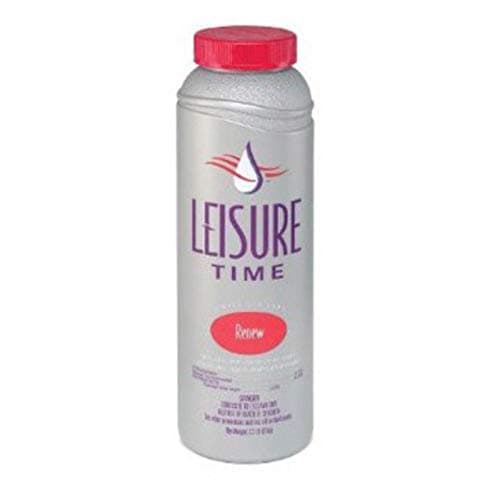
#1 · Best for the weekly oxidize
Leisure Time Renew Non-Chlorine Shock
Leisure Time · scored 8.6/10
The shock you can use and get back in the water quickly. Oxidizes; does not sanitize.
Non-chlorine shock does one job well: it oxidizes the organic load a soak leaves behind, which is what turns water dull and gives it that flat, used smell. On a bromine tub it does a second job for free, converting spent bromide back into active bromine.
Understand what it is not. MPS is an oxidizer, not a sanitizer. If the problem is biological rather than organic, this will not fix it and the tub will stay exactly as cloudy as it was.
What the maker states
- Chemistry
- Potassium monopersulfate (MPS)
- Job
- Oxidizes body oils, lotions and sweat
- Reactivates bromine
- Yes, on a bromine tub
- Wait before soaking
- Per the label, typically about 15 minutes
How it scored
- Oxidizing power
- 8.0
- Ease of dosing
- 9.5
- Odor and skin feel
- 9.0
- Cost per month
- 8.0
- Availability
- 9.0
Skip this one if: you are dealing with an actual contamination event. MPS burns off organics, it does not kill what a chlorine shock kills, and reaching for it instead is a common reason a cloudy tub stays cloudy.
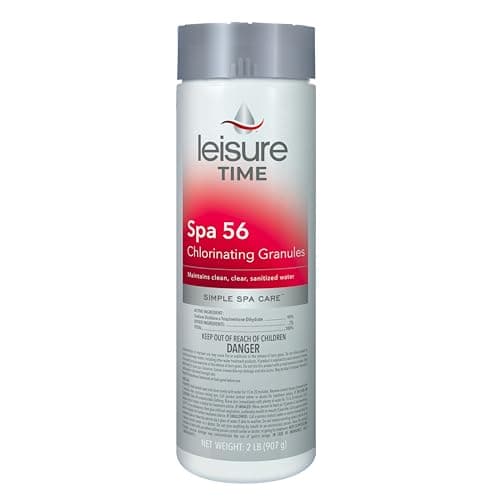
#2 · Best for chlorine users and fast recovery
Leisure Time Spa 56 Chlorinating Granules
Leisure Time · scored 8.1/10
Dichlor granules: dissolve fast, act fast, gone fast. The right tool after a heavy soak.
Dichlor is the granular chlorine hot tubs are dosed with, because it dissolves at spa temperature without pre-mixing and it is close enough to pH-neutral not to wreck your balance every time you add it. After a soak with four people in the tub, a measured dose of dichlor is the fastest way to get free chlorine back where the CDC says it should be.
The catch is cyanuric acid. Dichlor is stabilized, so every dose adds CYA that never leaves except by draining. Across a full water cycle that CYA accumulates and progressively blunts your chlorine, which is one of the real arguments for changing the water on schedule rather than topping up forever.
What the maker states
- Chemistry
- Sodium dichlor granules
- Dissolving
- Fast, no pre-mixing required per the label
- Target residual
- CDC gives at least 3 ppm free chlorine in hot tubs
- Adds cyanuric acid
- Yes, dichlor is stabilized
How it scored
- Stability at 104F
- 6.0
- Ease of dosing
- 8.5
- Odor and skin feel
- 8.0
- Cost per month
- 8.5
- Availability
- 9.5
Skip this one if: you only use the tub every couple of weeks. Dichlor burns off quickly at spa temperature, so an unattended chlorine tub goes unsanitized far sooner than a bromine one.
Questions people actually ask
Frequently asked questions
What is the difference between chlorine shock and non-chlorine shock?
Non-chlorine shock is potassium monopersulfate, an oxidizer. It burns off body oils and organic residue but does not sanitize. Chlorine shock is chlorine at a raised dose, which both oxidizes and sanitizes. Use MPS weekly and chlorine shock when the water is actually unsanitized.
Why does my hot tub smell of chlorine?
That smell is combined chlorine, or chloramines, which are the spent product of chlorine reacting with organics. It means too little effective chlorine, not too much. Shock the water to break the chloramines down and free chlorine will come back.
How long after shocking a hot tub can you use it?
Follow the specific product label and test rather than relying on a clock. Non-chlorine shock typically states a short wait of around fifteen minutes. After a chlorine shock you need free chlorine to fall back into the normal range before anyone gets in.
Should you leave the cover off after shocking?
Yes, for the time the label states, with the jets running. Shock by-products need to off-gas, and trapping them under a closed cover attacks the underside of the vinyl. A cover degrading from beneath is an expensive result of a five-minute shortcut.
How often should you shock a hot tub?
Weekly as a default, plus after any heavy use. The schedule should follow bather load rather than the calendar: four people on a Saturday leave far more organic load than one person twice in the week.
Where the numbers come from
Sources
- CDC, Model Aquatic Health Code (2023, 4th edition) - the source for the pH 7.2-7.8 range and the hot-tub disinfectant levels quoted on this site
- CDC, Controlling Legionella in Hot Tubs - the primary reference for the health and disinfection guidance quoted here
- PHTA, Find a Standard - the index confirming which ANSI standard actually covers water quality in public pools and hot tubs or spas
Read next
Related on Float & Filter
- Bromine vs chlorine for a hot tub
Why a bromine tub gets a second benefit from every shock.
- Why your hot tub water is cloudy
Including the branch for water that went cloudy right after shocking.
- The best hot tub test strips and test kits
Reading free against total chlorine is what tells you to shock.
- The hot tub maintenance schedule
Where the weekly shock sits in the routine.
- Best hot tub chemicals for sensitive skin
Chloramines are what people mistake for too much chlorine.
- Hot tub chlorine and bromine levels
Reading free against total is what tells you to shock.
- Hot tub chlorine tablets vs granules
Which form of chlorine to keep on the shelf.
- The best pH and alkalinity decreasers
Balance before you oxidize, and never dose acid in the same pass.