Comparison
Salt Water vs Mineral vs Traditional Sanitizing
A salt system is a chlorine generator, and a mineral cartridge is a sanitizer reducer. Neither is a way to run a hot tub without chemistry.
By Scooter M. · Published · How we pick
How this page is funded: the buy buttons below are Amazon affiliate links. If you buy through one we earn a commission at no extra cost to you. It does not change what we recommend, and where the better answer is a retailer we earn nothing from, we say so. The full version.
The verdict, up front. A salt water hot tub is a chlorine hot tub that makes its own chlorine. A mineral system is a traditional hot tub that needs less sanitizer, not none. Neither eliminates chemistry, neither eliminates testing, and if you were sold either as a way to stop thinking about the water, you were sold something that does not exist.
That is not an argument against them. Both change the day-to-day experience in real ways. It is an argument against the way they are usually described.
What each one actually is
| System | What it really does | Still need to | Upfront |
|---|---|---|---|
| Salt water | Electrolyzes dissolved salt into chlorine, continuously | Test, balance, shock, and replace the cell eventually | High |
| Mineral cartridge | Releases silver or copper ions that inhibit growth | Run a reduced sanitizer level and shock normally | Low to moderate |
| Traditional tablets | Dissolves bromine or chlorine directly into the water | Test, balance, shock, refill the dispenser | Lowest |
| Ozone or UV | Oxidizes as water passes the device, in the pipework only | Maintain a full sanitizer residual regardless | Moderate |
Salt water: a chlorine tub with a different delivery mechanism
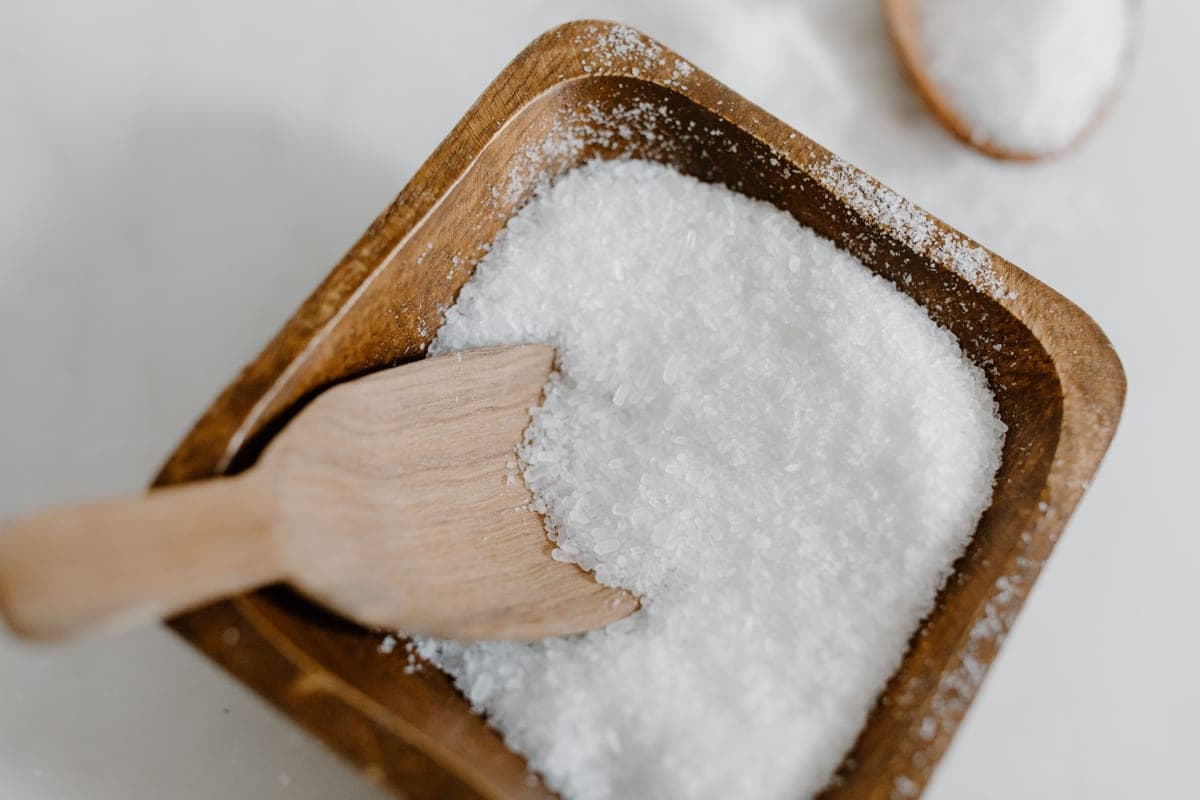
The salt cell splits sodium chloride and produces chlorine in the water. That is the entire mechanism. The chlorine it makes is the same chlorine as the chlorine in a bucket, subject to the same CDC target of at least 3 ppm in a hot tub[source] and the same pH range of 7.2 to 7.8.
What genuinely changes is the feel of the water, which most people describe as softer, and the fact that you are not handling granules or tablets. What does not change is testing, balancing or shocking. What gets added is a cell that has a service life and a replacement cost, and a salt level that itself needs monitoring.
One thing worth knowing before committing: salt water is corrosive to some metals and some tub components, and not every spa is designed for it. Check the manufacturer’s guidance for your specific tub before adding salt to it. This is a case where doing it anyway can cost you a heater.
Mineral systems: real, and smaller than advertised
Silver and copper ions inhibit bacterial growth, which is a genuine effect with a long history. What they do not do is oxidize the organic load a soak leaves behind, and they do not act fast enough to handle a contamination event. That is why every mineral system on the market is sold to be used alongside a sanitizer at a reduced level, not instead of one.
Used as intended, the payoff is real: less sanitizer, less smell, and a gentler feel. Used as advertised by the more enthusiastic sellers — as a way to run a tub with no chlorine or bromine at all — the result is a tub with no residual, which is precisely the condition the CDC’s Legionella guidance exists to prevent.[source]
Ozone and UV: they work where the water is, not where you are
Both oxidize or inactivate contaminants as water passes through the device. Both work. Neither leaves anything behind in the tub, which means neither provides a residual, which means neither protects the water you are actually sitting in between circulation cycles. They reduce sanitizer demand; they do not replace sanitizer.
If your tub came with an ozonator, that is a bonus rather than a strategy. Keep testing, keep a residual, and treat the ozone as something that makes your sanitizer go further.
Choose salt if...
- Your tub is rated for it by the manufacturer.
- You dislike handling granules and tablets.
- The water feel matters to you enough to pay for it.
- You are comfortable replacing a cell periodically.
Choose a mineral system if...
- You want to run less sanitizer without running none.
- Someone in the household reacts to higher sanitizer levels.
- You will still test weekly, because you still have to.
Stay traditional if...
- You want the lowest total cost of ownership.
- You want the fewest components that can fail.
- You would rather spend two minutes a week than a few hundred dollars up front.
Whichever route you take, the numbers you are aiming for do not change, and they are on the dosage and levels chart. If you have not settled the more basic question yet, the bromine vs chlorine comparison is the one that changes your weekly routine most.
What fixes it
The products for this job
Named because they do the specific job this page describes, not because they are the only options. Specifications are the manufacturer’s published figures.
#1 · Best for lowest weekly effort
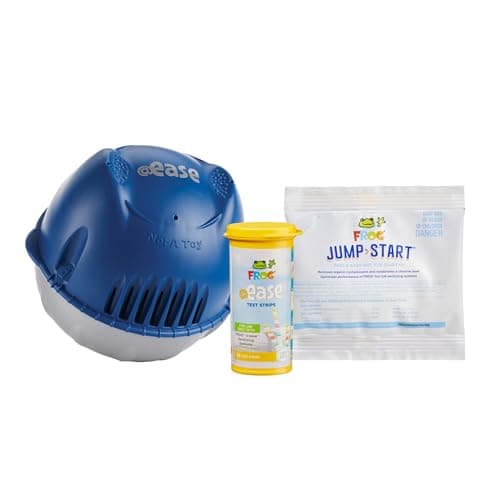
FROG @ease Floating Sanitizing System
King Technology · scored 8.3/10
Buys a genuinely hands-off month, at the cost of proprietary refills.
This is the option for people who want the tub to be a tub rather than a chemistry project. A mineral cartridge sits alongside a self-regulating chlorine cartridge, and the maker states the pair holds sanitizer for weeks rather than days. The weekly job shrinks to testing and the occasional shock.
The honest counterweight is cost and lock-in. Refill cartridges are proprietary and priced accordingly, so across a year this is meaningfully more expensive than tablets. If your objection to hot tub care is the time, that trade is worth making. If your objection is the money, it is not.
What the maker states
- Chemistry
- SmartChlor chlorine plus a mineral cartridge
- Cartridge life
- Maker states up to 3-4 weeks per SmartChlor cartridge
- Delivery
- Floating holder, no feeder required
- Refills
- Proprietary
How it scored
- Stability at 104F
- 8.0
- Ease of dosing
- 9.8
- Odor and skin feel
- 9.0
- Cost per month
- 5.5
- Availability
- 8.5
Skip this one if: you resent proprietary cartridges. The holder only accepts the maker's own refills, so you are committed to one supply chain for as long as you run it.
#2 · Best for set-and-forget sanitizing
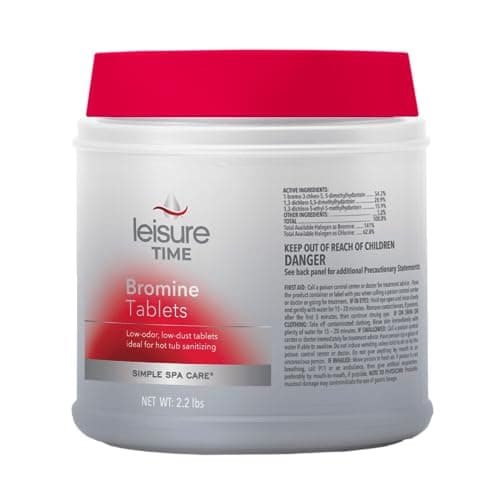
Leisure Time Brominating Tablets
Leisure Time · scored 8.7/10
The default sanitizer for most tubs, and the one that survives 104F best.
Bromine is the chemistry most hot tubs are set up around, and the reason is thermal: bromine keeps working at spa temperatures where chlorine burns off fast. In a floating dispenser the tablets dissolve slowly and hold a residual for days rather than hours, so a tub used twice a week does not need daily attention.
Two things to know before you buy. Bromine tablets alone will not sanitize a brand-new fill, because you need a bromide bank established first, which is what a sodium bromide starter or a bromine startup kit is for. And bromine is not destroyed by shocking: a non-chlorine shock reactivates spent bromide back into free bromine, which is why bromine owners can shock weekly without a chemistry penalty.
What the maker states
- Chemistry
- 1-inch bromine tablets (BCDMH)
- Delivery
- Floating dispenser or in-line feeder
- Target residual
- 3-8 ppm bromine, per the label
- Needs a bromide bank
- Yes, on a fresh fill
How it scored
- Stability at 104F
- 9.5
- Ease of dosing
- 9.0
- Odor and skin feel
- 7.0
- Cost per month
- 7.5
- Availability
- 9.5
Skip this one if: you want the sanitizer gone within an hour of getting out, or bromine bothers your skin. Bromine holds a residual for days, which is the point, but it also means you cannot flip to a fresh-feeling tub on demand the way a dichlor user can.
Questions people actually ask
Frequently asked questions
Is a salt water hot tub chlorine free?
No. A salt system generates chlorine from dissolved salt, so the water contains chlorine at the same target level as any chlorine tub. What changes is that you are not adding it by hand.
Can you run a hot tub with just minerals?
No. Mineral cartridges inhibit growth but do not oxidize the organic load and do not act fast enough for a contamination event. Every mineral system is designed to run alongside a sanitizer at a reduced level, not to replace one.
Does an ozonator mean I do not need chemicals?
No. Ozone works on water passing through the device and leaves no residual in the tub, so it reduces sanitizer demand without replacing sanitizer. Treat it as something that makes your chemicals go further.
Is salt bad for a hot tub?
It can be. Salt is corrosive to some metals and components, and not every spa is rated for a salt system. Check the manufacturer's guidance for your specific tub before adding salt, because getting it wrong can cost you a heater.
Where the numbers come from
Sources
- CDC, Model Aquatic Health Code (2023, 4th edition) - the source for the pH 7.2-7.8 range and the hot-tub disinfectant levels quoted on this site
- CDC, Controlling Legionella in Hot Tubs - the primary reference for the health and disinfection guidance quoted here
- PHTA, Find a Standard - the index confirming which ANSI standard actually covers water quality in public pools and hot tubs or spas
Read next
Related on Float & Filter
- Bromine vs chlorine for a hot tub
The more consequential decision, and the one to make first.
- What hot tub chemicals do you actually need?
The list that applies whichever system you run.
- Shocking a hot tub
The step no alternative system removes.
- What hot tub maintenance actually costs
Where the upfront cost of a salt cell shows up over a few years.
- Hot tub ozonators
The supplemental system most tubs already have fitted.
- The best hot tub mineral sanitizers
The cartridges and sticks themselves, compared.
- Hot tub salt water systems
The units themselves, compared, once you have decided on salt.