Diagnostic guide
Why Your Hot Tub Foams
Foam is surfactants in the water. Defoamer collapses it in seconds and removes none of them, which is why it comes back.
By Scooter M. · Published · How we pick
How this page is funded: the buy buttons below are Amazon affiliate links. If you buy through one we earn a commission at no extra cost to you. It does not change what we recommend, and where the better answer is a retailer we earn nothing from, we say so. The full version.
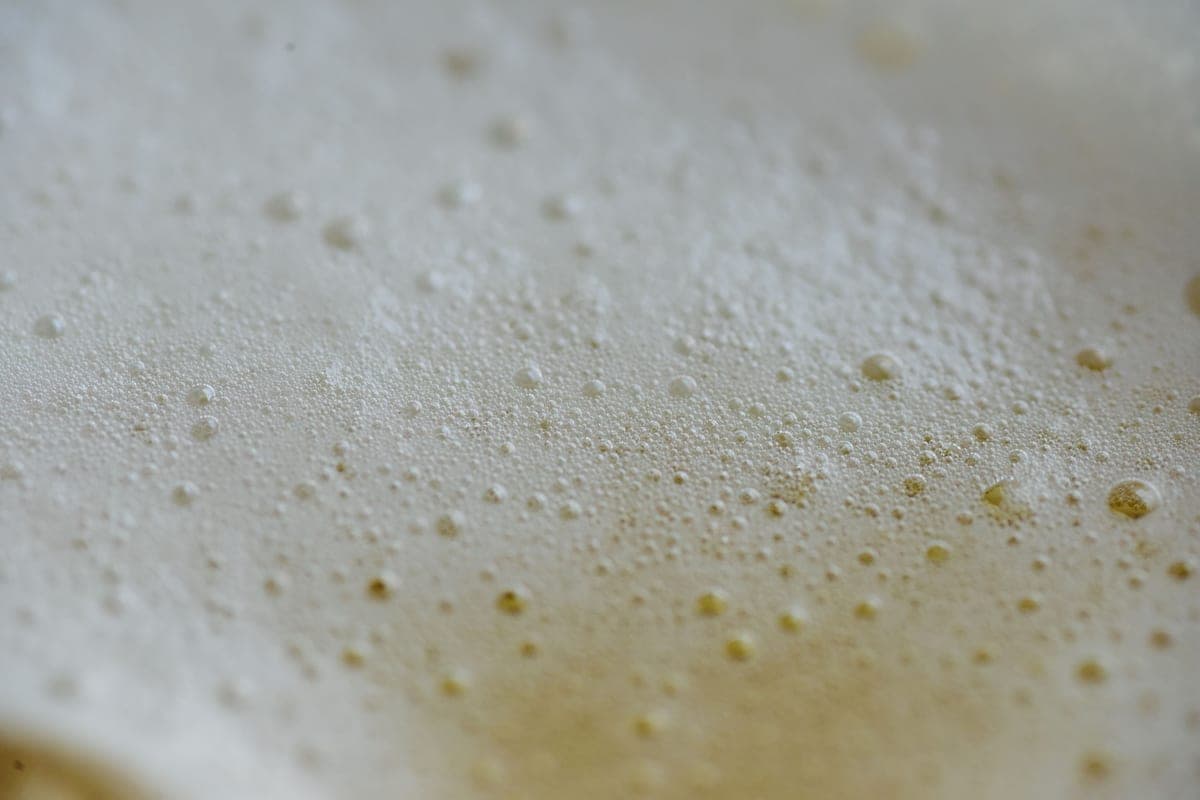
Foam means surfactants: soap, detergent, lotions, body oils, or cleaner left in a filter cartridge. Agitated water plus surfactants makes bubbles that persist instead of popping. Defoamer collapses those bubbles in seconds and removes none of the surfactants, which is exactly why the foam returns.
Which of these is you?
- It started right after I cleaned or refitted the filter
- It foamed after I shocked it
- It foams after people use it
- It foams constantly, whatever I do
Foam right after a filter clean
Why this happens. Cartridge cleaner left in the pleats goes straight into the water when the filter is refitted. Cleaners are surfactants by design, so this is a textbook cause and a very common one.
How to confirm it. Timing. If the foam appeared within a day of refitting a soaked cartridge and there was no other change, this is it.
The fix. Pull the cartridge and rinse it far more thoroughly than you did — until the run-off is completely clear, then another minute. A few drops of defoamer will clear the existing foam while the rinsed cartridge deals with the cause. Next time, treat the rinse as the important half of the job; the routine is on how to clean a hot tub filter.
Foam after shocking
Why this happens. Shock breaks organic material into smaller fragments, and some of those fragments are surface-active. A tub carrying a heavy organic load will often foam briefly after a shock because the shock is exposing what was already there.
How to confirm it. It appears within hours of the shock and subsides over a day or so with the jets running.
The fix. Wait it out with the pump running and the cover off for the label time. Do not shock again on top of it. If it persists past a day, the organic load is heavy enough that the water is probably due a change rather than another treatment.
Foam after people use it
Why this happens. The surfactants arrived with the bathers. Body lotion, deodorant, hair product, sunscreen, and above all detergent residue in swimwear, which is the biggest single contributor and the one nobody suspects. A machine-washed swimsuit carries surfactant into the water every time it is worn.
How to confirm it. It correlates with use, and it is worse after a busy soak than a solo one.
The fix, in order. Shock to oxidize the load. Dose an enzyme weekly so the organics get digested continuously rather than accumulating between shocks. Then change the two habits that cause it: a quick shower before getting in, and rinsing swimwear in plain water rather than washing it in detergent.
Constant foam, whatever you do
Why this happens. Accumulated surfactants that no product removes. Every lotion, every wash of swimwear and every dose of defoamer has added to the water, and none of it leaves except by draining. This is what water at the end of its life looks like.
How to confirm it. You are dosing defoamer weekly, the chemistry tests fine, the filter is clean, and the foam returns within days regardless.
The fix. Drain and refill, with a plumbing purge first. Nothing you add to this water will fix it, and continuing to treat it is spending money to postpone an afternoon’s work. The procedure is on draining and refilling a hot tub, and how often to change hot tub water explains why the interval exists.
Where soft water fits in
Water with very low calcium hardness foams more readily than water with calcium in it. If your fill water is softened and you are getting foam that seems disproportionate to the bather load, check hardness against the 150 to 250 ppm range for an acrylic spa[source] before assuming the cause is surfactants. The detail is on calcium hardness.
The defoamer question, answered honestly
Own a bottle. Use it when guests are arriving in ten minutes. That is a legitimate use and there is nothing wrong with it.
What it is not is a treatment. Every dose adds silicone that eventually loads the cartridge, and none of it removes a single surfactant. If you are reaching for it weekly, that frequency is the diagnosis: either the habits need changing or the water does.
Preventing it
- Shower before getting in, briefly. It removes most of the load at source.
- Rinse swimwear in plain water; never wash it in detergent.
- Rinse cartridges until the run-off is completely clear after any soak.
- Dose an enzyme weekly.
- Shock after heavy use rather than on a fixed day.
- Change the water on schedule.
None of that is exotic, and together it means most tubs simply do not foam. Where it fits in the week is on the maintenance schedule. And as always, the underlying requirement is holding a sanitizer residual, per the CDC’s hot tub guidance.[source]
What fixes it
The products for this job
Named because they do the specific job this page describes, not because they are the only options. Specifications are the manufacturer’s published figures.
#1 · Best for treating the cause of foam and scum
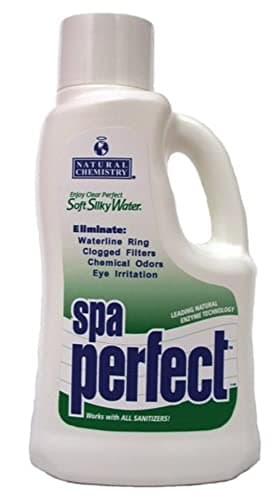
Natural Chemistry Spa Perfect
Natural Chemistry · scored 7.6/10
Enzymes eat the oils that make foam and scum lines. Slower than defoamer, and actually a fix.
Foam, scum lines and that dull film on the waterline are all the same problem: organic load the sanitizer has not oxidized. Enzymes work continuously on that load, which is why a tub dosed weekly develops far less of a scum line.
The trade-off is patience and running cost. This is a weekly maintenance product, so budget for it as a monthly cost rather than a one-off purchase.
What the maker states
- Type
- Enzyme concentrate
- Targets
- Body oils, lotions, organic residue
- Dosing
- Weekly, per the label
- Compatible with
- Chlorine and bromine, per the maker
How it scored
- Immediate effect
- 3.0
- Duration
- 8.5
- Treats the cause
- 8.5
- Value
- 7.0
- Availability
- 8.5
Skip this one if: you want an instant result. Enzymes work across days, not seconds, and they will not clear a foaming tub before guests arrive.
#2 · Best for killing foam right now
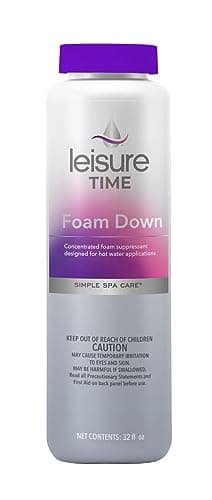
Leisure Time Foam Down
Leisure Time · scored 6.9/10
Works in seconds and treats nothing. Useful, and widely misused as a solution.
There is a legitimate use for defoamer: guests are arriving in ten minutes and the tub looks like a bubble bath. It handles that perfectly, and there is no shame in owning a bottle for exactly that.
What it does not do is remove the surfactants causing the foam. Those are still in the water, and every dose of defoamer adds silicone that eventually loads your filter. If you are reaching for it weekly, the tub is telling you it wants fresh water.
What the maker states
- Type
- Silicone-based defoamer
- Action
- Collapses surface foam on contact
- Treats the cause
- No
- Dose
- Drops, per the label
How it scored
- Immediate effect
- 9.5
- Duration
- 4.0
- Treats the cause
- 1.5
- Value
- 8.5
- Availability
- 9.0
Skip this one if: the foam comes back within a day. Recurring foam is a water-age or surfactant problem, and defoamer is a way to postpone dealing with it.
#3 · Best for the weekly oxidize
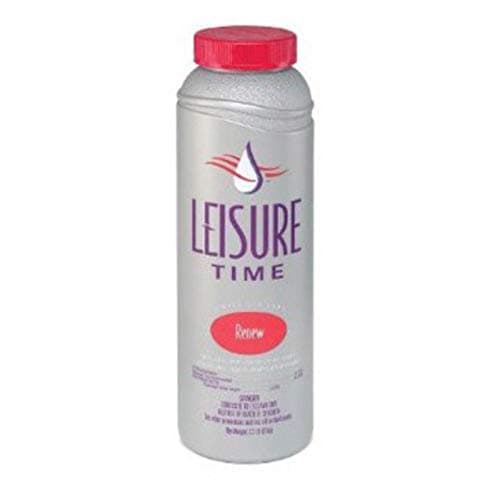
Leisure Time Renew Non-Chlorine Shock
Leisure Time · scored 8.6/10
The shock you can use and get back in the water quickly. Oxidizes; does not sanitize.
Non-chlorine shock does one job well: it oxidizes the organic load a soak leaves behind, which is what turns water dull and gives it that flat, used smell. On a bromine tub it does a second job for free, converting spent bromide back into active bromine.
Understand what it is not. MPS is an oxidizer, not a sanitizer. If the problem is biological rather than organic, this will not fix it and the tub will stay exactly as cloudy as it was.
What the maker states
- Chemistry
- Potassium monopersulfate (MPS)
- Job
- Oxidizes body oils, lotions and sweat
- Reactivates bromine
- Yes, on a bromine tub
- Wait before soaking
- Per the label, typically about 15 minutes
How it scored
- Oxidizing power
- 8.0
- Ease of dosing
- 9.5
- Odor and skin feel
- 9.0
- Cost per month
- 8.0
- Availability
- 9.0
Skip this one if: you are dealing with an actual contamination event. MPS burns off organics, it does not kill what a chlorine shock kills, and reaching for it instead is a common reason a cloudy tub stays cloudy.
Questions people actually ask
Frequently asked questions
Why does my hot tub foam after shocking?
Shock breaks organic material into smaller fragments and some of those are surface-active, so a tub carrying a heavy organic load foams briefly afterwards. Leave the jets running with the cover off and it should subside within a day. If it does not, the water is due a change.
How do I get rid of hot tub foam permanently?
Remove the surfactants rather than collapsing the bubbles. Shock to oxidize the load, dose an enzyme weekly, shower before getting in, rinse swimwear in plain water instead of washing it, and change the water on schedule. Defoamer treats the appearance only.
Does hot tub defoamer actually work?
It collapses existing foam within seconds, which is genuinely useful when guests are arriving. It removes no surfactants at all, so the foam returns, and every dose adds silicone that eventually loads the filter cartridge.
Can a dirty filter cause hot tub foam?
A dirty filter contributes by leaving organics in the water, but the more common filter-related cause is the opposite: cleaner left in the pleats after a soak. Cartridge cleaners are surfactants, so an under-rinsed filter puts foam straight into the water.
Does swimwear cause hot tub foam?
Yes, and it is the biggest single contributor people do not suspect. Detergent residue in a machine-washed swimsuit goes into the water every time it is worn. Rinse swimwear in plain water instead.
Where the numbers come from
Sources
- CDC, Controlling Legionella in Hot Tubs - the primary reference for the health and disinfection guidance quoted here
- CDC, Model Aquatic Health Code (2023, 4th edition) - the source for the pH 7.2-7.8 range and the hot-tub disinfectant levels quoted on this site
- PHTA, Find a Standard - the index confirming which ANSI standard actually covers water quality in public pools and hot tubs or spas
Read next
Related on Float & Filter
- How often to change hot tub water
Persistent foam usually means the water is finished.
- How to clean a hot tub filter
Including the rinse that stops a clean causing foam.
- The best hot tub clarifiers and defoamers
Which product treats the cause and which buys you an evening.
- Hot tub calcium hardness
Very soft water foams more readily than water with calcium in it.
- The hot tub scum line
The same organic load, parked at the waterline.
- Hot tub enzymes vs chlorine
The product that treats the cause of both.
- The best hot tub scum absorbers
Removing some of the surfactant load, though not the dissolved solids behind it.