Diagnostic guide
Hot Tub Algae
Algae in a 100F sanitized tub is not a plant problem, it is evidence the sanitizer stopped. Fix that and the algae has nowhere to live.
By Scooter M. · Published · How we pick
How this page is funded: the buy buttons below are Amazon affiliate links. If you buy through one we earn a commission at no extra cost to you. It does not change what we recommend, and where the better answer is a retailer we earn nothing from, we say so. The full version.
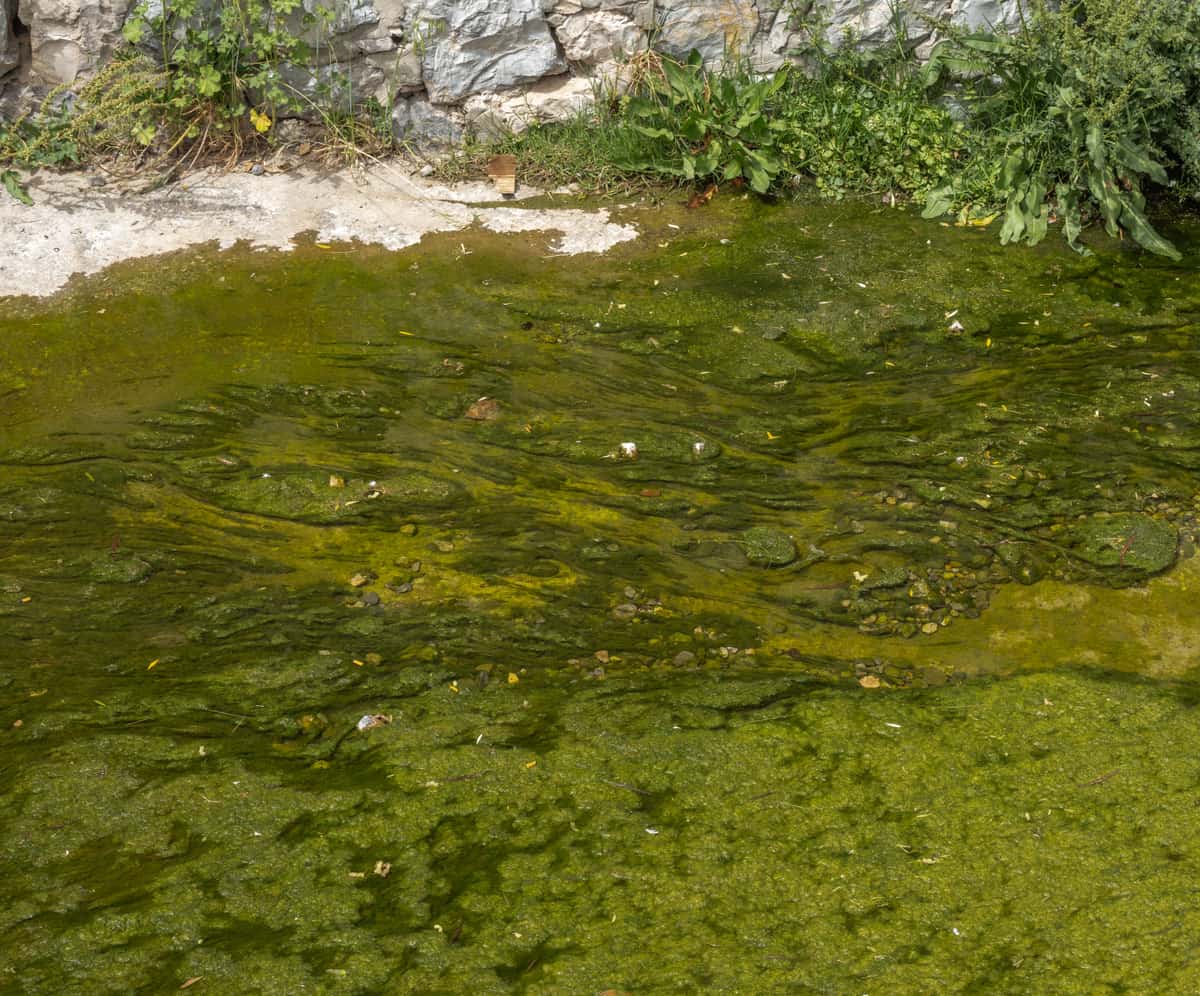
Algae should not be able to grow in a hot tub. The water is hot, it is usually covered and dark, and it carries a sanitizer residual. If algae is growing, at least one of those three has failed, and the useful question is which.
That is why algaecide is the wrong first purchase. It attacks the organism while leaving the condition that let it establish, so you end up buying it repeatedly. Fix the sanitizer and the algae has nowhere to live.
Which of these is you?
- Green water or green film on the surfaces
- Yellow or mustard deposits in shaded corners
- Dark spots in grout lines and around fittings
Green water or green film
Why this happens. Sanitizer has been at or near zero for a while. The usual sequence is a tub left unused, a floater that ran empty, or a cover left off in sunlight, which strips sanitizer particularly fast on a chlorine tub.
How to confirm it. Test. A sanitizer reading well below the CDC’s stated level for hot tubs[source] confirms it immediately, and is the diagnosis rather than a detail.
The fix, in order. Do not get in. Correct pH into 7.2 to 7.8 first, because chlorine loses effectiveness as pH climbs. Then shock with a chlorine shock at the label rate for your volume. Run the jets, cover off. Brush the shell and the waterline. Then clean or replace the filter, because everything you just killed went into it. Retest, and hold the residual for at least 24 hours before considering it resolved.
If the water is properly green rather than tinged, drain it. It is cheaper in chemicals and far quicker than shocking a fill this far gone, and it lets you purge the plumbing while you are at it.
Yellow or mustard deposits
Why this happens. This variety tolerates low sanitizer levels better than the green kind and prefers shaded, low-flow areas. It brushes away easily and comes straight back, which is its distinguishing behavior.
How to confirm it. It sits in corners and behind fittings rather than coloring the water, and it returns within a day or two of being brushed off.
The fix, in order. Shock, brush every surface including the low-flow corners, and pay particular attention to circulation: increase filtration time so those areas actually get flow. Clean the filter thoroughly afterwards, and check that nothing you brushed loose has settled somewhere it can re-establish.
Dark spots in grout and around fittings
Why this happens. Dark spotting rooted into grout or seals is stubborn because it is embedded rather than sitting on the surface, and it usually indicates a tub that has been under-sanitized for a long time rather than briefly.
How to confirm it. It does not brush off. That is the test.
The fix. Drain and treat the surfaces directly while the tub is empty, then refill and hold a sanitizer residual consistently. Trying to treat embedded growth through the water is a long, expensive way of not fixing it.
Why not algaecide?
Two reasons. It treats the organism rather than the condition, so you will be buying it again. And many pool algaecides are quaternary ammonium formulations that foam readily in an agitated hot tub, which replaces one visible problem with another. Neither of those makes it useless in a pool; both make it a poor first purchase for a spa.
The product that fixes hot tub algae is sanitizer, correctly dosed and consistently maintained. That is a boring answer and it is the right one.
The real lesson: how did the sanitizer get to zero?
This is the part worth acting on, because algae is a symptom of a lapse rather than a random event. The usual causes:
- The tub was left unattended. Bromine forgives this far better than chlorine — see bromine vs chlorine.
- The floater ran empty. Check it when you test, not when you notice.
- The cover was left off. Sunlight strips chlorine quickly.
- Cyanuric acid has accumulated from repeated dichlor dosing and is blunting the chlorine you are adding.
- Biofilm is consuming it. If the residual keeps vanishing with no explanation, read hot tub biofilm.
Whichever it was, the preventive is the same: test weekly, and hold the residual the CDC’s hot tub guidance is built around.[source] Fifteen seconds a week prevents the whole of this page.
Is a hot tub with algae safe to use?
Visible algae means the sanitizer has been absent long enough for something to grow, and other things grow in the same conditions. Do not use the tub until you can hold a residual again, and where health is concerned read the CDC’s own guidance rather than a summary of it. If anyone who used the tub becomes unwell, that is a question for a doctor.
What fixes it
The products for this job
Named because they do the specific job this page describes, not because they are the only options. Specifications are the manufacturer’s published figures.
#1 · Best for chlorine users and fast recovery
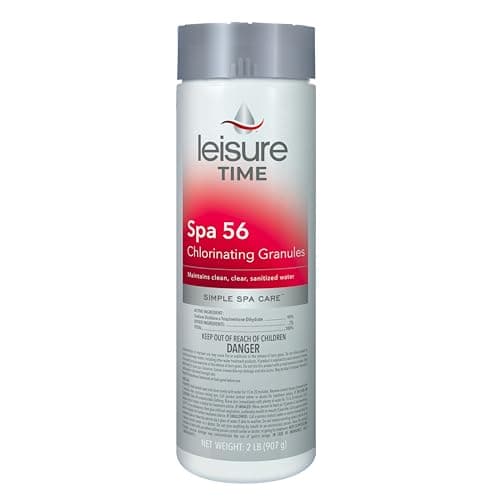
Leisure Time Spa 56 Chlorinating Granules
Leisure Time · scored 8.1/10
Dichlor granules: dissolve fast, act fast, gone fast. The right tool after a heavy soak.
Dichlor is the granular chlorine hot tubs are dosed with, because it dissolves at spa temperature without pre-mixing and it is close enough to pH-neutral not to wreck your balance every time you add it. After a soak with four people in the tub, a measured dose of dichlor is the fastest way to get free chlorine back where the CDC says it should be.
The catch is cyanuric acid. Dichlor is stabilized, so every dose adds CYA that never leaves except by draining. Across a full water cycle that CYA accumulates and progressively blunts your chlorine, which is one of the real arguments for changing the water on schedule rather than topping up forever.
What the maker states
- Chemistry
- Sodium dichlor granules
- Dissolving
- Fast, no pre-mixing required per the label
- Target residual
- CDC gives at least 3 ppm free chlorine in hot tubs
- Adds cyanuric acid
- Yes, dichlor is stabilized
How it scored
- Stability at 104F
- 6.0
- Ease of dosing
- 8.5
- Odor and skin feel
- 8.0
- Cost per month
- 8.5
- Availability
- 9.5
Skip this one if: you only use the tub every couple of weeks. Dichlor burns off quickly at spa temperature, so an unattended chlorine tub goes unsanitized far sooner than a bromine one.
#2 · Best for a first purge on a tub with history
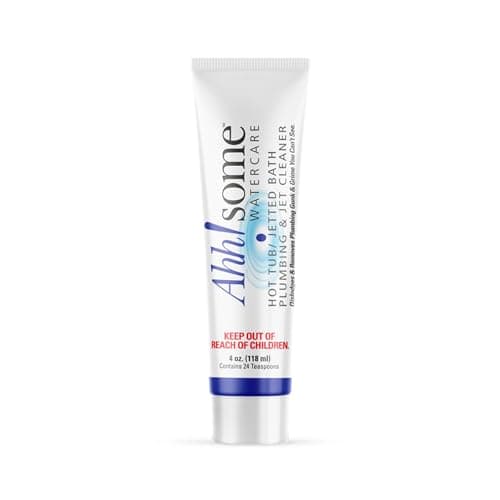
Ahh-Some Hot Tub Cleaner
Ahh-Some · scored 8.5/10
Pulls biofilm out of the plumbing in a way that is genuinely alarming to watch.
Biofilm lives on the inside of the pipework, not in the water, which is why a tub can test perfectly and still smell. A purge product circulates through the plumbing and lifts that layer off, and on a tub that has never had one done the result is visibly unpleasant and very convincing.
Plan the whole job in one session: purge, run the jets for the stated time, drain, wipe the shell and the waterline, then refill. Doing the purge and leaving the water in defeats the entire point.
What the maker states
- Type
- Gel plumbing purge
- Used
- Before draining, with jets running
- Contact time
- Per the label
- After use
- Drain, wipe the shell, refill
How it scored
- Biofilm removal
- 9.5
- Ease of use
- 7.5
- Value
- 8.5
- Odor
- 7.0
- Availability
- 8.5
Skip this one if: you cannot drain afterwards. This is a pre-drain product: what comes out has to go somewhere, and it is not staying in your water.
#3 · Best for the weekly check
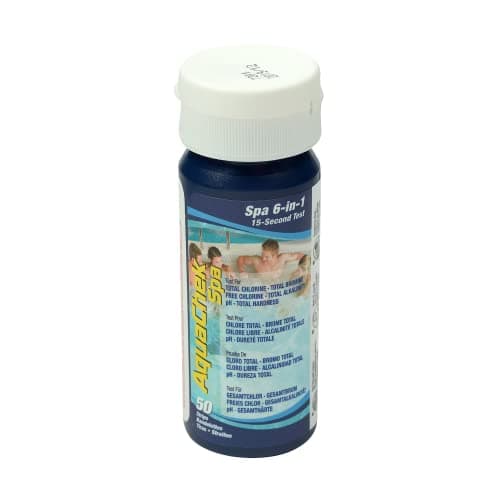
AquaChek Spa 6-in-1 Test Strips
AquaChek · scored 8.4/10
Six readings in fifteen seconds. Not precise, but precise enough to catch drift early.
Strips get an unfair reputation because people compare them to a reagent kit and call them inaccurate. That is the wrong comparison. The right one is against not testing at all, which is what happens when the routine takes ten minutes. A strip you actually use weekly beats a reference kit in a cupboard.
Two habits make strips far more reliable: keep the container sealed and out of the humid room the tub is in, and read them in daylight rather than under a yellow bulb. Most strip complaints trace back to one of those two.
What the maker states
- Reads
- Hardness, total chlorine, free chlorine, bromine, pH, alkalinity
- Method
- Dip-and-read colorimetric strip
- Time
- Seconds, per the label
- Storage
- Sealed container, away from humidity
How it scored
- Accuracy
- 6.5
- Speed
- 10.0
- Parameters covered
- 9.0
- Cost per test
- 9.0
- Availability
- 9.5
Skip this one if: you need an exact free chlorine number to diagnose a problem. Strips read in color bands; a drop-based kit reads in numbers.
Questions people actually ask
Frequently asked questions
How do you get rid of algae in a hot tub?
Correct pH into 7.2 to 7.8 first, then shock with a chlorine shock at the label rate, run the jets with the cover off, brush every surface, and clean or replace the filter afterwards. Hold the sanitizer residual for at least 24 hours before considering it resolved. If the water is properly green, draining is faster and cheaper.
Should I use algaecide in a hot tub?
Generally no. It treats the organism rather than the lapsed sanitizer that let it grow, so the problem recurs, and many pool algaecides are quaternary ammonium formulations that foam badly in an agitated spa. Sanitizer, correctly dosed and consistently held, is the fix.
Why did my hot tub turn green?
The sanitizer was at or near zero for a while. Common causes are a tub left unused, a floater that ran empty, a cover left off in sunlight, or accumulated cyanuric acid blunting the chlorine you are adding.
Is it safe to use a hot tub with algae in it?
No. Visible algae means sanitizer has been absent long enough for something to grow, and other things grow in the same conditions. Do not use it until you can hold a residual, and read the CDC's own hot tub guidance rather than a summary.
Where the numbers come from
Sources
- CDC, Model Aquatic Health Code (2023, 4th edition) - the source for the pH 7.2-7.8 range and the hot-tub disinfectant levels quoted on this site
- CDC, Controlling Legionella in Hot Tubs - the primary reference for the health and disinfection guidance quoted here
- PHTA, Find a Standard - the index confirming which ANSI standard actually covers water quality in public pools and hot tubs or spas
Read next
Related on Float & Filter
- Shocking a hot tub
Which of the two shocks this job needs, and how long to wait.
- Hot tub biofilm
If the sanitizer keeps vanishing with no explanation.
- Bromine vs chlorine for a hot tub
Bromine forgives an unattended fortnight far better.
- Draining and refilling a hot tub
Usually faster and cheaper than rescuing a properly green fill.