Roundup
The Best Hot Tub Filter Cleaners
Greasy and gray is an oil problem. Chalky and white is a scale problem. They need opposite products, and buying the wrong one wastes an evening.
By Scooter M. · Published · How we pick
How this page is funded: the buy buttons below are Amazon affiliate links. If you buy through one we earn a commission at no extra cost to you. It does not change what we recommend, and where the better answer is a retailer we earn nothing from, we say so. The full version.
The short answer
Top pick
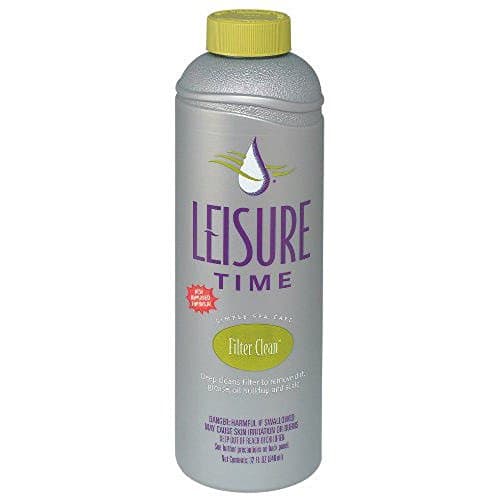
Leisure Time Filter Clean
A proper cartridge cleaner, which is a different product from a rinse.
Quick picks
Tap a row to jump to the full write-up. Prices come from the live price layer, never from memory.
| # | Product | Best for | Score | Price |
|---|---|---|---|---|
| 1 | Leisure Time Filter CleanA proper cartridge cleaner, which is a different product from a rinse. | The monthly deep clean | 8.4out of 10 | $23.86 · View on Amazon#ad how this is funded · price as of October 18, 2026 |
| 2 | 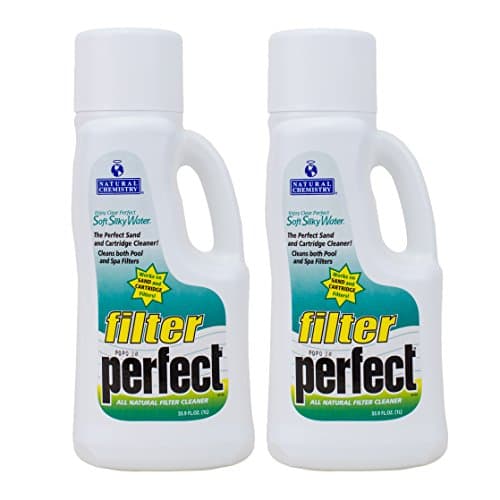 Natural Chemistry Filter PerfectEnzyme-based rather than surfactant-based, and better on a badly greased cartridge. Natural Chemistry Filter PerfectEnzyme-based rather than surfactant-based, and better on a badly greased cartridge. | Heavy oil loading | 8.0out of 10 | $35.49 · View on Amazon#ad how this is funded · price as of October 18, 2026 |
| 3 | 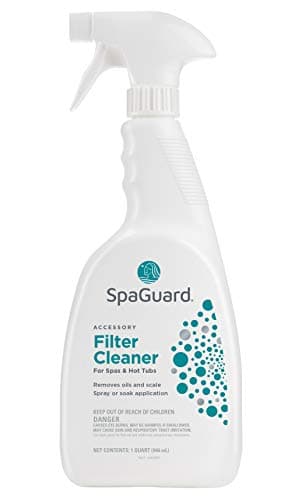 SpaGuard Filter CleanerEquivalent job, dealer-line pricing. Sensible if you already run SpaGuard. SpaGuard Filter CleanerEquivalent job, dealer-line pricing. Sensible if you already run SpaGuard. | Sticking to one chemical line | 8.0out of 10 | $21.99 · View on Amazon |
| 4 | 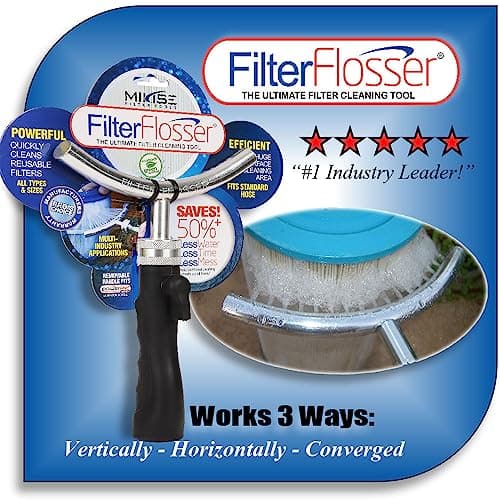 Filter Flosser rinsing wandTurns a garden hose into something that actually reaches the bottom of a pleat. Filter Flosser rinsing wandTurns a garden hose into something that actually reaches the bottom of a pleat. | The weekly rinse | 7.6out of 10 | $29.95 · View on Amazon#ad how this is funded · price as of October 18, 2026 |
| 5 | 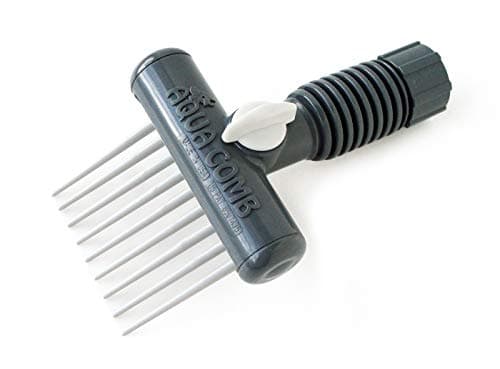 Aqua Comb spa filter cleaning combCheap, dumb, useful. Holds the pleats apart while you rinse. Aqua Comb spa filter cleaning combCheap, dumb, useful. Holds the pleats apart while you rinse. | Opening compressed pleats | 6.8out of 10 | $24.75 · View on Amazon#ad how this is funded · price as of October 18, 2026 |
Scores are our own, from the published scoring method on how we pick. They are an editorial judgment of published specifications, not a test result, and they are deliberately kept out of the page’s structured data.
Before you buy anything, look at the cartridge. Gray, slightly tacky pleats mean an oil load and you want a surfactant or an enzyme cleaner. Chalky white crust means mineral scale and you want an acid-based product. A cartridge that is simply full of leaves and grit wants neither — it wants a better rinse.
That diagnostic is the whole page in one paragraph, and getting it wrong is the most common reason an overnight soak produces a cartridge that still restricts flow.
The three jobs, and the products for each
| What you see | What it is | What removes it |
|---|---|---|
| Gray, tacky, slightly slippery pleats | Body oils, lotions, sunscreen | Surfactant cleaner or an enzyme soak |
| Chalky white crust, gritty to touch | Calcium scale | An acid-based cleaner, on a drained cartridge |
| Visible debris packed into the folds | Leaves, hair, grit | A fan-jet rinse and a pleat comb |
| Pleats that no longer spring back | Media fatigue | Nothing. Replace it. |
Rinse weekly, soak monthly
These are different jobs. A rinse removes debris from between the pleats and takes two minutes. A soak dissolves or digests the oil film, takes hours, and is what actually restores flow. Neither substitutes for the other, and a cartridge that is only ever rinsed is finished within months while a cartridge on both routines routinely lasts a year.
The reason people skip the soak is that the tub needs a filter in it overnight. That is what a second cartridge solves, and it is the cheapest meaningful upgrade in this whole category — see the cartridge roundup.
Rinse harder than you think, afterwards
The most common self-inflicted problem here is cleaner left in the pleats. It goes straight into the water when the cartridge is refitted, and it is a very common cause of foaming that owners then blame on detergent from swimwear. Rinse until the water running off is completely clear, then rinse for another minute.
If foam appears within a day of refitting a freshly soaked cartridge, that is almost certainly what happened. The foam page covers the other causes.
The home remedies question
Vinegar, bleach and the dishwasher come up constantly, and the honest answers are not all the same. Vinegar has a narrow legitimate use; bleach damages the media; the dishwasher is a firm no on any pleated cartridge. We work through all three, with what each one actually does to the media, on vinegar vs bleach vs the dishwasher.
The tools are not optional extras
A thumb over a hose end cleans the outer third of a pleat and leaves the rest loaded. A fan-jet wand gets water down into the fold, and a comb holds compressed pleats open long enough for it to work. Together they cost very little and change what a rinse actually accomplishes.
The one caution is force. A comb dragged hard through pleats tears media, and torn media is a cartridge you have to replace. Use it gently, on a wet filter, and never on one that has already gone brittle.
How often, realistically
Rinse weekly. Soak monthly. Deep clean at every water change, while the tub is drained and you have the time anyway. That cadence is built into the maintenance schedule, which is where it belongs: filter care is not a separate discipline, it is one column of the routine.
Every pick, in full
The picks in detail
Specifications below are the manufacturer’s own published figures, attributed as such. We have not tested these units and the scores are an editorial judgment of published data against the published method, not a test result.
#1 · Best for the monthly deep clean
Leisure Time Filter Clean
Leisure Time · scored 8.4/10
A proper cartridge cleaner, which is a different product from a rinse.
The reason a rinsed filter still restricts flow is that the load is oil, not grit, and water does not remove oil. A dedicated cartridge cleaner is a surfactant designed to release exactly that, and the difference in flow after a proper soak is obvious at the jets.
Rinse harder afterwards than you think you need to. Cleaner left in the pleats goes straight into your water and is a very common cause of foaming that owners then blame on the tub.
What the maker states
- Format
- Concentrate for soaking
- Targets
- Body oils, lotions, light scale
- Soak time
- Per the label, commonly overnight
- Rinse
- Thoroughly, before refitting
How it scored
- Oil removal
- 9.0
- Scale removal
- 7.5
- Ease of use
- 8.0
- Cost per clean
- 8.0
- Availability
- 9.0
Skip this one if: your filter is only ever lightly loaded. A hose rinse handles surface debris; this is for the oils a rinse cannot shift.
#2 · Best for heavy oil loading
Natural Chemistry Filter Perfect
Natural Chemistry · scored 8.0/10
Enzyme-based rather than surfactant-based, and better on a badly greased cartridge.
Enzymes digest organics rather than dissolving them, which makes this the better choice for a cartridge gone tacky from lotions and sunscreen. The trade is that it does nothing at all for a white mineral crust.
Diagnose before you buy: greasy and gray is an oil problem, chalky and white is a scale problem, and they need opposite products.
What the maker states
- Format
- Enzyme concentrate for soaking
- Targets
- Body oils, lotions, organic residue
- Soak time
- Per the label
- Not for
- Mineral scale
How it scored
- Oil removal
- 9.3
- Scale removal
- 4.0
- Ease of use
- 8.5
- Cost per clean
- 7.5
- Availability
- 8.0
Skip this one if: your filter is scaled rather than greasy. Enzymes work on organics; scale needs an acid step.
#3 · Best for sticking to one chemical line
SpaGuard Filter Cleaner
SpaGuard · scored 8.0/10
Equivalent job, dealer-line pricing. Sensible if you already run SpaGuard.
There is no meaningful functional gap between the major cartridge cleaners. Choose on price and on which line you already have open, because a cupboard holding one brand is easier to dose correctly than one holding four.
As with any cleaner, the rinse matters more than the soak.
What the maker states
- Format
- Concentrate for soaking
- Targets
- Oils and mineral deposits
- Soak time
- Per the label
- Line
- Bio-Lab dealer range
How it scored
- Oil removal
- 8.5
- Scale removal
- 8.0
- Ease of use
- 8.0
- Cost per clean
- 7.0
- Availability
- 8.0
Skip this one if: you are shopping on cost per clean.
#4 · Best for the weekly rinse
Filter Flosser rinsing wand
Filter Flosser · scored 7.6/10
Turns a garden hose into something that actually reaches the bottom of a pleat.
A thumb over a hose end cleans the outer third of a pleat and leaves the rest loaded. A wand that fans water down into the fold is the difference between a filter that looks clean and one that is clean.
It does not replace a chemical soak. Rinse weekly, soak monthly, and a cartridge lasts roughly twice as long as one that only ever gets rinsed.
What the maker states
- Type
- Hose-fed rinsing wand
- Job
- Directs a fan of water down between pleats
- Replaces
- Nothing chemical
- Fits
- Standard garden hose
How it scored
- Debris removal
- 8.5
- Oil removal
- 2.0
- Time saved
- 9.0
- Durability
- 7.5
- Availability
- 8.5
Skip this one if: you already own a fan-jet hose nozzle and use it patiently. This is a convenience tool, not a chemistry one.
#5 · Best for opening compressed pleats
Aqua Comb spa filter cleaning comb
Aqua Comb · scored 6.8/10
Cheap, dumb, useful. Holds the pleats apart while you rinse.
Pleats compress with use, and a compressed pleat traps debris no amount of spraying will reach. A comb holds them open long enough for water to get in.
Use it gently and only on a wet filter. This is the one filter tool that can actively cost you a cartridge if you get impatient with it.
What the maker states
- Type
- Plastic pleat comb
- Job
- Separates pleats for rinsing
- Use with
- A hose or rinsing wand
- Risk
- Media damage if forced
How it scored
- Debris removal
- 7.5
- Oil removal
- 1.5
- Time saved
- 7.5
- Durability
- 7.0
- Availability
- 9.0
Skip this one if: you are heavy-handed. A comb dragged hard through pleats tears media, and torn media is a cartridge you have to replace.
Questions people actually ask
Frequently asked questions
What is the best way to clean a hot tub filter?
Rinse weekly with a fan-jet wand to clear debris from between the pleats, and soak monthly in a dedicated cartridge cleaner to remove the body oils a rinse cannot shift. Rinse thoroughly after the soak, because cleaner left in the pleats causes foaming.
Enzyme or chemical filter cleaner: which is better?
It depends what is on the cartridge. Enzymes digest organics and are better on a heavily greased filter. Surfactant cleaners handle general oil loading and light scale. Neither does anything useful for a white mineral crust, which needs an acid-based product.
Why does my hot tub foam after I clean the filter?
Almost always cleaner left in the pleats going straight into the water. Rinse until the run-off is completely clear and then rinse for another minute. If foam persists beyond that, the cause is elsewhere.
How often should you deep clean a hot tub filter?
Rinse weekly, chemically soak monthly, and do a full deep clean at every water change while the tub is drained. That cadence roughly doubles the working life of a cartridge compared with rinsing alone.
Where the numbers come from
Sources
Read next
Related on Float & Filter
- How to clean a hot tub filter
The step-by-step version, including the rinse people cut short.
- Vinegar vs bleach vs the dishwasher
Honest answers on the three home remedies, including the one that works.
- The best hot tub filter cartridges
Owning two is what makes a monthly soak practical.
- Why your hot tub foams
Including the case caused by a badly rinsed cartridge.