Guide
Hot Tub pH and Total Alkalinity
If your pH will not stay where you put it, the problem is almost never pH. It is the buffer underneath it.
By Scooter M. · Published · How we pick
How this page is funded: the buy buttons below are Amazon affiliate links. If you buy through one we earn a commission at no extra cost to you. It does not change what we recommend, and where the better answer is a retailer we earn nothing from, we say so. The full version.
The most common hot tub chemistry mistake is treating pH as the problem. pH is usually the symptom. Total alkalinity is the buffer that holds pH in place, and when alkalinity is out of range, pH moves freely no matter how many times you correct it.
The CDC gives a target of 7.2 to 7.8 for pools and hot tubs.[source] Total alkalinity is not a CDC figure; 80 to 120 ppm is the industry consensus range, and where an ANSI standard applies to spa water it is the water-quality standard for public pools and hot tubs.[source]
Which of these is you?
There are four combinations and they need four different responses. Read both numbers before doing anything.
- pH high, alkalinity high — the most common on municipal water
- pH high, alkalinity in range — the easy one
- pH low, alkalinity low — do not touch the pH
- pH will not stay put at all — a buffer problem wearing a pH costume
pH high, alkalinity high
Both need to come down and one product does both. Dry acid lowers pH directly and lowers total alkalinity as a side effect, which is exactly what you want here. Add half the label dose for your volume, run the jets for a full circulation cycle, and retest. Repeat rather than dosing heavily once.
Expect this to take two or three sessions across a week. Alkalinity comes down slowly and dumping acid to force it produces a pH crash you then have to correct upward, which puts alkalinity back up. Patience is genuinely the technique here.
pH high, alkalinity in range
The straightforward case. Add dry acid at half the label dose, circulate for a cycle, retest. Because alkalinity is already buffering properly, the correction will hold.
One thing to know: aeration drives pH up. Every time the jets run, they strip carbon dioxide out of the water and pH rises. A tub that creeps up by a couple of tenths a week is not broken, it is being aerated, and a small regular correction is the normal cost of having jets.
pH low, alkalinity low
Do not add a pH increaser. Raise alkalinity with sodium bicarbonate and the pH will usually come up with it, because bicarbonate raises pH modestly as well. Adding soda ash here overshoots pH long before alkalinity is anywhere useful, and you end up correcting downward again.
Raise alkalinity in stages toward 80 ppm, retesting between them, and only look at pH once the buffer is in range. Low pH is worth fixing promptly for a practical reason as well as a comfort one: acidic water is corrosive to heater components and seals.
pH will not stay put at all
This is the classic low-alkalinity signature: you correct pH, it holds for two days, and by the weekend it is back. Every acid dose you added to chase it lowered alkalinity further, which made the pH swing more easily, which made you add more acid.
Break the loop by ignoring pH entirely for a week. Get total alkalinity to 80 to 120 ppm, let it stabilize, and only then look at pH. In most tubs it will have settled somewhere sensible on its own.
Why pH matters beyond comfort
Chlorine loses effectiveness as pH climbs. The same measured free chlorine reading does less work at pH 8.0 than at pH 7.4, which means a tub with high pH can test as adequately sanitized while behaving as though it is not. That is one reason the CDC range has an upper bound rather than just a floor,[source] and it is why "my chlorine reads fine but the water smells" so often turns out to be a pH problem.
Bromine is less pH-sensitive than chlorine, which is one of the quieter arguments in its favor and is covered on bromine vs chlorine.
Practical dosing habits
- Jets on, cover off. Chemicals need circulating and some need off-gassing.
- Half doses. Every correction here is easier to repeat than to reverse.
- Wait a full cycle before retesting. A reading taken thirty seconds after dosing is meaningless, and the second dose people add because the first "did not work" is how tubs end up at pH 6.8.
- Never mix products. Add one, circulate, retest, then consider the next.
Quantities for your volume are on the dosage chart, and if you are starting from a fresh fill, the whole sequence is on first chemicals after a refill. If the water is cloudy as well as unbalanced, work through why your water is cloudy after you have the chemistry settled, not before.
Where this sits in the routine
pH and alkalinity are weekly readings. They move, they interact, and they take fifteen seconds to check on a strip. Everything else in hot tub care is downstream of getting these two right, including whether your sanitizer is doing the job the CDC’s Legionella guidance depends on it doing.[source]
What fixes it
The products for this job
Named because they do the specific job this page describes, not because they are the only options. Specifications are the manufacturer’s published figures.
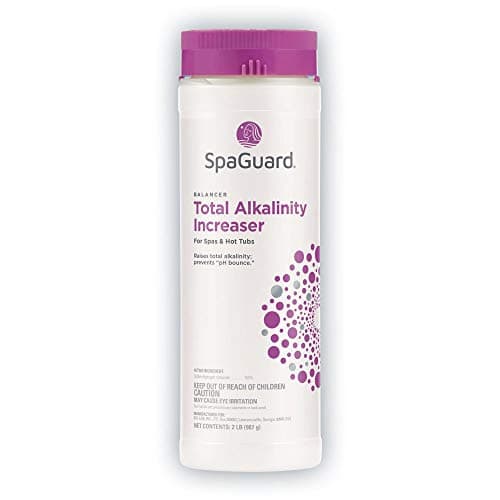
#1 · Best for stopping ph drifting
SpaGuard Total Alkalinity Increaser
SpaGuard · scored 8.9/10
The product most people should buy before they buy any pH adjuster at all.
Total alkalinity is the buffer that stops pH moving. If your pH will not stay put no matter how much acid or soda ash you add, the actual problem is almost always that TA is too low, and this is the fix.
Raise it in stages and retest between them. Bicarbonate is forgiving on the way up and unforgiving on the way down, because the only route back from over-corrected alkalinity is acid plus aeration plus patience.
What the maker states
- Chemistry
- Sodium bicarbonate
- Typical target
- 80-120 ppm total alkalinity
- Effect on pH
- Raises it slightly
- Dose
- By tub volume, per the label
How it scored
- Predictability
- 9.0
- Ease of dosing
- 8.5
- Container size fit
- 9.0
- Cost per month
- 9.0
- Availability
- 9.0
Skip this one if: your alkalinity is already in range. Overshooting TA locks pH high and is genuinely tedious to undo.
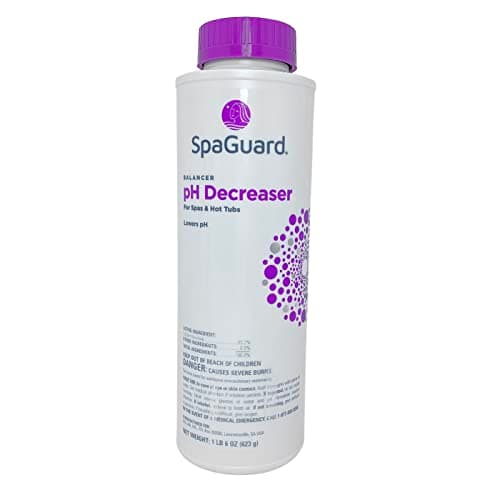
#2 · Best for bringing high ph down
SpaGuard Spa pH Decreaser
SpaGuard · scored 8.5/10
Dry acid in a spa-sized container with spa-scale dosing on the label. That is the whole trick.
Dry acid is dry acid. What you are buying is a container sized for a 350-gallon tub rather than a 20,000-gallon pool, and a label with spa-scale dosing on it. That sounds trivial until you have tried to measure a pool dose into a hot tub.
Add it with the jets running and the cover off, then retest after a full circulation cycle rather than immediately. A pH reading taken thirty seconds after dosing means nothing, and the second dose people add because the first appeared not to work is how tubs end up at pH 6.8.
What the maker states
- Chemistry
- Sodium bisulfate (dry acid)
- Target
- CDC gives pH 7.2-7.8 for pools and hot tubs
- Side effect
- Lowers total alkalinity as well
- Dose
- By tub volume, per the label
How it scored
- Predictability
- 8.5
- Ease of dosing
- 8.5
- Container size fit
- 9.0
- Cost per month
- 8.5
- Availability
- 9.0
Skip this one if: your total alkalinity is also high. Chasing pH while TA is out of range means you will be back next week. Fix alkalinity first, then pH.
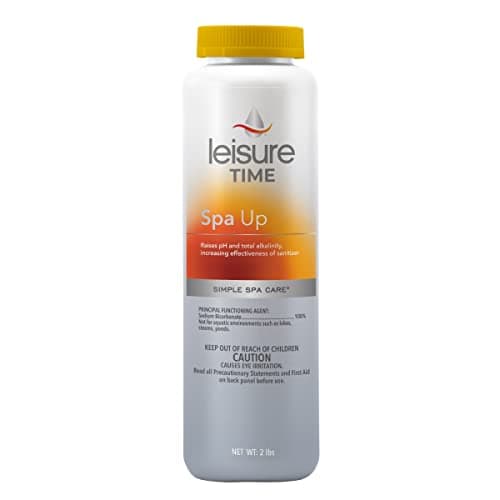
#3 · Best for bringing low ph up
Leisure Time Spa Up
Leisure Time · scored 8.4/10
Soda ash for the other direction. Small doses, then wait a full cycle.
Soda ash raises pH quickly and total alkalinity slightly. Because it moves pH faster than it moves TA, it is the wrong tool when both are low: you will overshoot pH long before alkalinity is anywhere useful.
Dose in halves. Soda ash can cloud water briefly if you dump it in one spot with the pump off, so spread it across the surface with the jets running and give it a full cycle before retesting.
What the maker states
- Chemistry
- Sodium carbonate (soda ash)
- Target
- CDC gives pH 7.2-7.8
- Side effect
- Raises total alkalinity modestly
- Dose
- By tub volume, per the label
How it scored
- Predictability
- 8.0
- Ease of dosing
- 8.5
- Container size fit
- 9.0
- Cost per month
- 8.5
- Availability
- 9.0
Skip this one if: your pH is low because your total alkalinity is low. Raise TA first and pH usually follows on its own.
Questions people actually ask
Frequently asked questions
Why does my hot tub pH keep rising?
Two reasons, usually together. Aeration from the jets strips carbon dioxide out of the water and drives pH up, and high total alkalinity locks pH at the top of the range. A small weekly correction is normal; a large repeated one means alkalinity needs bringing down.
Should I fix pH or alkalinity first in a hot tub?
Alkalinity first, every time. Total alkalinity buffers pH, so correcting pH while alkalinity is out of range means the pH simply drifts back within days.
What should hot tub pH and alkalinity be?
pH 7.2 to 7.8, per CDC guidance for pools and hot tubs. Total alkalinity 80 to 120 ppm, which is the industry consensus range rather than a CDC figure.
How do I lower alkalinity in a hot tub?
Dry acid lowers both pH and alkalinity, so add it in half doses, circulate for a full cycle and retest. Expect it to take two or three sessions across a week. Dumping acid to force it down produces a pH crash you then have to correct upward.
Is high pH in a hot tub dangerous?
It is not directly harmful at the levels a domestic tub reaches, but it makes chlorine measurably less effective, so the tub can test as adequately sanitized while behaving as though it is not. It also contributes to scale and cloudy water.
Where the numbers come from
Sources
- CDC, Model Aquatic Health Code (2023, 4th edition) - the source for the pH 7.2-7.8 range and the hot-tub disinfectant levels quoted on this site
- CDC, Controlling Legionella in Hot Tubs - the primary reference for the health and disinfection guidance quoted here
- PHTA, Find a Standard - the index confirming which ANSI standard actually covers water quality in public pools and hot tubs or spas
Read next
Related on Float & Filter
- Hot tub chemical dosage and levels chart
The quantities for each of the corrections above.
- Hot tub calcium hardness
The third balance reading, and the only one you cannot undo.
- Why your hot tub water is cloudy
Where a chemistry problem shows itself first.
- The hot tub maintenance schedule
How often to take these two readings.
- Best hot tub chemicals for sensitive skin
pH is the biggest single lever on how the water feels.
- The best hot tub alkalinity increasers
Which container to actually buy, once you know alkalinity is the problem.
- The best hot tub pH increasers
Soda ash, and the check that tells you whether you need it at all.
- The best pH and alkalinity decreasers
One dry acid for both numbers, and the aeration technique that separates them.