Roundup
The Best Hot Tub pH Increasers
Soda ash raises pH fast and total alkalinity a little. That second effect is why it is the wrong first move for most people with a low pH reading, and why this page starts by trying to talk you out of it.
By Scooter M. · Published · How we pick
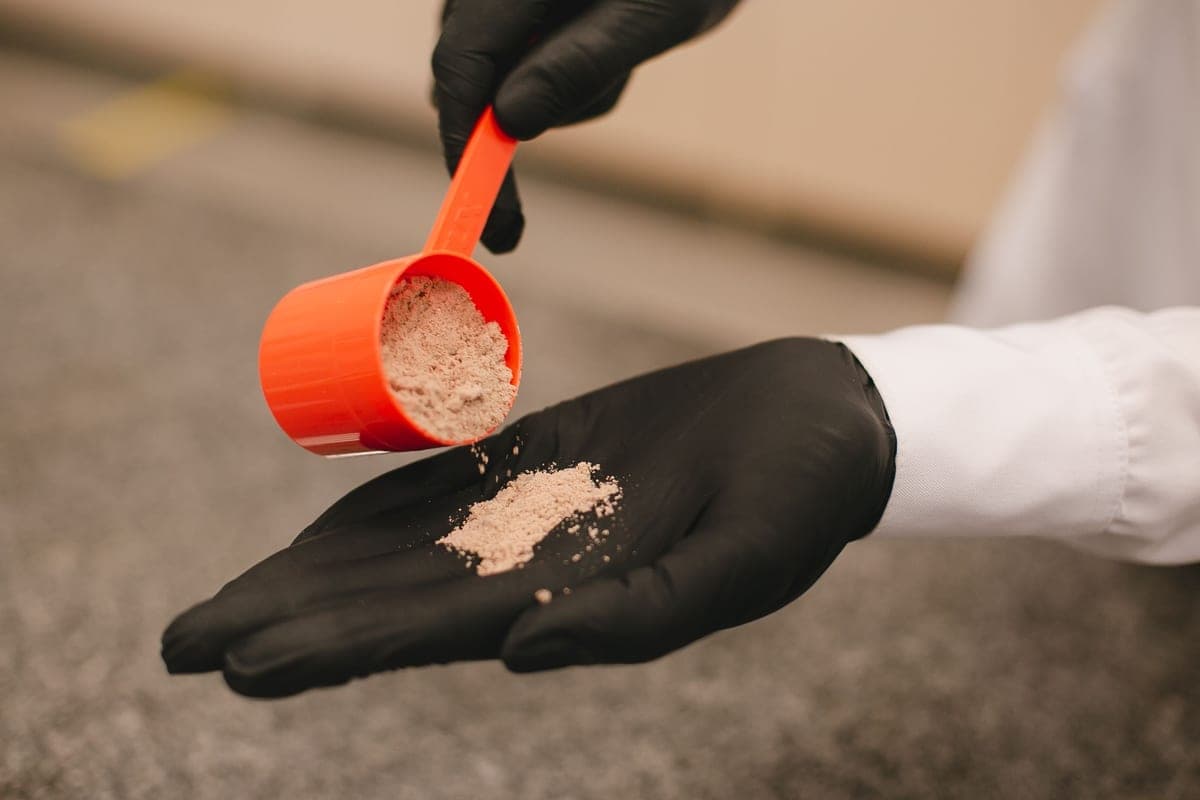
How this page is funded: the buy buttons below are Amazon affiliate links. If you buy through one we earn a commission at no extra cost to you. It does not change what we recommend, and where the better answer is a retailer we earn nothing from, we say so. The full version.
The short answer
Top pick
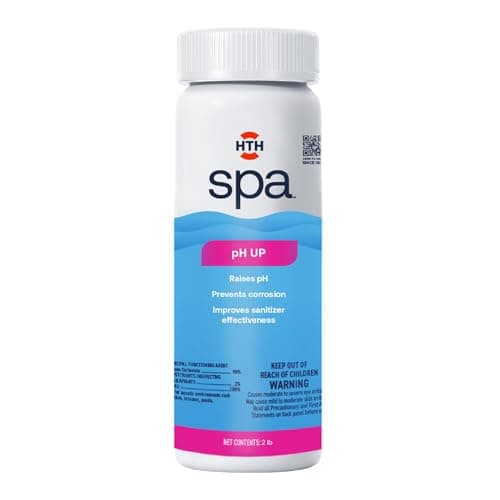
HTH Spa 86133R pH Up, 2 lb
A spa-labeled 2 lb container of pH up at the lowest cash outlay on this page.
Quick picks
Tap a row to jump to the full write-up. Prices come from the live price layer, never from memory.
| # | Product | Best for | Score | Price |
|---|---|---|---|---|
| 1 | HTH Spa 86133R pH Up, 2 lbA spa-labeled 2 lb container of pH up at the lowest cash outlay on this page. | The cheapest spa-labeled tub | 8.1out of 10 | $10.42 · View on Amazon |
| 2 | 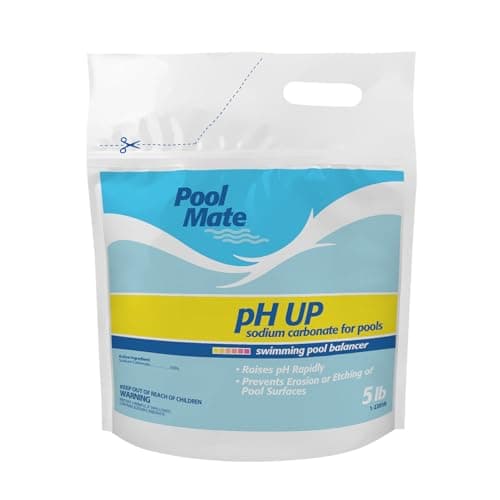 Pool Mate Premium pH Up, 5 lbTwo and a half times the product of a spa tub for roughly the same money, if you will scale the dose yourself. Pool Mate Premium pH Up, 5 lbTwo and a half times the product of a spa tub for roughly the same money, if you will scale the dose yourself. | Best value per pound | 7.7out of 10 | $20.24 · View on Amazon#ad how this is funded · price as of October 17, 2026 |
| 3 | 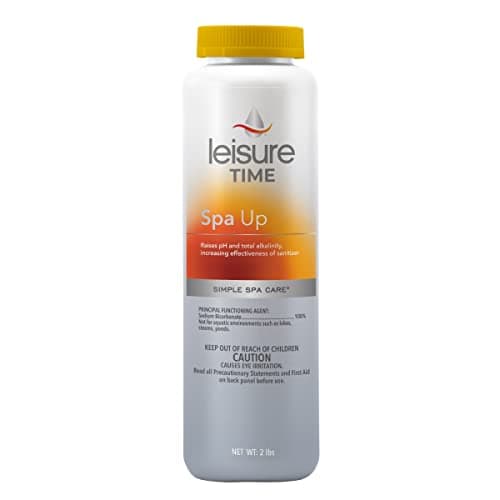 Leisure Time Spa UpSoda ash for the other direction. Small doses, then wait a full cycle. Leisure Time Spa UpSoda ash for the other direction. Small doses, then wait a full cycle. | Bringing low pH up | 8.4out of 10 | $6.15 · View on Amazon |
| 4 | 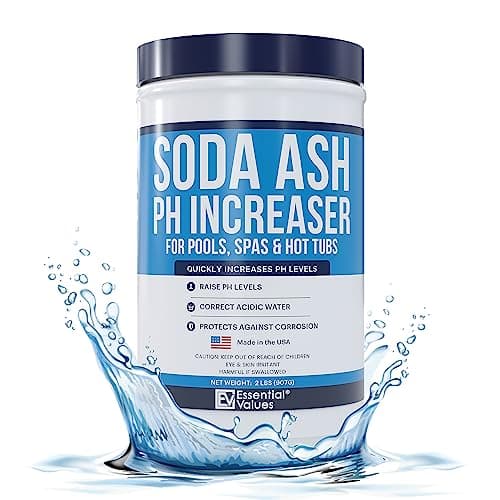 Soda Ash pH Increaser for Hot Tub and Spa, 2 lbA 2 lb container that names soda ash on the label rather than leaving you to infer it. Soda Ash pH Increaser for Hot Tub and Spa, 2 lbA 2 lb container that names soda ash on the label rather than leaving you to infer it. | Knowing exactly what is in the tub | 7.6out of 10 | $20.49 · View on Amazon#ad how this is funded · price as of October 17, 2026 |
| 5 | 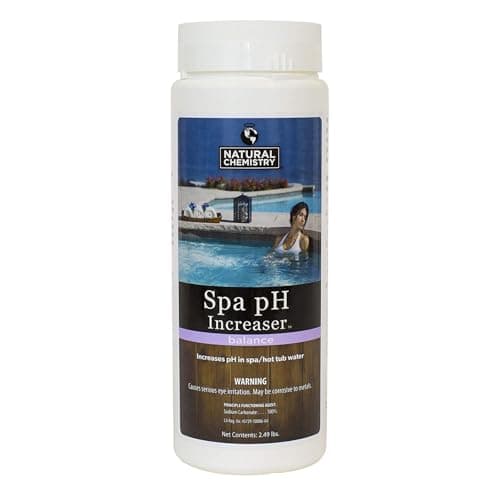 Natural Chemistry Spa pH Increaser, 2.49 lbA slightly larger spa-labeled container from a brand that sits across the spa aisle. Natural Chemistry Spa pH Increaser, 2.49 lbA slightly larger spa-labeled container from a brand that sits across the spa aisle. | A spa-brand alternative | 7.6out of 10 | $20.01 · View on Amazon#ad how this is funded · price as of October 17, 2026 |
| 6 | 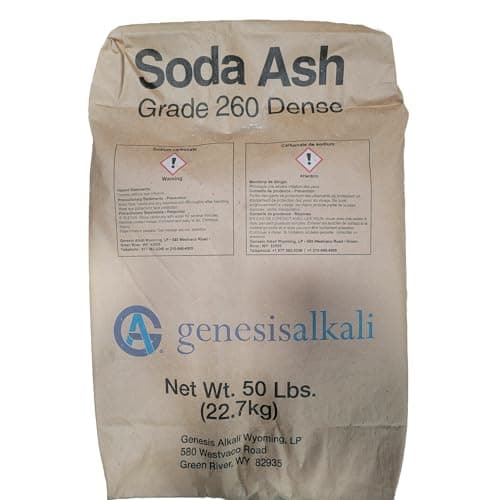 Leslie's Soda Ash pH Up, 50 lbThe chemical by the sack, stated on the listing as 100 percent sodium carbonate. Leslie's Soda Ash pH Up, 50 lbThe chemical by the sack, stated on the listing as 100 percent sodium carbonate. | Pool owners who also have a tub | 7.2out of 10 | $60.49 · View on Amazon#ad how this is funded · price as of October 17, 2026 |
Scores are our own, from the published scoring method on how we pick. They are an editorial judgment of published specifications, not a test result, and they are deliberately kept out of the page’s structured data.
The verdict, up front. pH increaser is sodium carbonate — soda ash. Every product below is the same compound in a different sized container, so the honest comparison is cost per pound and whether the dosing table matches your water volume.
Before any of that: most people buying pH up do not have a pH problem. They have a total alkalinity problem that is showing up as a pH reading that will not stay put. Soda ash will lift the number today and it will be back down next week, because nothing is holding it there.
So the first section of this page is a two-minute check that tells you whether to buy anything at all. The diagnosis in full is on hot tub pH and total alkalinity; the picks below assume you have already run it.
Check this before you buy
Test both numbers, then find yourself here:
- pH low, alkalinity low. The common case. Buy an alkalinity increaser instead. Sodium bicarbonate raises alkalinity and nudges pH up with it, and the pH problem usually resolves without any soda ash at all.
- pH low, alkalinity in range (80–120 ppm). This is what pH increaser is for. Buy from this page.
- pH low, alkalinity high. Do not add soda ash. You have an unusual combination and adding more alkali makes half of it worse; work through the guide first.
- pH fine. Do not buy anything. A pH reading inside 7.2 to 7.8 needs nothing doing to it.
That is genuinely most of the value on this page. The remaining choice is which container, and that is a price question.
How we judged these
| Criterion | Why it matters | What we looked at |
|---|---|---|
| Value per pound | With the compound effectively constant across the category, this is what actually separates the products. | Live price against stated container weight |
| Label clarity | A container that names soda ash or sodium carbonate lets you compare the whole aisle honestly. | Whether the listing states the chemical and the use |
| Dosing guidance | Soda ash moves pH quickly. A dosing table written for pools is a scaling exercise, and an easy way to overshoot. | Whether stated dosing matches spa volumes |
| Availability | You want this on the shelf when a test says you need it, not in a week. | Whether the product is reliably stocked |
| Container practicality | Soda ash cakes if it gets damp. A resealable container you can store dry keeps working. | Size and format against realistic home storage |
Soda ash versus baking soda, which is the real question
These are two different chemicals that people routinely confuse, and buying the wrong one is the most common mistake in this corner of the aisle.
| Soda ash (pH increaser) | Sodium bicarbonate (alkalinity increaser) | |
|---|---|---|
| Chemical | Sodium carbonate | Sodium bicarbonate |
| Moves pH | A lot, quickly | A little, gently |
| Moves alkalinity | A little | A lot |
| Buy it when | pH is low and alkalinity is already in range | Alkalinity is low, whatever pH is doing |
| Overshoot risk | High — pH climbs fast | Lower, but hard to reverse |
If you take one thing from this page: reach for bicarbonate first and soda ash rarely. Our alkalinity increaser roundup covers the other half of that pair.
The targets you are aiming at
pH belongs between 7.2 and 7.8.[source] Total alkalinity has an industry consensus range of 80 to 120 ppm; it is not itself a CDC figure.[source]
pH matters beyond comfort because chlorine loses effectiveness as pH climbs, so a tub sitting at 8.2 is holding a sanitizer reading that is doing less than the number suggests. That is covered on sanitizer levels. It is also the reason overshooting with soda ash is not a harmless error.
Dosing without overshooting
- Add a fraction of what you think. Soda ash is potent and a hot tub is small. Half the label dose, then test.
- Pre-dissolve in a bucket of tub water and pour it in with the jets running. Undissolved granules on an acrylic shell are how spotting and etching start.
- Wait a full circulation cycle before retesting. Ten minutes is not a reading.
- Do not chase pH and alkalinity in the same session. Fix alkalinity, let it settle, then look at pH again. Most of the time you will not need this product.
If you overshoot, the fix is dry acid, and going back and forth between the two is how people end up with water full of dissolved solids and a drain due early.
The pool-container question
As on the alkalinity page, the same compound is sold in pool-size containers for far less per pound, and we recommend one here. The caveat is sharper with soda ash than with bicarbonate: it moves pH quickly, so a pool dosing table scaled carelessly will send you past the target in one go.
Buy the larger container if you will convert the dose and add in fractions. Buy the spa tub if you want a label written for a few hundred gallons and would rather not do arithmetic at the tub side. Both are rational; only one is right for how you actually work.
What this will not do
- Hold pH in place. That is alkalinity's job. Soda ash alone on a low-buffer tub is a weekly chore.
- Sanitize. pH is not a disinfectant; you still hold a residual.
- Clear cloudy water. See cloudy water.
- Fix hardness. Calcium is a separate number — calcium hardness increasers.
On prices, and on what these scores are
pH increaser is one of the cheapest things you will buy for a hot tub, and the spread here is a few dollars per container but a large multiple per pound. Every button reads the live price where our price layer has one; anything we cannot verify, we do not print — the reasoning is on how we pick.
The scores are an editorial judgment of stated container size against live price, label clarity, dosing guidance and storage practicality, against our published method. We have not tested these products, we make no performance claims beyond what the labels state, and there is no rating markup in this page’s structured data.
The honest summary
Test alkalinity before you buy. If it is below 80 ppm, close this page and buy bicarbonate instead — that is the correct answer for most people who searched for pH increaser.
If alkalinity really is in range and pH really is low, a spa-labeled 2 lb tub is enough for a long time and costs very little. Take the pool-size container if you are comfortable scaling the dose, and skip the 50 lb sack unless you own a pool as well. Then add half of what you think and test again.
Every pick, in full
The picks in detail
Specifications below are the manufacturer’s own published figures, attributed as such. We have not tested these units and the scores are an editorial judgment of published data against the published method, not a test result.
#1 · Best for the cheapest spa-labeled tub
HTH Spa 86133R pH Up, 2 lb
HTH · scored 8.1/10
A spa-labeled 2 lb container of pH up at the lowest cash outlay on this page.
A spa-labeled container at a genuinely low price, which is the combination most people want here. Two pounds of soda ash is a lot of pH correction for a few hundred gallons, so for most single-tub owners this is more than a season's worth.
The honest caveat applies to the whole category rather than this product: most people reaching for pH up do not need it. If pH keeps falling, the buffer underneath it is the problem, and no amount of soda ash fixes a low total alkalinity for long.
What the maker states
- Part
- 86133R, per the listing
- Size
- 2 lb, per the listing
- Labeled for
- Spa use, per the listing
- Job
- Raises pH
How it scored
- Label clarity
- 8.0
- Dosing guidance
- 7.5
- Value per pound
- 8.0
- Availability
- 8.5
- Container practicality
- 8.5
Skip this one if: your alkalinity is also low. Raise total alkalinity first and pH usually follows without this.
#2 · Best for best value per pound
Pool Mate Premium pH Up, 5 lb
Pool Mate · scored 7.7/10
Two and a half times the product of a spa tub for roughly the same money, if you will scale the dose yourself.
The same value logic as the alkalinity page: pH increaser is soda ash whichever aisle it is sold in, and a pool-size container costs far less per pound than a spa-size one. If the arithmetic does not put you off, this is the rational buy.
The arithmetic is the catch. A pool dosing table is written in tens of thousands of gallons and your tub holds a few hundred, so you scale down and add in very small increments. Soda ash moves pH quickly, which makes overshooting easy and makes this the wrong container for anyone who will eyeball it.
What the maker states
- Size
- 5 lb, per the listing
- Labeled for
- Swimming pools, per the listing
- Job
- Raises pH
- Grade
- Described as premium on the listing
How it scored
- Label clarity
- 6.0
- Dosing guidance
- 5.0
- Value per pound
- 9.5
- Availability
- 8.5
- Container practicality
- 7.5
Skip this one if: you want a dosing table written for a few hundred gallons. This one is written for pools.
#3 · Best for bringing low ph up
Leisure Time Spa Up
Leisure Time · scored 8.4/10
Soda ash for the other direction. Small doses, then wait a full cycle.
Soda ash raises pH quickly and total alkalinity slightly. Because it moves pH faster than it moves TA, it is the wrong tool when both are low: you will overshoot pH long before alkalinity is anywhere useful.
Dose in halves. Soda ash can cloud water briefly if you dump it in one spot with the pump off, so spread it across the surface with the jets running and give it a full cycle before retesting.
What the maker states
- Chemistry
- Sodium carbonate (soda ash)
- Target
- CDC gives pH 7.2-7.8
- Side effect
- Raises total alkalinity modestly
- Dose
- By tub volume, per the label
How it scored
- Predictability
- 8.0
- Ease of dosing
- 8.5
- Container size fit
- 9.0
- Cost per month
- 8.5
- Availability
- 9.0
Skip this one if: your pH is low because your total alkalinity is low. Raise TA first and pH usually follows on its own.
#4 · Best for knowing exactly what is in the tub
Soda Ash pH Increaser for Hot Tub and Spa, 2 lb
Generic · scored 7.6/10
A 2 lb container that names soda ash on the label rather than leaving you to infer it.
Worth listing because it says soda ash on the front. Once you know pH increaser is sodium carbonate, you can compare any container against any other on price per pound instead of on branding, and this is the listing that makes that obvious.
It is not the cheapest here and it is dual-labeled for pools and spas, so check the dosing table applies to a few hundred gallons before you scoop. Transparency about the chemical is the reason to pick it, not performance.
What the maker states
- Chemical
- Soda ash powder, per the listing
- Size
- 2 lb, per the listing
- Labeled for
- Hot tubs, swimming pools and spas, per the listing
- Job
- Raises pH, per the listing
How it scored
- Label clarity
- 9.0
- Dosing guidance
- 7.0
- Value per pound
- 6.5
- Availability
- 7.5
- Container practicality
- 8.0
Skip this one if: you want the cheapest spa option. Naming the chemical does not make it work differently.
#5 · Best for a spa-brand alternative
Natural Chemistry Spa pH Increaser, 2.49 lb
Natural Chemistry · scored 7.6/10
A slightly larger spa-labeled container from a brand that sits across the spa aisle.
Included as a second spa-labeled source, because running out of a balancing chemical on a refill day is the situation you are actually protecting against. Half a pound more product than the cheapest spa tub here.
We cannot separate it from the other spa-labeled options on published evidence, and it costs more per pound than either the budget spa tub or the pool container. Buy it if it is what is in front of you, not because it is different.
What the maker states
- Size
- 2.49 lb, per the listing
- Labeled for
- Spa use, per the listing
- Job
- Raises pH
- Pack
- Single, per the listing
How it scored
- Label clarity
- 8.0
- Dosing guidance
- 7.5
- Value per pound
- 6.5
- Availability
- 8.0
- Container practicality
- 8.0
Skip this one if: price per pound is your priority. This is mid-pack on value and there is no published reason to pay the difference.
#6 · Best for pool owners who also have a tub
Leslie's Soda Ash pH Up, 50 lb
Leslie's · scored 7.2/10
The chemical by the sack, stated on the listing as 100 percent sodium carbonate.
The listing states 100 percent sodium carbonate, which removes any question about what you are buying, and the cost per pound is a fraction of any spa container. For a household with both a pool and a tub, this is the sensible purchase and it is not close.
For one hot tub it is the wrong product. Fifty pounds is more soda ash than a spa will consume in the life of the tub, it needs genuinely dry storage or it sets solid, and there is no spa-scale dosing guidance anywhere on it.
What the maker states
- Chemical
- 100 percent sodium carbonate, per the listing
- Size
- 50 lb, per the listing
- Job
- Raises pH
- Form
- Granular
How it scored
- Label clarity
- 8.5
- Dosing guidance
- 4.0
- Value per pound
- 10.0
- Availability
- 7.0
- Container practicality
- 3.0
Skip this one if: you own only a hot tub. This is many years of supply and soda ash cakes if it gets damp.
Questions people actually ask
Frequently asked questions
Is hot tub pH increaser the same as baking soda?
No, and this is the most common mix-up in the aisle. pH increaser is soda ash (sodium carbonate), which moves pH a lot and alkalinity a little. Baking soda is sodium bicarbonate, sold as alkalinity increaser, which moves alkalinity a lot and pH a little. Most people with a low pH reading need the bicarbonate.
Why does my hot tub pH keep dropping?
Almost always because total alkalinity is low. Alkalinity is the buffer that holds pH in place, so with it below range pH moves freely no matter how often you correct it. Raise alkalinity into the 80 to 120 ppm band and pH usually stays put on its own.
How much pH increaser does a hot tub need?
Less than you expect. Soda ash is potent and a spa holds a few hundred gallons, so start at roughly half the label dose, pre-dissolve it in a bucket of tub water, add it with the jets running and retest after a full circulation cycle.
Can you use pool pH increaser in a hot tub?
It is the same soda ash and it costs far less per pound. The catch is the dosing table, which is written for tens of thousands of gallons. Scale it down to your actual volume and add in fractions, because soda ash moves pH quickly and overshooting is easy.
What happens if you add too much pH increaser?
pH climbs above 7.8, chlorine gets less effective, and scale becomes more likely on hard water. The correction is dry acid, and repeatedly bouncing between increaser and decreaser loads the water with dissolved solids and brings your next water change forward.
Where the numbers come from
Sources
Read next
Related on Float & Filter
- Hot tub pH and total alkalinity
The diagnosis: which of the four combinations you have, and the order to fix them in.
- The best hot tub alkalinity increasers
What most people searching for pH increaser actually need.
- The best pH and alkalinity decreasers
The other direction, and what you reach for if you overshoot.
- Hot tub chemical dosage and levels chart
Scaling a dose to your actual water volume.
- The best test kits and strips
You cannot run the check at the top of this page without one.