Guide
How to Clean a Hot Tub Filter
A rinse removes debris. A soak removes oil. Only one of them is what is actually clogging your cartridge, and it is not the one most people do.
By Scooter M. · Published · How we pick
How this page is funded: the buy buttons below are Amazon affiliate links. If you buy through one we earn a commission at no extra cost to you. It does not change what we recommend, and where the better answer is a retailer we earn nothing from, we say so. The full version.
Cartridges fail from oil, not from dirt. Body oils, lotions and sunscreen coat the pleats in a film that water cannot shift, and once that film is established the filter restricts flow even though it looks clean. That is why a rinse-only routine kills a cartridge in months while a rinse-plus-soak routine gets a year or more out of the same part.
Weekly: the rinse
- Turn the pump off. On most tubs that means the power, not just the jets. Pulling a cartridge with the pump running can pull debris into the plumbing.
- Remove the cartridge and look at it before you clean it. Gray and tacky is oil. Chalky white is scale. Packed with debris is neither. What you see decides what you do next.
- Rinse from the top down, working around, with a fan-jet nozzle or a rinsing wand. Direct water into the fold, not across the surface. A thumb over a hose end cleans the outer third of a pleat and leaves the rest loaded.
- Use a comb on compressed pleats if debris is packed in, gently and on a wet cartridge. Forced, a comb tears media.
- Refit and restart. Two minutes, once a week.
Monthly: the soak
- Rinse first, so the cleaner is working on oil rather than on leaves.
- Mix the cleaner to the label in a bucket deep enough to submerge the cartridge completely. Half-submerged cartridges come out half clean, with a visible line.
- Soak for the stated time, commonly overnight.
- Rinse until the run-off is completely clear, then rinse for another minute. This is the step people cut short and it is the one that matters most.
- Let it dry if you can, which is only practical if you own a second cartridge. Drying makes the next rinse more effective because dried-on residue lifts more readily.
The rinse-after-soak step deserves the emphasis. Cleaner left in the pleats goes directly into the water when the cartridge is refitted, and it is a leading cause of foaming that owners blame on swimwear detergent. If foam appears within a day of refitting a soaked cartridge, that is what happened — see why your hot tub foams.
At every water change: the deep clean
The tub is drained, you have the time, and there is no pressure to get the cartridge back in tonight. This is the moment for a long soak, an acid step if there is scale, and an honest assessment of whether the cartridge is worth keeping at all.
It is also the moment to flush the plumbing, because whatever is on the inside of the pipes is part of what keeps loading your filter. The sequence is on draining and refilling a hot tub.
The two-cartridge rotation
Everything above becomes easy the moment you own two cartridges. One is in the tub, the other is soaking or drying. You never have to choose between a proper overnight soak and a usable tub tomorrow, which is the single reason most cartridges only ever get rinsed.
Two aftermarket cartridges in rotation will outlast one premium cartridge used alone, which is covered on the cartridge roundup.
Mistakes that halve a cartridge's life
- Pressure washing. High pressure drives debris into the media and can tear it. Volume beats pressure here.
- Hot water. Warm is fine, hot softens the end caps.
- Bleach or the dishwasher. Both damage pleated media. The full reasoning is on vinegar vs bleach vs the dishwasher.
- Skipping the rinse after a soak. Foaming, every time.
- Refitting a cartridge with a deformed cap. Water bypasses the media entirely and nothing looks wrong.
Why the routine matters beyond clarity
Filtration is what lets your sanitizer do its job on the whole volume of water rather than on the part of it that is still circulating. Maintaining a residual is the core of the CDC’s hot tub guidance,[source] and a restricted cartridge quietly works against it. Fifteen minutes a month is a very cheap way to keep that from happening.
What fixes it
The products for this job
Named because they do the specific job this page describes, not because they are the only options. Specifications are the manufacturer’s published figures.
#1 · Best for the weekly rinse
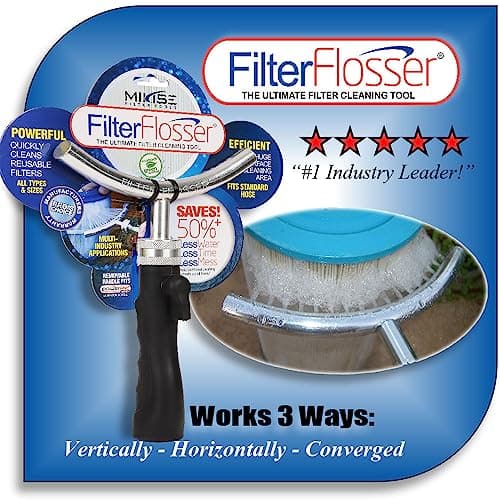
Filter Flosser rinsing wand
Filter Flosser · scored 7.6/10
Turns a garden hose into something that actually reaches the bottom of a pleat.
A thumb over a hose end cleans the outer third of a pleat and leaves the rest loaded. A wand that fans water down into the fold is the difference between a filter that looks clean and one that is clean.
It does not replace a chemical soak. Rinse weekly, soak monthly, and a cartridge lasts roughly twice as long as one that only ever gets rinsed.
What the maker states
- Type
- Hose-fed rinsing wand
- Job
- Directs a fan of water down between pleats
- Replaces
- Nothing chemical
- Fits
- Standard garden hose
How it scored
- Debris removal
- 8.5
- Oil removal
- 2.0
- Time saved
- 9.0
- Durability
- 7.5
- Availability
- 8.5
Skip this one if: you already own a fan-jet hose nozzle and use it patiently. This is a convenience tool, not a chemistry one.
#2 · Best for the monthly deep clean
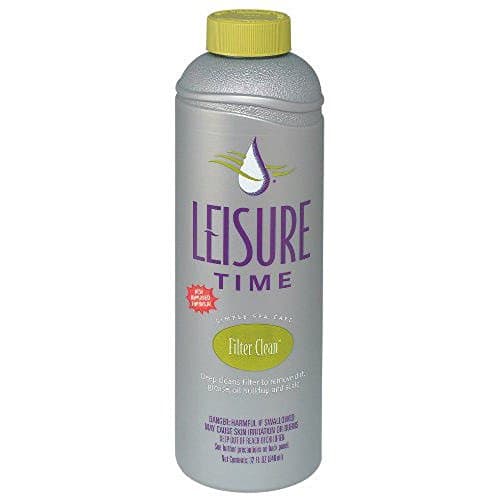
Leisure Time Filter Clean
Leisure Time · scored 8.4/10
A proper cartridge cleaner, which is a different product from a rinse.
The reason a rinsed filter still restricts flow is that the load is oil, not grit, and water does not remove oil. A dedicated cartridge cleaner is a surfactant designed to release exactly that, and the difference in flow after a proper soak is obvious at the jets.
Rinse harder afterwards than you think you need to. Cleaner left in the pleats goes straight into your water and is a very common cause of foaming that owners then blame on the tub.
What the maker states
- Format
- Concentrate for soaking
- Targets
- Body oils, lotions, light scale
- Soak time
- Per the label, commonly overnight
- Rinse
- Thoroughly, before refitting
How it scored
- Oil removal
- 9.0
- Scale removal
- 7.5
- Ease of use
- 8.0
- Cost per clean
- 8.0
- Availability
- 9.0
Skip this one if: your filter is only ever lightly loaded. A hose rinse handles surface debris; this is for the oils a rinse cannot shift.
#3 · Best for opening compressed pleats
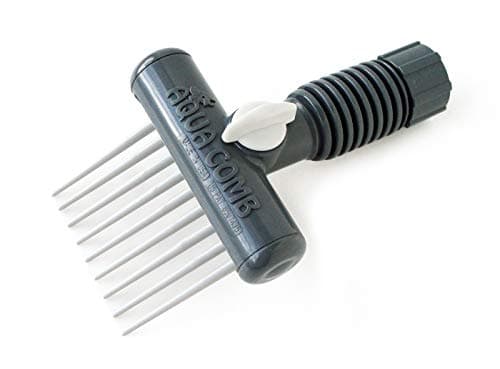
Aqua Comb spa filter cleaning comb
Aqua Comb · scored 6.8/10
Cheap, dumb, useful. Holds the pleats apart while you rinse.
Pleats compress with use, and a compressed pleat traps debris no amount of spraying will reach. A comb holds them open long enough for water to get in.
Use it gently and only on a wet filter. This is the one filter tool that can actively cost you a cartridge if you get impatient with it.
What the maker states
- Type
- Plastic pleat comb
- Job
- Separates pleats for rinsing
- Use with
- A hose or rinsing wand
- Risk
- Media damage if forced
How it scored
- Debris removal
- 7.5
- Oil removal
- 1.5
- Time saved
- 7.5
- Durability
- 7.0
- Availability
- 9.0
Skip this one if: you are heavy-handed. A comb dragged hard through pleats tears media, and torn media is a cartridge you have to replace.
Questions people actually ask
Frequently asked questions
How often should you clean a hot tub filter?
Rinse weekly, soak in a chemical cleaner monthly, and deep clean at every water change while the tub is drained. Rinsing alone kills a cartridge in months, because what clogs it is body oil rather than debris and water does not remove oil.
Should you rinse a hot tub filter with hot water?
Warm is fine, hot is not. Heat softens the plastic end caps, and a deformed cap stops sealing against the housing so water bypasses the media entirely while the cartridge still looks correct.
Can you pressure wash a hot tub filter?
No. High pressure drives debris deeper into the media and can tear the pleats. A garden hose with a fan-jet nozzle or a rinsing wand moves more water into the folds and does no damage.
Do you need to dry a hot tub filter after cleaning?
Not strictly, but it helps, because dried-on residue lifts more readily on the next rinse. It is only practical if you own a second cartridge to run while the first dries, which is worth doing for several other reasons too.
Should the filter go in the top or the bottom of the tub?
Wherever the tub's housing puts it. Spa filters sit in a skimmer or a dedicated housing and there is no choice to make: the cartridge fits one way, seated fully so the end caps seal. If it does not seat properly, it is the wrong part.
Where the numbers come from
Sources
Read next
Related on Float & Filter
- The best hot tub filter cleaners
Which cleaner for which kind of loading.
- When to replace a hot tub filter
When a clean will not help, however thorough.
- Hot tub filter finder by size
Working out which cartridge to buy as your second.
- The hot tub maintenance schedule
Where the rinse and the soak sit in the whole routine.
- How many hot tub filters do you need?
What makes the monthly soak practical.
- The best inflatable hot tub filters
Why the soak routine does not pay on an inflatable's cartridges.
- Hot Spring filters: Tri-X and alternatives
Ceramic elements are built around repeated cleaning rather than replacement.