Roundup
The Best Hot Tub Chemicals
Not the longest shelf, the shortest one. Nine products cover almost every situation a normal owner meets, and two of them are only worth buying if a test says so.
By Scooter M. · Updated · How we pick
How this page is funded: the buy buttons below are Amazon affiliate links. If you buy through one we earn a commission at no extra cost to you. It does not change what we recommend, and where the better answer is a retailer we earn nothing from, we say so. The full version.
The short answer
Top pick
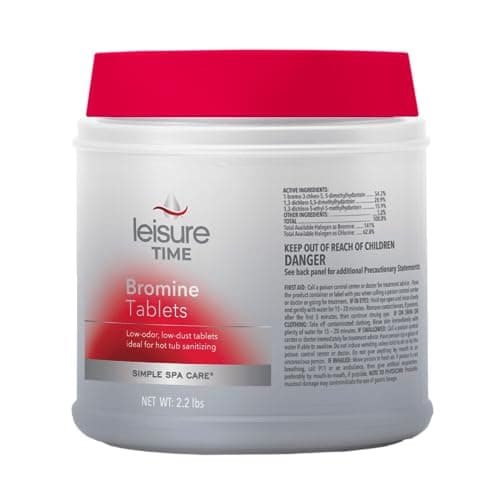
Leisure Time Brominating Tablets
The default sanitizer for most tubs, and the one that survives 104F best.
Quick picks
Tap a row to jump to the full write-up. Prices come from the live price layer, never from memory.
| # | Product | Best for | Score | Price |
|---|---|---|---|---|
| 1 | Leisure Time Brominating TabletsThe default sanitizer for most tubs, and the one that survives 104F best. | Set-and-forget sanitizing | 8.7out of 10 | $26.94 · View on Amazon#ad how this is funded · price as of October 18, 2026 |
| 2 | 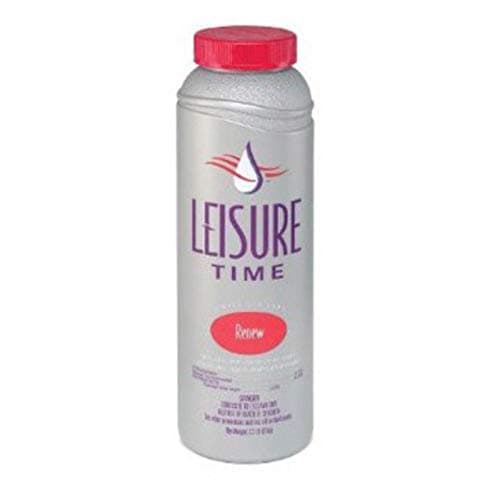 Leisure Time Renew Non-Chlorine ShockThe shock you can use and get back in the water quickly. Oxidizes; does not sanitize. Leisure Time Renew Non-Chlorine ShockThe shock you can use and get back in the water quickly. Oxidizes; does not sanitize. | The weekly oxidize | 8.6out of 10 | $29.74 · View on Amazon#ad how this is funded · price as of October 18, 2026 |
| 3 | 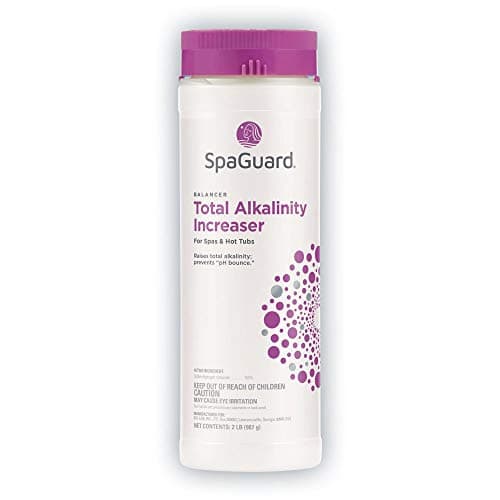 SpaGuard Total Alkalinity IncreaserThe product most people should buy before they buy any pH adjuster at all. SpaGuard Total Alkalinity IncreaserThe product most people should buy before they buy any pH adjuster at all. | Stopping pH drifting | 8.9out of 10 | $13.99 · View on Amazon#ad how this is funded · price as of October 18, 2026 |
| 4 | 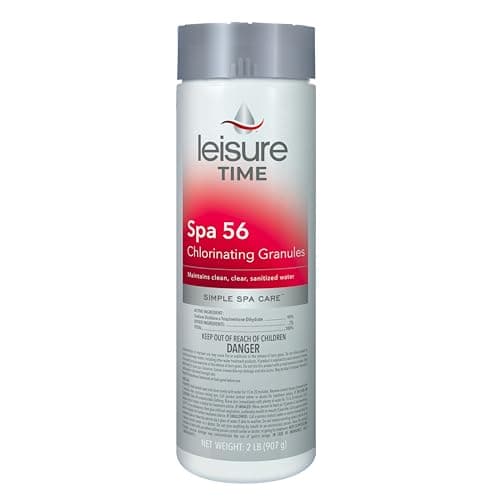 Leisure Time Spa 56 Chlorinating GranulesDichlor granules: dissolve fast, act fast, gone fast. The right tool after a heavy soak. Leisure Time Spa 56 Chlorinating GranulesDichlor granules: dissolve fast, act fast, gone fast. The right tool after a heavy soak. | Chlorine users and fast recovery | 8.1out of 10 | $16.00 · View on Amazon |
| 5 | 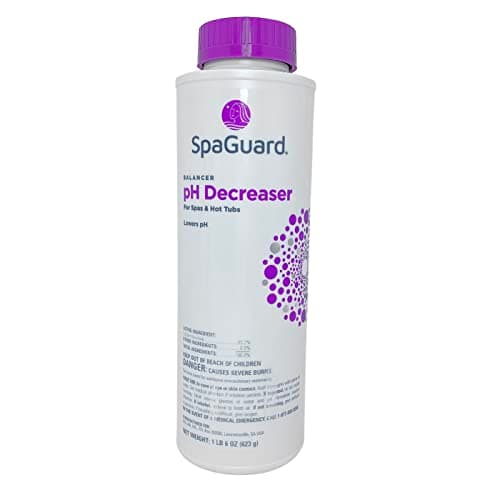 SpaGuard Spa pH DecreaserDry acid in a spa-sized container with spa-scale dosing on the label. That is the whole trick. SpaGuard Spa pH DecreaserDry acid in a spa-sized container with spa-scale dosing on the label. That is the whole trick. | Bringing high pH down | 8.5out of 10 | $11.99 · View on Amazon |
| 6 | 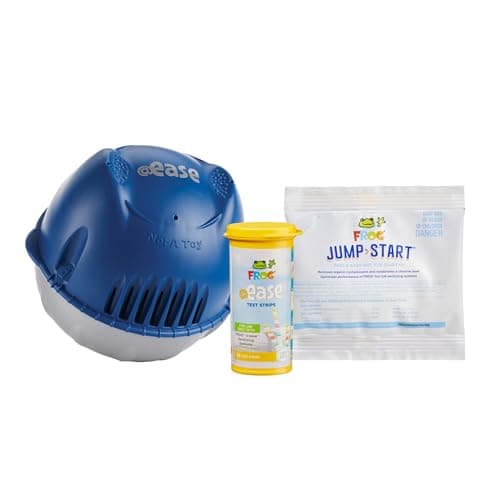 FROG @ease Floating Sanitizing SystemBuys a genuinely hands-off month, at the cost of proprietary refills. FROG @ease Floating Sanitizing SystemBuys a genuinely hands-off month, at the cost of proprietary refills. | Lowest weekly effort | 8.3out of 10 | $55.38 · View on Amazon |
| 7 | 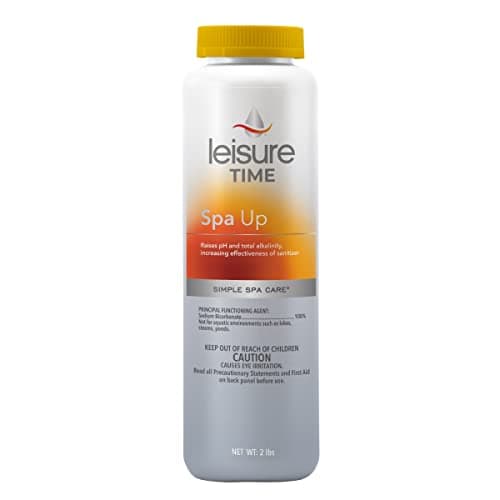 Leisure Time Spa UpSoda ash for the other direction. Small doses, then wait a full cycle. Leisure Time Spa UpSoda ash for the other direction. Small doses, then wait a full cycle. | Bringing low pH up | 8.4out of 10 | $6.15 · View on Amazon |
| 8 | 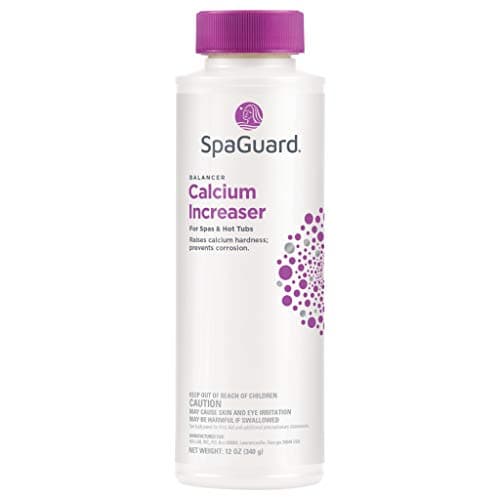 SpaGuard Calcium Hardness IncreaserOnly buy this if a test says you need it. Plenty of municipal water does not. SpaGuard Calcium Hardness IncreaserOnly buy this if a test says you need it. Plenty of municipal water does not. | Soft or well water | 8.4out of 10 | $8.99 · View on Amazon |
| 9 | 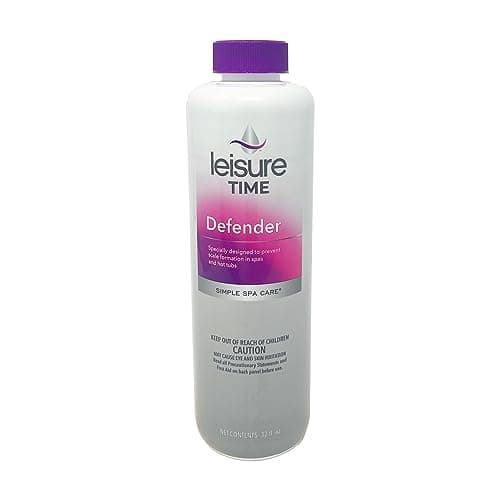 Leisure Time DefenderA sequestrant, not a cleaner. Genuinely useful on well water, pointless on soft municipal water. Leisure Time DefenderA sequestrant, not a cleaner. Genuinely useful on well water, pointless on soft municipal water. | Hard or metal-bearing fill water | 7.6out of 10 | $24.72 · View on Amazon#ad how this is funded · price as of October 18, 2026 |
Scores are our own, from the published scoring method on how we pick. They are an editorial judgment of published specifications, not a test result, and they are deliberately kept out of the page’s structured data.
A hot tub needs one product per job, not one product per symptom. The list below is organized that way: a sanitizer, an oxidizer, the two balancers you will use constantly, the two you will use occasionally, and two more that are either essential or a waste depending entirely on a number you can measure in fifteen seconds.
We have not tested any of these. What we have done is compile the manufacturers' published labels, check the target ranges they imply against the CDC's published guidance, work out the practical consequences, and say plainly which products most owners are buying for no reason. The method is published in full, and the scores in the table are an editorial judgment of that published data rather than a test result.
The four numbers everything on this page exists to move
Hot tub chemistry is four dials, and every product below moves exactly one of them. Once you see it that way the shopping list gets much shorter.
| Dial | Target | Moves it up | Moves it down |
|---|---|---|---|
| Free chlorine | At least 3 ppm in a hot tub[source] | Dichlor granules | Time, heat and bather load |
| Bromine | 4-8 ppm | Tablets in a floater or feeder | Time and bather load |
| pH | 7.2-7.8[source] | Soda ash (pH increaser) | Sodium bisulfate (dry acid) |
| Total alkalinity | 80-120 ppm, commonly cited | Sodium bicarbonate | Dry acid plus aeration |
| Calcium hardness | 150-250 ppm in an acrylic spa | Calcium chloride | Draining. There is no reducer. |
The CDC gives pH 7.2 to 7.8 for pools and hot tubs and specifies at least 3 ppm free chlorine in hot tubs, higher than the pool figure, because heat consumes chlorine faster and the bather load per gallon in a spa is enormous by comparison.[source] The alkalinity and hardness figures are the industry consensus ranges rather than CDC numbers, and where an ANSI standard is the right reference for spa water it is the water-quality standard for public pools and hot tubs.[source]
One correction worth making explicitly, because a national retailer publishes the error on a spa page: ANSI/APSP/ICC-5 is not the right citation for spa water. Its scope is residential inground swimming pools.[source] We cite the CDC first throughout this site partly because it is correct for the vessel and partly because it is free to read, which means you can check us.
Buy these first
If you are starting from nothing, the honest shortest list is: a sanitizer, a non-chlorine shock, an alkalinity increaser, a pH decreaser and a way to test. That is five items and it will handle the first several months of ownership. The pH increaser joins the list the first time your pH goes low, which for most municipal water supplies takes a while.
Calcium hardness increaser and a sequestrant are the two that should stay on the shelf in the shop unless a test tells you otherwise. Both solve real problems; both are useless and mildly counterproductive if you do not have those problems. On soft municipal water you are unlikely to need the sequestrant at all. On a well, you probably need both. Fifteen seconds with a test strip is the entire difference.
How we ordered them
The ranking is by how much of your actual routine the product carries. A sanitizer runs continuously and determines everything about how the tub behaves, so it ranks first. Shock is used weekly. Alkalinity gets adjusted on most fills and is the fix for the pH problem people misdiagnose most often, which is why it sits above the pH adjusters themselves. The situational products rank last on this page and would rank first on a page about well water.
Where two products do the same job, we have listed the one that is easier to buy and easier to dose. There is no meaningful performance gap between major-brand sodium bicarbonate and any other sodium bicarbonate: what you are paying for is a container sized for a 350-gallon tub and a label with spa-scale dosing on it, which is worth more than it sounds the first time you try to scale a pool dose down by a factor of fifty.
What we deliberately left off
Aromatherapy and fragrance products. They add organic load to water whose whole problem is organic load. If you want them, use them sparingly and expect to shock more often.
Anything sold as a total water conditioner. Products that claim to replace testing and balancing are selling the removal of a step that cannot be removed. Sanitizer gets consumed, pH drifts, and no bottle changes that.
Algaecide. Algae in a hot tub is a symptom of a sanitizer that has failed, not a separate problem with its own product. Fix the sanitizer and you fix the algae. We cover why on the hot tub algae page.
The order to add them in
Sequence matters and it is not the sequence on the labels. Total alkalinity first, because it is the buffer that decides whether your pH adjustment holds. Then pH. Then calcium hardness, if your test says it needs moving. Then sanitizer. Then shock, once everything else is in range. Adding sanitizer to badly balanced water works, but it works inefficiently and you spend more sanitizer than you need to.
The exact quantities for a given tub volume are on the dosage and levels chart, and the full first-fill sequence is on first chemicals after a refill. If you have not decided between bromine and chlorine yet, decide that before buying anything on this page, because it changes half the list.
Safety, briefly and seriously
Never mix concentrated pool or spa chemicals with each other, dry or wet. Add chemicals to water, never water to chemicals. Store them dry, separated, and out of reach. And where health is genuinely at stake in a hot tub, the risk that matters most is bacterial rather than chemical: the CDC publishes specific guidance on controlling Legionella in hot tubs, and maintaining a sanitizer residual is the core of it.[source]
None of that is a reason to be nervous about a hot tub. It is a reason to keep a residual, which is the single thing every product on this page is ultimately in service of.
Every pick, in full
The picks in detail
Specifications below are the manufacturer’s own published figures, attributed as such. We have not tested these units and the scores are an editorial judgment of published data against the published method, not a test result.
#1 · Best for set-and-forget sanitizing
Leisure Time Brominating Tablets
Leisure Time · scored 8.7/10
The default sanitizer for most tubs, and the one that survives 104F best.
Bromine is the chemistry most hot tubs are set up around, and the reason is thermal: bromine keeps working at spa temperatures where chlorine burns off fast. In a floating dispenser the tablets dissolve slowly and hold a residual for days rather than hours, so a tub used twice a week does not need daily attention.
Two things to know before you buy. Bromine tablets alone will not sanitize a brand-new fill, because you need a bromide bank established first, which is what a sodium bromide starter or a bromine startup kit is for. And bromine is not destroyed by shocking: a non-chlorine shock reactivates spent bromide back into free bromine, which is why bromine owners can shock weekly without a chemistry penalty.
What the maker states
- Chemistry
- 1-inch bromine tablets (BCDMH)
- Delivery
- Floating dispenser or in-line feeder
- Target residual
- 3-8 ppm bromine, per the label
- Needs a bromide bank
- Yes, on a fresh fill
How it scored
- Stability at 104F
- 9.5
- Ease of dosing
- 9.0
- Odor and skin feel
- 7.0
- Cost per month
- 7.5
- Availability
- 9.5
Skip this one if: you want the sanitizer gone within an hour of getting out, or bromine bothers your skin. Bromine holds a residual for days, which is the point, but it also means you cannot flip to a fresh-feeling tub on demand the way a dichlor user can.
#2 · Best for the weekly oxidize
Leisure Time Renew Non-Chlorine Shock
Leisure Time · scored 8.6/10
The shock you can use and get back in the water quickly. Oxidizes; does not sanitize.
Non-chlorine shock does one job well: it oxidizes the organic load a soak leaves behind, which is what turns water dull and gives it that flat, used smell. On a bromine tub it does a second job for free, converting spent bromide back into active bromine.
Understand what it is not. MPS is an oxidizer, not a sanitizer. If the problem is biological rather than organic, this will not fix it and the tub will stay exactly as cloudy as it was.
What the maker states
- Chemistry
- Potassium monopersulfate (MPS)
- Job
- Oxidizes body oils, lotions and sweat
- Reactivates bromine
- Yes, on a bromine tub
- Wait before soaking
- Per the label, typically about 15 minutes
How it scored
- Oxidizing power
- 8.0
- Ease of dosing
- 9.5
- Odor and skin feel
- 9.0
- Cost per month
- 8.0
- Availability
- 9.0
Skip this one if: you are dealing with an actual contamination event. MPS burns off organics, it does not kill what a chlorine shock kills, and reaching for it instead is a common reason a cloudy tub stays cloudy.
#3 · Best for stopping ph drifting
SpaGuard Total Alkalinity Increaser
SpaGuard · scored 8.9/10
The product most people should buy before they buy any pH adjuster at all.
Total alkalinity is the buffer that stops pH moving. If your pH will not stay put no matter how much acid or soda ash you add, the actual problem is almost always that TA is too low, and this is the fix.
Raise it in stages and retest between them. Bicarbonate is forgiving on the way up and unforgiving on the way down, because the only route back from over-corrected alkalinity is acid plus aeration plus patience.
What the maker states
- Chemistry
- Sodium bicarbonate
- Typical target
- 80-120 ppm total alkalinity
- Effect on pH
- Raises it slightly
- Dose
- By tub volume, per the label
How it scored
- Predictability
- 9.0
- Ease of dosing
- 8.5
- Container size fit
- 9.0
- Cost per month
- 9.0
- Availability
- 9.0
Skip this one if: your alkalinity is already in range. Overshooting TA locks pH high and is genuinely tedious to undo.
#4 · Best for chlorine users and fast recovery
Leisure Time Spa 56 Chlorinating Granules
Leisure Time · scored 8.1/10
Dichlor granules: dissolve fast, act fast, gone fast. The right tool after a heavy soak.
Dichlor is the granular chlorine hot tubs are dosed with, because it dissolves at spa temperature without pre-mixing and it is close enough to pH-neutral not to wreck your balance every time you add it. After a soak with four people in the tub, a measured dose of dichlor is the fastest way to get free chlorine back where the CDC says it should be.
The catch is cyanuric acid. Dichlor is stabilized, so every dose adds CYA that never leaves except by draining. Across a full water cycle that CYA accumulates and progressively blunts your chlorine, which is one of the real arguments for changing the water on schedule rather than topping up forever.
What the maker states
- Chemistry
- Sodium dichlor granules
- Dissolving
- Fast, no pre-mixing required per the label
- Target residual
- CDC gives at least 3 ppm free chlorine in hot tubs
- Adds cyanuric acid
- Yes, dichlor is stabilized
How it scored
- Stability at 104F
- 6.0
- Ease of dosing
- 8.5
- Odor and skin feel
- 8.0
- Cost per month
- 8.5
- Availability
- 9.5
Skip this one if: you only use the tub every couple of weeks. Dichlor burns off quickly at spa temperature, so an unattended chlorine tub goes unsanitized far sooner than a bromine one.
#5 · Best for bringing high ph down
SpaGuard Spa pH Decreaser
SpaGuard · scored 8.5/10
Dry acid in a spa-sized container with spa-scale dosing on the label. That is the whole trick.
Dry acid is dry acid. What you are buying is a container sized for a 350-gallon tub rather than a 20,000-gallon pool, and a label with spa-scale dosing on it. That sounds trivial until you have tried to measure a pool dose into a hot tub.
Add it with the jets running and the cover off, then retest after a full circulation cycle rather than immediately. A pH reading taken thirty seconds after dosing means nothing, and the second dose people add because the first appeared not to work is how tubs end up at pH 6.8.
What the maker states
- Chemistry
- Sodium bisulfate (dry acid)
- Target
- CDC gives pH 7.2-7.8 for pools and hot tubs
- Side effect
- Lowers total alkalinity as well
- Dose
- By tub volume, per the label
How it scored
- Predictability
- 8.5
- Ease of dosing
- 8.5
- Container size fit
- 9.0
- Cost per month
- 8.5
- Availability
- 9.0
Skip this one if: your total alkalinity is also high. Chasing pH while TA is out of range means you will be back next week. Fix alkalinity first, then pH.
#6 · Best for lowest weekly effort
FROG @ease Floating Sanitizing System
King Technology · scored 8.3/10
Buys a genuinely hands-off month, at the cost of proprietary refills.
This is the option for people who want the tub to be a tub rather than a chemistry project. A mineral cartridge sits alongside a self-regulating chlorine cartridge, and the maker states the pair holds sanitizer for weeks rather than days. The weekly job shrinks to testing and the occasional shock.
The honest counterweight is cost and lock-in. Refill cartridges are proprietary and priced accordingly, so across a year this is meaningfully more expensive than tablets. If your objection to hot tub care is the time, that trade is worth making. If your objection is the money, it is not.
What the maker states
- Chemistry
- SmartChlor chlorine plus a mineral cartridge
- Cartridge life
- Maker states up to 3-4 weeks per SmartChlor cartridge
- Delivery
- Floating holder, no feeder required
- Refills
- Proprietary
How it scored
- Stability at 104F
- 8.0
- Ease of dosing
- 9.8
- Odor and skin feel
- 9.0
- Cost per month
- 5.5
- Availability
- 8.5
Skip this one if: you resent proprietary cartridges. The holder only accepts the maker's own refills, so you are committed to one supply chain for as long as you run it.
#7 · Best for bringing low ph up
Leisure Time Spa Up
Leisure Time · scored 8.4/10
Soda ash for the other direction. Small doses, then wait a full cycle.
Soda ash raises pH quickly and total alkalinity slightly. Because it moves pH faster than it moves TA, it is the wrong tool when both are low: you will overshoot pH long before alkalinity is anywhere useful.
Dose in halves. Soda ash can cloud water briefly if you dump it in one spot with the pump off, so spread it across the surface with the jets running and give it a full cycle before retesting.
What the maker states
- Chemistry
- Sodium carbonate (soda ash)
- Target
- CDC gives pH 7.2-7.8
- Side effect
- Raises total alkalinity modestly
- Dose
- By tub volume, per the label
How it scored
- Predictability
- 8.0
- Ease of dosing
- 8.5
- Container size fit
- 9.0
- Cost per month
- 8.5
- Availability
- 9.0
Skip this one if: your pH is low because your total alkalinity is low. Raise TA first and pH usually follows on its own.
#8 · Best for soft or well water
SpaGuard Calcium Hardness Increaser
SpaGuard · scored 8.4/10
Only buy this if a test says you need it. Plenty of municipal water does not.
Soft water is aggressive. With too little calcium in it, water pulls calcium out of whatever it can reach, which in a hot tub means grout, heater components and seals. That is the real reason a hardness floor exists, and it is why this is worth owning if your fill water is soft.
It only moves one way. There is no calcium reducer, so the only route down from an over-corrected hardness reading is a partial or full drain. Test first, dose to the bottom of the range, and leave it there.
What the maker states
- Chemistry
- Calcium chloride
- Typical target
- 150-250 ppm in an acrylic spa
- Dissolving
- Exothermic, add slowly per the label
- Removable by
- Draining only
How it scored
- Predictability
- 8.5
- Ease of dosing
- 8.0
- Container size fit
- 8.5
- Cost per month
- 9.0
- Availability
- 8.5
Skip this one if: you have not measured your calcium hardness. Adding calcium you do not need is the quickest route to scale on the heater element, and there is no calcium reducer.
#9 · Best for hard or metal-bearing fill water
Leisure Time Defender
Leisure Time · scored 7.6/10
A sequestrant, not a cleaner. Genuinely useful on well water, pointless on soft municipal water.
Sequestrants hold dissolved metals and hardness minerals in solution so they cannot deposit on the shell and the heater. On a tub filled from a well, or from a supply with visible hardness, that is worth doing at every fill.
On soft municipal water it does nothing you need. This is the clearest example on the site of a product that is either essential or a waste depending entirely on a number you can measure for a few cents.
What the maker states
- Job
- Sequesters metals and scale-forming minerals
- Best added
- At fill, before the water heats
- Re-dose
- Per the label, typically monthly
- Not a
- Sanitizer, clarifier or stain remover
How it scored
- Predictability
- 7.5
- Ease of dosing
- 9.0
- Value on hard water
- 8.5
- Value on soft water
- 3.0
- Availability
- 8.5
Skip this one if: your calcium hardness is already in range and your fill water carries no metals. You would be paying for a problem you do not have.
Questions people actually ask
Frequently asked questions
What chemicals do I actually need for a hot tub?
Five to start: a sanitizer (bromine tablets or dichlor granules), a non-chlorine shock, an alkalinity increaser, a pH decreaser, and test strips. A pH increaser joins the list the first time your pH goes low. Calcium hardness increaser and a sequestrant are only worth buying if a test says your water needs them.
What order do you add hot tub chemicals in?
Total alkalinity first, then pH, then calcium hardness if it needs adjusting, then sanitizer, then shock. Alkalinity comes first because it buffers pH: adjust pH while alkalinity is out of range and the pH will simply drift back.
Is one brand of hot tub chemicals better than another?
For the balancers, no. Sodium bicarbonate is sodium bicarbonate, whoever packages it. What you pay for with a major brand is a spa-sized container and dosing instructions written for spa volumes. For sanitizers the differences are real but they are differences of chemistry rather than brand.
Do I need a clarifier?
Only as a finisher. A clarifier clumps fine particles so the filter can catch them, which is useful for the last of a haze after the chemistry is right. Used on water with low sanitizer or a dirty filter, it does nothing except load the cartridge.
How much free chlorine should a hot tub have?
The CDC specifies at least 3 ppm free chlorine in hot tubs, which is higher than the 1 ppm figure for pools, because heat consumes chlorine faster and the bather load per gallon is far greater. The same guidance gives a pH range of 7.2 to 7.8.
Where the numbers come from
Sources
- CDC, Model Aquatic Health Code (2023, 4th edition) - the source for the pH 7.2-7.8 range and the hot-tub disinfectant levels quoted on this site
- CDC, Controlling Legionella in Hot Tubs - the primary reference for the health and disinfection guidance quoted here
- PHTA, Find a Standard - the index confirming which ANSI standard actually covers water quality in public pools and hot tubs or spas
- ANSI webstore, ANSI/APSP/ICC 5-2011 - scope confirms it covers residential INGROUND SWIMMING POOLS, which is why we do not cite it for spa water
Read next
Related on Float & Filter
- What hot tub chemicals do you actually need?
The checklist version of this page, without the product rankings.
- Bromine vs chlorine for a hot tub
The one decision that changes half of the list above.
- Hot tub chemical dosage and levels chart
The target ranges and quantities, as a table you can print.
- The hot tub maintenance schedule
Where each of these products fits in the weekly and monthly routine.
- The best hot tub floating dispensers
How the tablets above actually get into the water.
- Hot tub chlorine and bromine levels
The readings these products move, with the CDC figures.