Can I use it?
Can You Put Epsom Salt or Bath Bombs in a Hot Tub?
No to all of it, and the reason is the same every time: a bathtub empties after one soak and a hot tub does not. What you add stays in the water, in the plumbing and in the filter.
By Scooter M. · Published · How we pick
How this page is funded: the buy buttons below are Amazon affiliate links. If you buy through one we earn a commission at no extra cost to you. It does not change what we recommend, and where the better answer is a retailer we earn nothing from, we say so. The full version.
The verdict, up front. No. Not Epsom salt, not supermarket bath salts, not bath bombs, not bubble bath, not essential oils. If you want a scented or mineral soak in a hot tub, the only correct product is one formulated for a jetted spa — a spa crystal rather than a bath product — used sparingly, with a shock afterwards. Hot Spring states plainly that it does not recommend any type of oils or bath salts in a spa because they gum up filters and damage electrical components, and that service needed to repair damage caused by non-approved chemicals is not covered by the warranty.[source]
The reason is structural, not chemical snobbery. A bathtub holds a few dozen gallons and empties down the drain in ten minutes. A hot tub holds several hundred gallons, recirculates them through a pump, a heater and a pleated filter, and keeps them for three or four months. Everything you put in stays in.
How we judged each additive
- Where does it end up? Dissolved salts stay in the water until it is changed. Oils migrate to the waterline, the filter pleats and the inside of the plumbing.
- Can you get it back out? If the only removal mechanism is a drain and refill, the additive has set the clock on your next water change.
- What does the manufacturer say? On this question the spa makers are unusually direct, and their position affects your warranty.
- Does it interfere with the chemistry you are testing? Something that moves a reading without doing the job behind that reading is worse than something inert.
Every bath additive, and what it actually does
| Additive | What is in it | What it does to a hot tub | Removable without draining? |
|---|---|---|---|
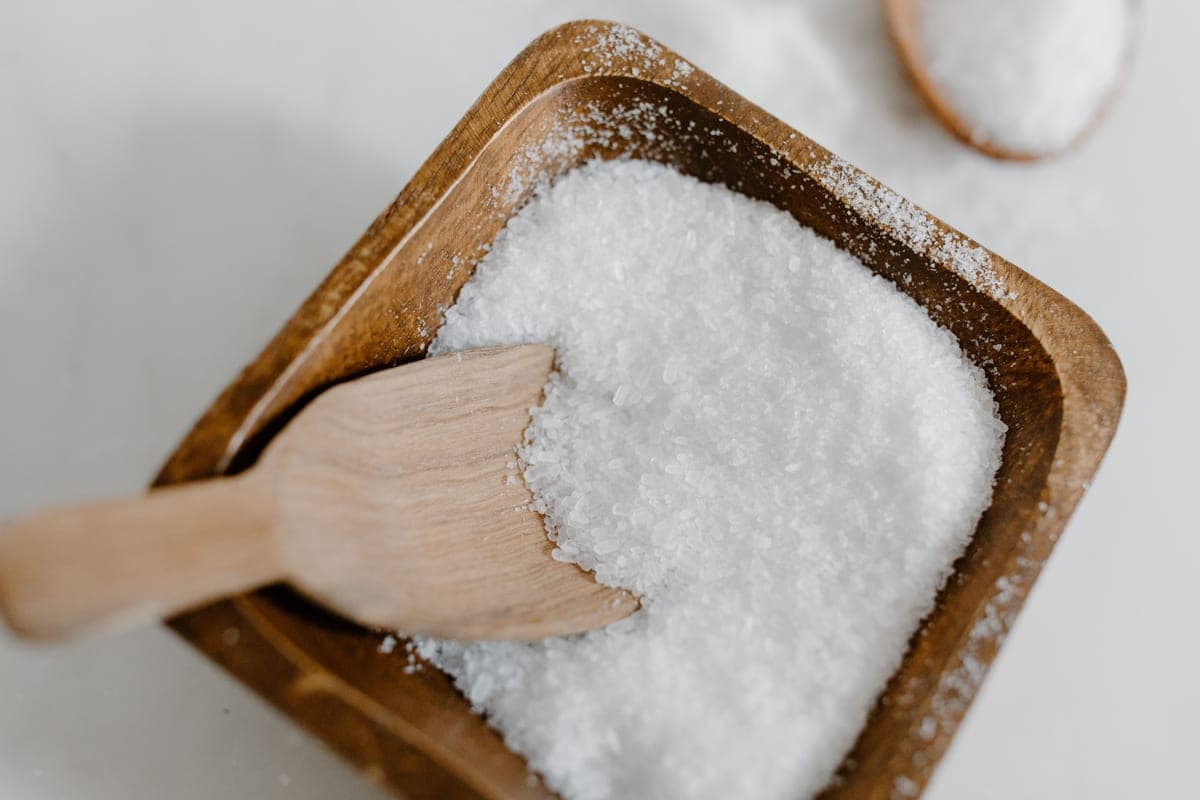
| Epsom salt | Magnesium sulfate | Raises total dissolved solids and the total hardness reading; maker guidance is against bath salts in a spa | No |
| Supermarket bath salts | Salts plus fragrance, oils and dye | All of the above, plus oil film and possible staining | No |
| Magnesium flakes / dead sea salt | Magnesium chloride and mixed salts | Same as Epsom salt, with added chloride load | No |
| Bath bomb | Bicarbonate plus citric acid, with oils, butters, dye, sometimes glitter or petals | Moves pH both ways, films the waterline, blocks jets and filter pleats | No |
| Bubble bath / shampoo | Surfactant | Foams violently under jets; maker guidance cites clogged jets and harm to the motor and components | Defoamer masks it; only a drain removes it |
| Essential or fragrance oils | Oil, undiluted | Waterline ring, loaded filter, raised sanitizer demand, scum | No |
| Spa-formulated crystals | Oil-free salt crystals made for spa water | Adds some organic load and raises sanitizer demand; designed to dissolve and pass a filter | Manageable with a shock |
Epsom salt: the one everybody asks about
The motive is completely reasonable. Epsom salt in a bath is a long tradition for aching muscles, a hot tub is a bath that stays hot, and the leap looks obvious. Three things make it a bad leap.
The dose would have to be enormous. This is arithmetic rather than chemistry. A domestic bathtub holds something like 30 to 40 gallons and takes a cup or two of Epsom salt. A small hot tub holds ten times that water, so matching the concentration you are used to means pounds of salt, not cups. The quantity that would give you the soak you are imagining is exactly the quantity that does the damage, and the quantity that is harmless is too dilute to feel.
It never leaves. Magnesium sulfate is a dissolved salt. It does not get consumed, filtered out or shocked away. The only exit is a water change, so one enthusiastic dose has committed you to a drain and refill earlier than you planned — how often to change hot tub water is the baseline you would be shortening.
It corrupts a reading you rely on. A total hardness test pad counts magnesium alongside calcium. Dose Epsom salt and your hardness number climbs while the calcium that actually protects the shell and the heater has not changed at all — so a tub can read “hard” and still be chemically soft, which is the state that etches surfaces. What calcium hardness is for, and why the reading matters, is on hot tub calcium hardness.
And then the manufacturer position, which is the part with money attached. Hot Spring says it does not recommend oils or bath salts, that they gum up filters and damage electrical components, and that while using them does not void the warranty outright, any repair needed because of damage from non-approved chemicals is not covered.[source] That is a carefully worded sentence and it is worth reading twice: the warranty survives, the repair bill does not.
Bath bombs: two problems in one package
A bath bomb is a fizz reaction — sodium bicarbonate and citric acid — wrapped around a payload of oils, butters, dye and sometimes glitter or dried petals. Both halves are a problem.
The fizz half moves your chemistry in both directions at once: the citric acid pushes pH down, the bicarbonate pushes alkalinity up, and you are left guessing which reading to chase. The payload half is worse, because oil and dye are what the filter and the waterline collect. Glitter and botanicals go straight into the pleats and, on a tub with a suction fitting at floor level, into the plumbing.
Jacuzzi’s own guidance covers the family this belongs to: keep bubble suds, bath lotions, soaps, shampoos, detergents and other foam-causing products out of the tub, because they clog the jets and the chemicals in them can be harsh on the motor and other components.[source]
Best for: a bathtub. There is no spa-safe bath bomb, and the products sold as “hot tub bombs” are usually spa crystals in a ball shape — check the ingredients for oil before you believe the label.
Bubble bath, shampoo and anything that foams
Surfactant plus jets equals foam, immediately and spectacularly, and unlike most hot tub problems this one is visible within a minute. The cleanup is the same as for dish soap and it is on household chemicals in a hot tub: defoamer to get the cover back on, then a drain, with a line flush if it went through the pipework.
One thing worth separating: foam from a soap is a different diagnosis from foam that appears gradually in a tub nobody has soaped. The second kind is usually body oils and a low calcium level, and chasing it with defoamer forever is the mistake. That distinction is worked through on why your hot tub foams.
Essential oils
Undiluted oil in recirculating water goes exactly where oil always goes: up to the surface, round to the waterline, and into the filter. You get a scum ring, a filter that needs cleaning sooner, and a measurable rise in sanitizer demand, because oil is organic load and organic load is what consumes chlorine.
This site has taken the same line on fragrance products from the start — the main chemicals page leaves them off deliberately, and we are not making an exception for the artisanal version. If you want scent, the form to buy it in is a crystal, not an oil. The waterline consequence of getting this wrong is on the hot tub scum line.
The legitimate version: spa-formulated crystals
There is a real product category here, and it exists precisely because people want what Epsom salt seemed to offer. Spa crystals are formulated for jetted, filtered, recirculating water: oil-free, fully soluble, and dosed by the capful into hundreds of gallons.
- Best for the sore-muscle soak: a therapy-branded crystal that states magnesium on the label. It is the closest legitimate answer to the Epsom question, with the honest caveat that a spa dose is nothing like a bathtub dose.
- Best for a scented soak: a plain fragrance crystal from an established spa brand. Cheaper per jar, makes no therapeutic claim, and in crystal form it gives the filter far less trouble than an oil.
Neither is free of consequence. Both add organic load, both raise sanitizer demand slightly, and a tub that gets scented every soak is a tub that needs shocking more often — shocking a hot tub covers which shock and when. Use them in the first half of a fill rather than the week before a water change, and keep a strip handy: chlorine and bromine levels explains what you are checking against the CDC figures.[source]
If you already added Epsom salt, a bath bomb or bubble bath
Nothing here is an emergency, but the order matters. Work down this list and stop at the point where the water is behaving again.
- If it is foaming, dose a defoamer. That buys you a lid and a working pump. It is first aid, and it does not remove the surfactant.
- Test before anyone gets in. A bath bomb will have moved pH and alkalinity; a dye may have left a tint. Balance first, and do not assume the sanitizer survived — the extra organic load will have eaten some of it.
- Clean or replace the filter. Oils and dye sit in the pleats and re-release for weeks. A chemical soak is more effective than a rinse here — how to clean a hot tub filter has the method, and a badly oiled cartridge is often cheaper to replace than to rescue.
- Purge the plumbing if oil went in. A line flush lifts the film out of pipework you cannot see or reach, and it should be done before you drain rather than after — flushing hot tub plumbing lines.
- Then drain and refill. For dissolved salts this is the only step that actually works, because nothing else removes them. The procedure, including getting the last of the water out, is on draining and refilling a hot tub, and the chemistry on the way back up is on first chemicals after a refill.
Inflatable tubs: the same answer, sooner
Everything above applies more sharply to an inflatable. The volume is smaller, so any additive is more concentrated; the filters are smaller and cheaper, so they load up faster; and the liner is vinyl, which holds dye and oil more readily than acrylic. The pump assemblies on these tubs are also the least tolerant of anything that films or blocks. If you want a scented soak in an inflatable, the crystal route is the only one, and in a smaller dose — see inflatable hot tub chemicals.
The honest summary
The thing people are chasing — a long magnesium soak that leaves your skin feeling different — is a bathtub experience, and a hot tub cannot deliver it at any dose that is safe for the equipment. What a hot tub can deliver is water that feels good because it is balanced, plus a spa crystal if you want scent. Chasing the bathtub version instead buys you an early water change, a clogged filter and a repair bill the warranty will not meet.
If the underlying complaint is how the water feels rather than how it smells, that is a different and more fixable problem. Balanced water with calcium in range feels noticeably better than soft, under-buffered water, and the products that claim to improve water feel directly are assessed on hot tub water conditioners.
What fixes it
The products for this job
Named because they do the specific job this page describes, not because they are the only options. Specifications are the manufacturer’s published figures.
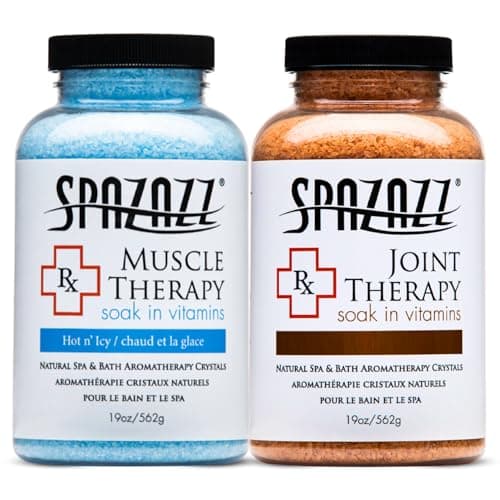
#1 · Best for the epsom-salt buyer who wanted the sore-muscle soak
Spazazz RX Muscle & Joint Therapy Spa Crystals, 19 oz
Spazazz · scored 7.0/10
Spa-formulated crystals that state magnesium on the label, which is the closest legitimate answer to the Epsom salt question.
The reason this product is on the site is the question it answers. People ask whether they can put Epsom salt in a hot tub because they want the soak, not because they want to change their water chemistry. A crystal formulated for a jetted spa is the version of that which does not put magnesium sulfate through a heater.
It is still something extra in the water. Any scented or mineral crystal adds organic load to a vessel whose main ongoing problem is organic load, so use it sparingly, do not use it in the last fill before a water change if you can help it, and expect to shock afterwards. That is the same advice this site gives about every fragrance product, and we are not making an exception here.
Our scores do not rate the therapeutic claims, because nothing is published that would let us. What we can judge is that it is formulated for spa water, that it names its contents, and that it is expensive per soak.
What the maker states
- Size
- 19 oz, per the listing
- Formulated for
- Hot tubs and spas, per the listing
- Stated contents
- Salt crystals with magnesium and arnica, per the listing
- Oil content
- Spazazz lists its crystal range as oil-free
How it scored
- Made for a jetted spa
- 8.5
- Added organic load
- 5.5
- Label clarity
- 7.0
- Value
- 6.0
- Availability
- 7.5
Skip this one if: you are hoping for an Epsom-strength magnesium soak. A spa crystal is dosed by the capful into hundreds of gallons, which is nothing like a bathtub dose.
#2 · Best for a scented soak without the oil
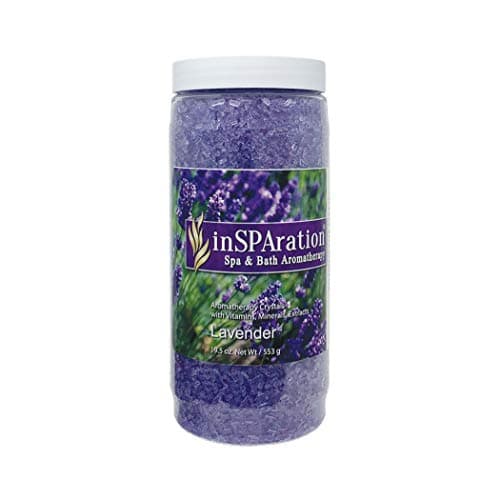
InSPAration Lavender Crystals for Spas and Hot Tubs, 19 oz
InSPAration · scored 7.2/10
A crystal rather than a liquid, from the oldest name in spa fragrance, and crystals are the form that gives filters the least trouble.
If you are going to add a scent, add it as a crystal and not as an oil or a bath bomb. A crystal dissolves; an oil emulsifies, films the waterline and ends up in the pleats of the filter, which is the mechanism behind every manufacturer warning about oils in a spa.
This is honest about being a fragrance. It makes no muscle or joint claim, which makes it easier to price against: you are buying a smell, and it is cheaper per jar than the therapy-branded crystals.
The same caveat applies as to everything in this part of the cupboard. It is organic load, it will raise your sanitizer demand slightly, and a tub that gets scented every soak is a tub that needs shocking more often.
What the maker states
- Size
- 19 oz, per the listing
- Form
- Crystals, per the listing
- Formulated for
- Spas and hot tubs, per the listing
- Model
- InSPAration 7463, per the listing
How it scored
- Made for a jetted spa
- 8.5
- Added organic load
- 6.0
- Label clarity
- 7.5
- Value
- 7.5
- Availability
- 7.5
Skip this one if: you want any therapeutic benefit stated. This is a fragrance product and it does not pretend otherwise.
#3 · Best for killing foam right now
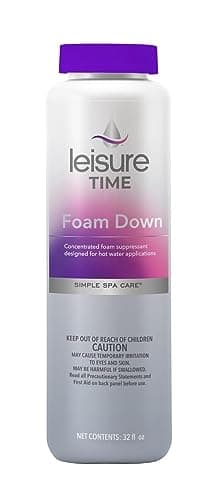
Leisure Time Foam Down
Leisure Time · scored 6.9/10
Works in seconds and treats nothing. Useful, and widely misused as a solution.
There is a legitimate use for defoamer: guests are arriving in ten minutes and the tub looks like a bubble bath. It handles that perfectly, and there is no shame in owning a bottle for exactly that.
What it does not do is remove the surfactants causing the foam. Those are still in the water, and every dose of defoamer adds silicone that eventually loads your filter. If you are reaching for it weekly, the tub is telling you it wants fresh water.
What the maker states
- Type
- Silicone-based defoamer
- Action
- Collapses surface foam on contact
- Treats the cause
- No
- Dose
- Drops, per the label
How it scored
- Immediate effect
- 9.5
- Duration
- 4.0
- Treats the cause
- 1.5
- Value
- 8.5
- Availability
- 9.0
Skip this one if: the foam comes back within a day. Recurring foam is a water-age or surfactant problem, and defoamer is a way to postpone dealing with it.
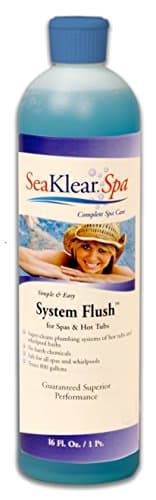
#4 · Best for a serious pre-drain purge
SeaKlear Spa System Flush
SeaKlear · scored 8.2/10
Built for the deep clean rather than the routine one, and priced accordingly.
Purge products are the one category where the aggressive option earns its price, because the thing you are removing is inside pipework you cannot inspect or scrub.
Whatever you use, the sequence is the same: circulate, drain, wipe the shell and the waterline while it is empty, then refill. The wipe step is not optional; everything the purge released is sitting on the shell.
What the maker states
- Type
- Liquid plumbing purge
- Used
- Before draining, with jets running
- Contact time
- Per the label
- After use
- Drain, wipe, refill
How it scored
- Biofilm removal
- 8.5
- Ease of use
- 8.5
- Value
- 7.5
- Odor
- 8.0
- Availability
- 8.0
Skip this one if: you purge at every water change already. Then a cheaper routine product is enough.
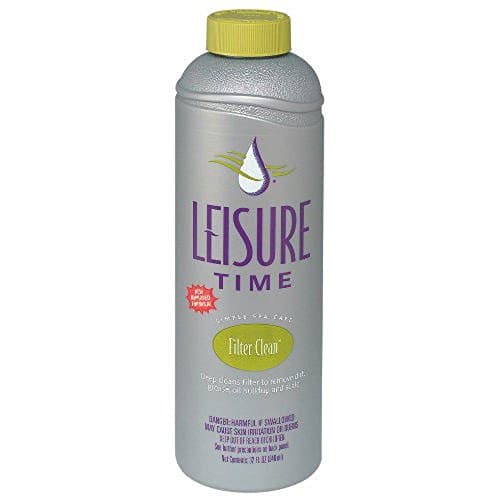
#5 · Best for the monthly deep clean
Leisure Time Filter Clean
Leisure Time · scored 8.4/10
A proper cartridge cleaner, which is a different product from a rinse.
The reason a rinsed filter still restricts flow is that the load is oil, not grit, and water does not remove oil. A dedicated cartridge cleaner is a surfactant designed to release exactly that, and the difference in flow after a proper soak is obvious at the jets.
Rinse harder afterwards than you think you need to. Cleaner left in the pleats goes straight into your water and is a very common cause of foaming that owners then blame on the tub.
What the maker states
- Format
- Concentrate for soaking
- Targets
- Body oils, lotions, light scale
- Soak time
- Per the label, commonly overnight
- Rinse
- Thoroughly, before refitting
How it scored
- Oil removal
- 9.0
- Scale removal
- 7.5
- Ease of use
- 8.0
- Cost per clean
- 8.0
- Availability
- 9.0
Skip this one if: your filter is only ever lightly loaded. A hose rinse handles surface debris; this is for the oils a rinse cannot shift.
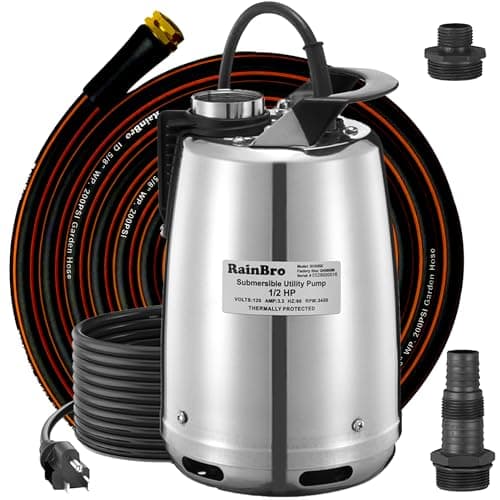
#6 · Best for not waiting three hours
RainBro 1/2 HP submersible drain pump
RainBro · scored 8.5/10
Turns a half-day drain into twenty minutes. The most boring worthwhile purchase here.
The single biggest reason people stretch a water change from four months to seven is that draining through the built-in valve takes most of an afternoon. Removing that friction is worth more to your water quality than most chemicals.
Watch it as the water gets low. Utility pumps do not like running dry, and the last inch is a wet-vac job anyway.
What the maker states
- Flow
- 2,300 GPH, per the listing
- Max lift
- 23 ft, per the listing
- Included
- 10 ft hose, 3/4 in GHT adapter, 25 ft cord, per the listing
- Minimum suction
- Not stated in the listing
How it scored
- Drain speed
- 9.5
- Build quality
- 7.0
- Ease of use
- 8.5
- Value
- 8.5
- Availability
- 9.0
Skip this one if: your tub has a gravity drain that runs somewhere useful and you are not in a hurry.
Questions people actually ask
Frequently asked questions
Can you put Epsom salt in a hot tub?
No. Magnesium sulfate is a dissolved salt that nothing removes except a water change, it inflates the total hardness reading without adding the calcium that protects the shell, and matching a bathtub concentration in several hundred gallons would take pounds of it. Hot Spring states it does not recommend bath salts in a spa and that repairs from non-approved chemicals are not covered by the warranty.
What happens if you put a bath bomb in a hot tub?
Two things at once. The citric acid and bicarbonate move pH and alkalinity in opposite directions, and the oils, dye and any glitter or petals film the waterline and load the filter pleats. Jacuzzi’s own guidance says products like this clog the jets and can be harsh on the motor and other components.
Can you put bubble bath in a hot tub?
No. Surfactant plus jets gives immediate, heavy foam, and the surfactant does not break down on its own. Defoamer suppresses the suds so you can get the cover back on, but the real fix is a water change, plus a line flush if it circulated through the plumbing.
Can you use essential oils in a hot tub?
Not in a jetted spa. Undiluted oil rises to the surface, collects at the waterline as a scum ring, and ends up in the filter pleats, where it raises sanitizer demand because oil is organic load. If you want scent, use an oil-free crystal formulated for spa water.
Can you put Epsom salt in an inflatable hot tub?
No, and the case against it is stronger than on a hard tub. The volume is smaller so the concentration is higher, the filter is smaller so it loads faster, and a vinyl liner holds dye and oil more readily than acrylic. The pump assembly on these tubs is also the least tolerant component on the market.
I already added Epsom salt. What should I do?
Test and rebalance first, clean or replace the filter, and plan a drain and refill, because a dissolved salt has no other exit. If anything oily or scented went in with it, run a line flush before you drain so the film comes out of the pipework rather than staying behind for the next fill.
Do bath salts void a hot tub warranty?
Read the wording carefully. Hot Spring says using non-approved products does not void the warranty itself, but that any service needed to repair damage caused by them is not covered. So the warranty survives and the repair bill is yours — which on a heater or a pump is the expensive half.
Where the numbers come from
Sources
- Hot Spring, Service and Support FAQ - the manufacturer statement that it does not recommend oils or bath salts in a spa, and that repairs caused by non-approved chemicals are not covered by the warranty
- Jacuzzi, 6 'Don'ts' of Hot Tub Use - the manufacturer guidance to keep bubble bath, soaps, lotions and other foam-causing products out of a hot tub, and its stated reasons
- CDC, Model Aquatic Health Code (2023, 4th edition) - the source for the pH 7.2-7.8 range and the hot-tub disinfectant levels quoted on this site
Read next
Related on Float & Filter
- Baking soda, vinegar and bleach in a hot tub
The cupboard-substitute question for chemistry rather than soaking.
- Why your hot tub foams
Telling a soap foam apart from an oils-and-calcium foam.
- The hot tub scum line
Where oils end up, and how to get the ring off.
- Hot tub water conditioners
If what you actually want is water that feels different.
- Flushing hot tub plumbing lines
The step to run before draining if anything oily went in.