Guide
The Hot Tub Scum Line
The ring is not dirt. It is the oils your sanitizer never oxidized, parked at the waterline where the water stops moving.
By Scooter M. · Published · How we pick
How this page is funded: the buy buttons below are Amazon affiliate links. If you buy through one we earn a commission at no extra cost to you. It does not change what we recommend, and where the better answer is a retailer we earn nothing from, we say so. The full version.
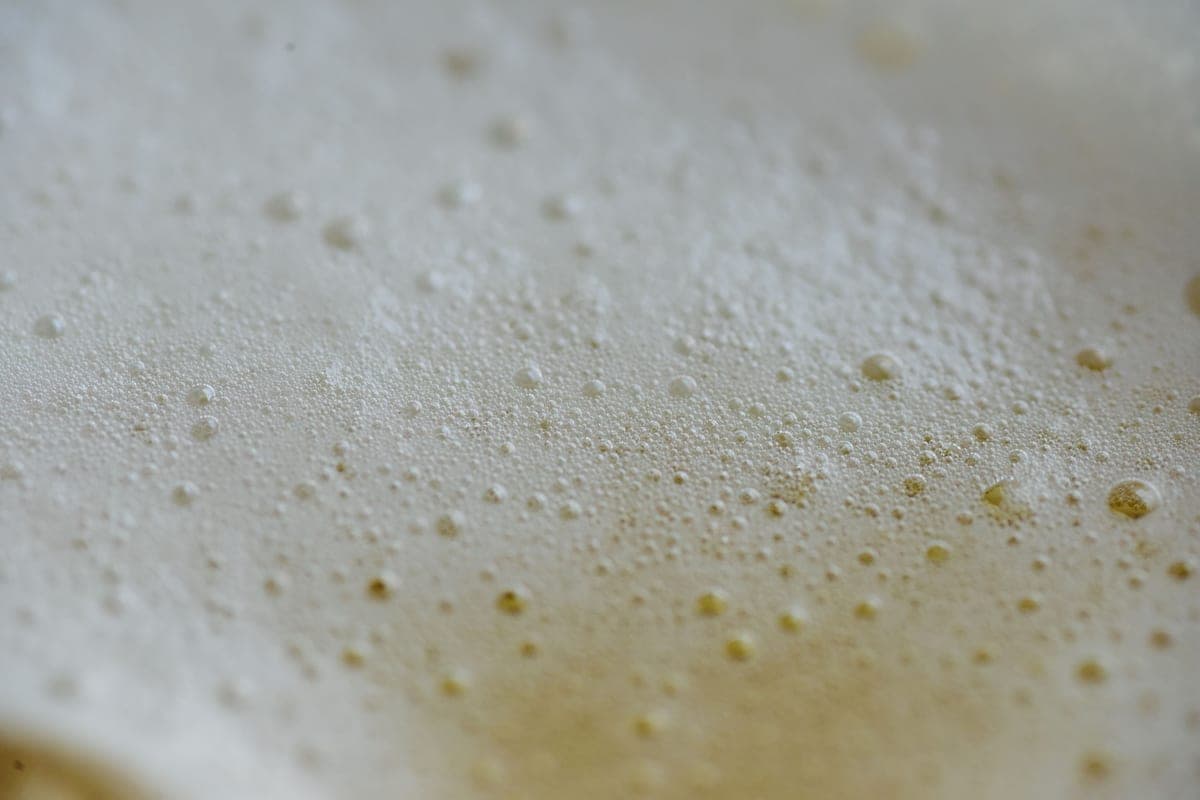
The greasy band around the waterline is body oil, lotion, deodorant, sunscreen and detergent residue from swimwear. It collects there because the waterline is where circulation effectively stops, so anything floating gets pressed against the shell and stays.
It is worth understanding as a symptom rather than a cleaning chore. The ring is a visible measure of the organic load your sanitizer has not oxidized and your filter has not caught — which is the same load that causes foaming and that turns into the chloramines people mistake for “too much chlorine”.
Removing it without wrecking the shell
- Do it when the water is low or the tub is drained if the ring is heavy. Working at the waterline of a full tub pushes half of what you loosen back into the water, where it goes to the filter.
- Use a non-abrasive cloth or sponge and a spa-safe cleaner. Acrylic scratches, and scratches hold future scum better than smooth acrylic does, so an aggressive first clean makes every subsequent one harder.
- Work with the grain of the shell, in long passes rather than small circles.
- Rinse thoroughly. Cleaner left on the shell goes into the water on the refill and is a classic cause of foaming.
- Clean the filter afterwards. Whatever you released has ended up there.
What not to use: household abrasives, scouring pads, bleach, or anything aggressive enough to dull acrylic. The damage is permanent and it makes the problem recur faster.
Why it keeps coming back
Because removal is not prevention. Four things put oils into the water, and all four are addressable.
| Source | How much it contributes | Fix |
|---|---|---|
| Body oils and sweat | Constant, unavoidable | Rinse before getting in |
| Lotions, sunscreen, deodorant | Large, and underestimated | Rinse before getting in |
| Swimwear detergent | Large, and almost never suspected | Rinse swimwear in plain water, never wash it |
| Hair product | Moderate | Tie hair up, or rinse it first |
A shower before getting in is the single most effective intervention available, it is free, and it does more for a scum line than any product on this site.
What to add to the water
Enzymes. These continuously digest the oils rather than waiting for a weekly shock to oxidize them, which is why a tub dosed weekly develops a far lighter ring. This is the one product that genuinely treats the cause rather than the appearance.
A weekly shock. Oxidizing the organic load is what stops it accumulating between water changes. See shocking a hot tub.
A clean filter. Oils that reach the cartridge are oils that are not at the waterline, and a loaded cartridge stops catching them. Rinse weekly and soak monthly — how to clean a hot tub filter has the routine.
What will not help: more sanitizer. A scum line is not a sanitizer shortage, and dosing harder to fix it just produces more chloramines. Hold the residual the CDC guidance asks for and treat the oils separately.[source]
The floating absorber question
Small sponges and discs sold to float in the tub and soak up oils are a real product category. We are not naming one, because we could not verify current availability for a specific model to the standard the rest of this site holds — and a named recommendation we cannot stand behind is worse than none.
As a category they are cheap and broadly harmless, and they address the symptom at the surface rather than the cause. If you use one, replace it when it stops feeling absorbent, and treat it as a supplement to the habits above rather than a substitute for them.
When the ring is telling you something else
If it returns within days of a clean, on a tub with normal use, the water is at the end of its service life. Accumulated oils do not leave except by draining, and past a point every product is treating water that should be replaced — how often to change hot tub water has the interval.
If the ring is chalky rather than greasy, that is scale, not scum, and it needs the opposite approach. See hot tub scale and hard water stains.
If the shell feels slippery below the waterline too, that is biological rather than oily, and it points at the plumbing.
What fixes it
The products for this job
Named because they do the specific job this page describes, not because they are the only options. Specifications are the manufacturer’s published figures.
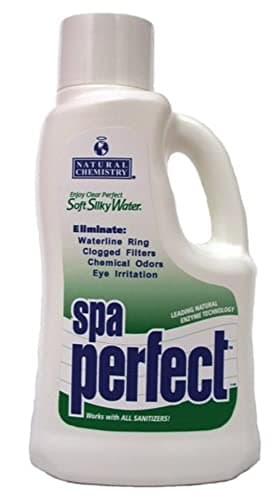
#1 · Best for treating the cause of foam and scum
Natural Chemistry Spa Perfect
Natural Chemistry · scored 7.6/10
Enzymes eat the oils that make foam and scum lines. Slower than defoamer, and actually a fix.
Foam, scum lines and that dull film on the waterline are all the same problem: organic load the sanitizer has not oxidized. Enzymes work continuously on that load, which is why a tub dosed weekly develops far less of a scum line.
The trade-off is patience and running cost. This is a weekly maintenance product, so budget for it as a monthly cost rather than a one-off purchase.
What the maker states
- Type
- Enzyme concentrate
- Targets
- Body oils, lotions, organic residue
- Dosing
- Weekly, per the label
- Compatible with
- Chlorine and bromine, per the maker
How it scored
- Immediate effect
- 3.0
- Duration
- 8.5
- Treats the cause
- 8.5
- Value
- 7.0
- Availability
- 8.5
Skip this one if: you want an instant result. Enzymes work across days, not seconds, and they will not clear a foaming tub before guests arrive.
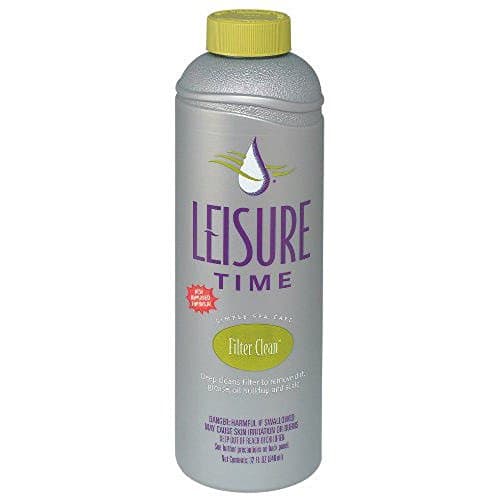
#2 · Best for the monthly deep clean
Leisure Time Filter Clean
Leisure Time · scored 8.4/10
A proper cartridge cleaner, which is a different product from a rinse.
The reason a rinsed filter still restricts flow is that the load is oil, not grit, and water does not remove oil. A dedicated cartridge cleaner is a surfactant designed to release exactly that, and the difference in flow after a proper soak is obvious at the jets.
Rinse harder afterwards than you think you need to. Cleaner left in the pleats goes straight into your water and is a very common cause of foaming that owners then blame on the tub.
What the maker states
- Format
- Concentrate for soaking
- Targets
- Body oils, lotions, light scale
- Soak time
- Per the label, commonly overnight
- Rinse
- Thoroughly, before refitting
How it scored
- Oil removal
- 9.0
- Scale removal
- 7.5
- Ease of use
- 8.0
- Cost per clean
- 8.0
- Availability
- 9.0
Skip this one if: your filter is only ever lightly loaded. A hose rinse handles surface debris; this is for the oils a rinse cannot shift.
Questions people actually ask
Frequently asked questions
What causes the ring around a hot tub waterline?
Body oils, lotion, sunscreen, deodorant and detergent residue from swimwear. It collects at the waterline because that is where circulation effectively stops, so anything floating gets pressed against the shell and stays there.
How do you clean a hot tub scum line?
With a non-abrasive cloth and a spa-safe cleaner, ideally with the water low or the tub drained so you are not pushing what you loosen back into the water. Rinse thoroughly afterwards, because cleaner left on the shell causes foaming, and clean the filter, because that is where the rest of it went.
How do you stop a hot tub scum line forming?
Rinse before getting in, rinse swimwear in plain water instead of washing it in detergent, dose an enzyme weekly, shock weekly, and keep the filter clean. A shower beforehand is free and does more than any product.
Will more chlorine get rid of a scum line?
No. A scum line is not a sanitizer shortage, and dosing harder mostly produces more chloramines. Hold your normal residual and treat the oils separately with enzymes, a weekly shock and a clean filter.
Where the numbers come from
Sources
- CDC, Controlling Legionella in Hot Tubs - the primary reference for the health and disinfection guidance quoted here
- CDC, Model Aquatic Health Code (2023, 4th edition) - the source for the pH 7.2-7.8 range and the hot-tub disinfectant levels quoted on this site
- PHTA, Find a Standard - the index confirming which ANSI standard actually covers water quality in public pools and hot tubs or spas
Read next
Related on Float & Filter
- Why your hot tub foams
The same organic load, showing up a different way.
- Hot tub scale and hard water stains
If the ring is chalky rather than greasy.
- How to clean a hot tub filter
Where the oils go once the filter catches them.
- How often to change hot tub water
When a ring that keeps returning means the water is finished.
- The best hot tub surface cleaners
The products that lift the ring without scratching acrylic.
- The best hot tub scum absorbers
Catching the oil while it still floats, before it becomes the ring.