Buyer's guide
Hot Tub Leak Repair
The fix depends entirely on where the water is going. Buy the cheap thing that finds the leak before the expensive thing that claims to seal it.
By Scooter M. · Published · How we pick

How this page is funded: the buy buttons below are Amazon affiliate links. If you buy through one we earn a commission at no extra cost to you. It does not change what we recommend, and where the better answer is a retailer we earn nothing from, we say so. The full version.
The short answer
Top pick
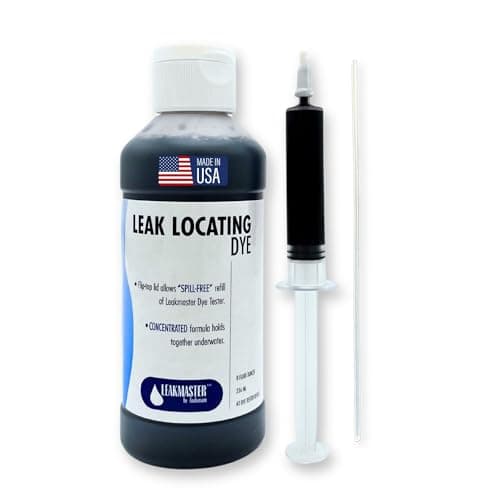
Leakmaster leak detection dye kit
The cheapest thing on this page and the one to buy first, because it tells you which of the others you need.
Quick picks
Tap a row to jump to the full write-up. Prices come from the live price layer, never from memory.
| # | Product | Best for | Score | Price |
|---|---|---|---|---|
| 1 | Leakmaster leak detection dye kitThe cheapest thing on this page and the one to buy first, because it tells you which of the others you need. | Finding the leak first | 7.1out of 10 | $9.95 · View on Amazon |
| 2 | 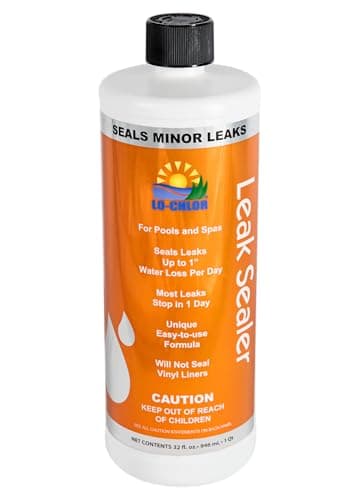 Lo-Chlor leak sealer, 32 ozThe sealer that tells you its own limit, which is exactly what you need to know before pouring it in. Lo-Chlor leak sealer, 32 ozThe sealer that tells you its own limit, which is exactly what you need to know before pouring it in. | Small leaks in piping and fittings | 7.1out of 10 | $25.00 · View on Amazon#ad how this is funded · price as of October 17, 2026 |
| 3 | 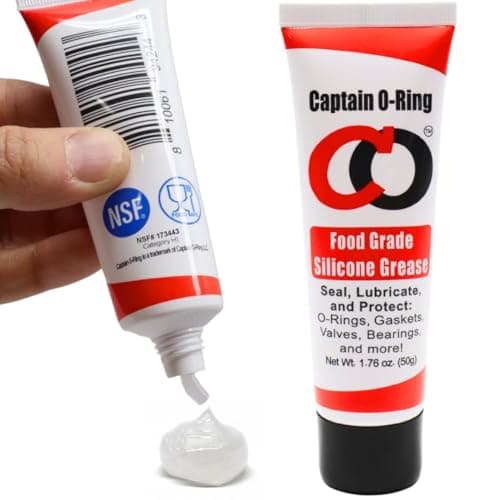 Captain O-Ring silicone lubricant, NSF food gradeFor the leak a sealer cannot help with: a union or fitting whose O-ring has dried and stopped seating. Captain O-Ring silicone lubricant, NSF food gradeFor the leak a sealer cannot help with: a union or fitting whose O-ring has dried and stopped seating. | Dripping unions and O-rings | 6.4out of 10 | $9.99 · View on Amazon#ad how this is funded · price as of October 17, 2026 |
| 4 | 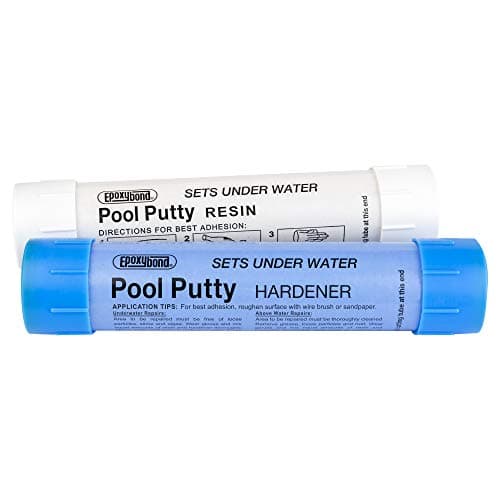 Epoxybond Pool Putty, 2-part setA hand-mixed putty that cures underwater, for a crack or chip you can physically get your fingers to. Epoxybond Pool Putty, 2-part setA hand-mixed putty that cures underwater, for a crack or chip you can physically get your fingers to. | A visible crack you can reach | 6.0out of 10 | $20.49 · View on Amazon#ad how this is funded · price as of October 17, 2026 |
| 5 | 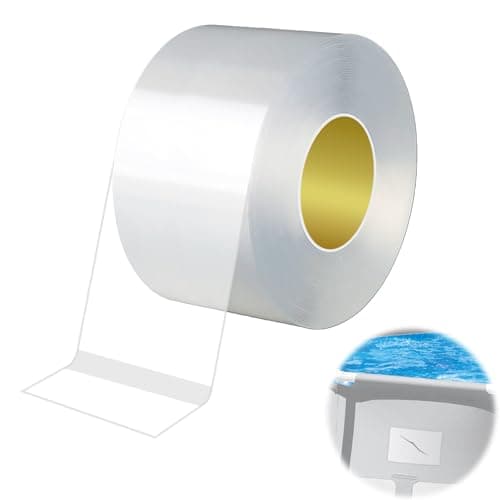 Clear vinyl patch repair tape, Intex-compatibleA clear roll you cut to size, for a puncture on a flat part of an inflatable tub's wall or floor. Clear vinyl patch repair tape, Intex-compatibleA clear roll you cut to size, for a puncture on a flat part of an inflatable tub's wall or floor. | Pinholes in an inflatable tub | 6.0out of 10 | $9.99 · View on Amazon#ad how this is funded · price as of October 17, 2026 |
| 6 | 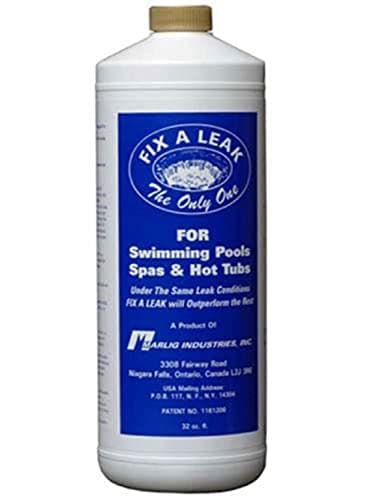 Fix-A-Leak by Marlig, 32 ozThe best-known sealer, with instructions that openly say which leaks it cannot reach. Fix-A-Leak by Marlig, 32 ozThe best-known sealer, with instructions that openly say which leaks it cannot reach. | The name everyone searches for | 5.9out of 10 | $32.99 · View on Amazon |
Scores are our own, from the published scoring method on how we pick. They are an editorial judgment of published specifications, not a test result, and they are deliberately kept out of the page’s structured data.
The verdict, up front. Do not buy a leak sealer yet. The fix for a hot tub leak depends completely on where the water is escaping, and a pour-in sealer only helps with one kind of leak. Pour one into a tub whose real problem is a loose union or a worn pump seal, and you have spent money and changed nothing.
So this page runs in the order you should actually work: confirm it is a leak and not evaporation, find where it is, and only then buy the thing that matches. That is why the top pick is the cheapest item here — a dye kit that tells you which of the others you need.
Safety first: power off at the breaker
A leak puts water near the pump, the heater and the wiring in the equipment bay. Before you open a side panel, touch a fitting or put your hands anywhere near the equipment, switch the tub off at its breaker, not just at the topside control panel.
If the water is coming from the heater, the control pack or anywhere you cannot identify with the power off, stop and call a spa technician. That combination of water and electrics is not a DIY job, and nothing on this page is a substitute for someone qualified looking at it.
Step 1: is it really a leak?
Hot tubs lose water to evaporation all the time, and more so when the water is hot, the cover is off, or the air is dry and windy. Before assuming a leak, rule that out with a bucket test.
- Set a bucket on the tub’s step or seat so that it sits in the tub water, weighted so it does not float, and fill it to roughly the same level as the tub water.
- Mark the water level inside the bucket and the tub’s water level on the shell.
- Run the tub normally, with the cover on as usual, for about a day.
- Compare the two drops. Both lose water to the same evaporation, so if the tub has dropped clearly more than the bucket, the difference is a leak.
If both dropped by about the same amount, you do not have a leak. You have evaporation, and the answer is the cover, not a repair — see whether a cover cap is worth it and thermal blanket vs cover.
Step 2: find where the water is going
Start with the equipment bay. Take the side panels off with the power still off and look for water, damp wood, mineral crust or rust stains around the pump, the heater and the pipe unions. A lot of hot tub leaks announce themselves here once you look.
If the bay is dry, use the water level itself as a clue. Let the tub keep losing water and note where the level stops dropping. A leak usually stops once the water falls below it, so if the level settles just under a row of jets, those jets are the prime suspects.
Then confirm with dye. With circulation off, release a small amount of dye right beside each suspect spot — a jet, a light, the skimmer, a fitting. If there is a leak, the dye is visibly drawn into it. That turns a guess into a specific location, and a specific location tells you what to buy.
Step 3: match the fix to the leak
| Where it leaks | What usually fixes it | Will a pour-in sealer help? |
|---|---|---|
| A union or fitting in the equipment bay | Hand-tighten; clean and lubricate or replace the O-ring | No — this is mechanical |
| Water dripping from the pump itself | Often a worn pump shaft seal, which needs replacing | No |
| The heater | A spa technician | No |
| Small leak in the plumbing or shell you cannot reach | A circulating leak sealer, within its stated limits | Yes, if it is small enough |
| Suction side, with air bubbles at the jets | A plumbing repair | Unlikely — circulation carries sealer away |
| A crack you can reach | An underwater-curing putty | Not the right tool |
| A pinhole in an inflatable tub | A vinyl patch | No |
Read the last column down and the point of this page is plain: a pour-in sealer is the answer for one row out of seven. It is a real product that works on the leaks it is made for. It is just not the default answer to “my hot tub is leaking,” however it is marketed.
How we judged these
| Criterion | Why it matters |
|---|---|
| Tells you what to buy next | The cheapest mistake is the repair you never needed. A product that identifies the leak saves you buying the wrong fix. |
| Fixes the leak | Whether it actually stops water loss, for the leak it is made for. |
| Works on any leak type | Most fixes suit one kind of leak. We score that narrowness honestly rather than hiding it. |
| Ease of use | Whether the instructions suit a hot tub or have to be translated from pool directions. |
| Cost | Against a service call, which is the real alternative. |
Notice that no single product scores well on both “fixes the leak” and “works on any leak type.” That is not a flaw in the products. It is the nature of leaks, and it is why there is no honest single best leak repair product.
When a leak sealer is the right call
A circulating sealer earns its place when the leak is small, somewhere in the plumbing or shell that you cannot reach, and on the pressure side rather than the suction side. It works by circulating through the system and settling into small gaps where water escapes.
Two limits matter, and the better listings state them. One sealer here gives a specific ceiling — leaks losing up to an inch of water a day — and says larger leaks need a real plumbing repair. Another says in its own instructions that it cannot reach suction-side leaks, because circulation draws it away. Believe both. If your leak is larger than the stated limit, or on the suction side, a sealer is the wrong spend.
Also check the dose against your tub. Sealers sold in pool-sized bottles may need only a small fraction of the bottle for a hot tub. Follow the label’s per-gallon dose, and read what it says about the pump and the filter before adding it.
Unions and O-rings: the leak you fix with your hands
Pipe unions near the pump and heater hold a rubber O-ring that seals the joint. Over time that ring dries out, flattens, or shifts, and the joint starts to weep. No sealer in the water reaches it.
With the power off at the breaker, first try hand-tightening the union. If it still drips, undo it, inspect the O-ring, wipe the seat clean, apply a thin film of silicone lubricant and reassemble hand-tight. If the ring is cracked, split or flattened, replace it rather than lubricating it. Avoid overtightening with a wrench, which can crack the plastic union.
Inflatable tubs are a different repair
An inflatable hot tub leaks through its vinyl wall or floor, not through rigid plumbing, so pour-in sealers are not the tool. A hole in the vinyl needs a patch. Find it with dye or by listening and feeling for escaping air with the tub inflated, dry the area completely, and patch a flat section.
The catch is seams. Many inflatable tubs fail along a seam, and general vinyl patches are commonly listed as unsuitable for seams. If yours is a seam leak, a patch may not hold, and it is worth checking the tub’s warranty before attempting a repair. The rest of inflatable care is on inflatable hot tub chemicals and inflatable hot tub filters.
After the repair: rebalance the water
A leak means you have been topping up with fresh water, and a sealer or a partial drain changes the chemistry again. Once the leak is fixed, test and rebalance before anyone gets in. The target is the same as ever: at least 3 ppm free chlorine, with pH between 7.2 and 7.8.[source] If the repair meant draining, follow the order on start-up after a refill.
When to call a professional
- The heater or control pack is wet. Water and electrics together are a technician’s job.
- You cannot find the leak after the bucket test, a look in the equipment bay and dye.
- The loss is fast — more than a sealer’s stated limit, or visible running water.
- The shell is cracked in a way that suggests a structural or support problem underneath.
- The pump shaft seal is leaking and you are not confident taking the pump apart.
On prices, and on what these scores are
Every repair on this page costs a small fraction of a service call, which is the real comparison. Every button reads the live price where our price layer has one; anything we cannot verify, we do not print. The reasoning is on how we pick.
The scores are an editorial judgment of each listing’s published instructions and stated limits against our published method. We have not tested these products on a leaking tub, every specification is the seller’s own claim, and there is no rating markup in this page’s structured data.
The honest summary
Turn the power off at the breaker. Do the bucket test to be sure it is a leak. Look in the equipment bay, then use dye to find the exact spot. Match the fix to the location: tighten or re-lubricate a union, replace a failed seal, use a sealer only for a small, unreachable, pressure-side leak, patch an inflatable. And call a technician for anything involving the heater or electrics. Buying the dye first is the cheapest way to avoid buying everything else.
Every pick, in full
The picks in detail
Specifications below are the manufacturer’s own published figures, attributed as such. We have not tested these units and the scores are an editorial judgment of published data against the published method, not a test result.
#1 · Best for finding the leak first
Leakmaster leak detection dye kit
Leakmaster · scored 7.1/10
The cheapest thing on this page and the one to buy first, because it tells you which of the others you need.
A leak sealer bought for the wrong leak is money poured into the water. Dye costs less than any fix here and answers the question that decides everything else: is the water leaving through the shell, a jet, a fitting, or the equipment? The listed method is simple — turn the circulation off, release a thin ribbon of dye close to the spot you suspect, and watch whether it gets pulled toward it.
It scores 1 on 'fixes the leak' on purpose, because it does not. Its value is entirely in stopping you buying the wrong repair. It also only works where you can get dye near the leak, so a leak deep inside a heater or pump housing needs a different approach.
What the maker states
- Contents
- Prefilled 6 ml syringe plus 8 oz refill, per the listing
- Uses
- Up to 40 refills, per the listing
- Method
- Circulation off, dye released about 1/4 in from the suspect spot, per the listing
- Sold for
- Pools, hot tubs and spas, per the listing
How it scored
- Tells you what to buy next
- 9.5
- Ease of use
- 8.5
- Cost
- 9.5
- Works on any leak type
- 7.0
- Fixes the leak
- 1.0
Skip this one if: your leak is plainly visible in the equipment bay. If water is already dripping from a fitting you can see, you have found it.
#2 · Best for small leaks in piping and fittings
Lo-Chlor leak sealer, 32 oz
Lo-Chlor · scored 7.1/10
The sealer that tells you its own limit, which is exactly what you need to know before pouring it in.
Most leak sealers promise to fix 'minor leaks' without saying what minor means. This listing gives a number — up to an inch of water lost per day — and says outright that anything larger needs a real plumbing repair. That honesty is the main reason it leads the sealers here.
Size is worth noticing. At the listed dose of 1 oz per 500 gallons, a typical hot tub needs well under an ounce, and this is a 32 oz bottle sized for pools. Expect to own most of it for a long time. That is good value if you need it again, and waste if the leak turns out to be a fitting you could have tightened.
What the maker states
- Rated for
- Leaks losing up to 1 in of water per day, per the listing
- Dose
- 1 oz per 500 gallons for smaller bodies of water, per the listing
- Method
- Pump off before adding, per the listing
- Size
- 32 oz, per the listing
How it scored
- Tells you what to buy next
- 6.0
- Ease of use
- 8.5
- Cost
- 9.0
- Works on any leak type
- 5.0
- Fixes the leak
- 7.0
Skip this one if: you are losing more than an inch of water a day. The listing says larger leaks need conventional plumbing repair, and it is right.
#3 · Best for dripping unions and o-rings
Captain O-Ring silicone lubricant, NSF food grade
Captain O-Ring · scored 6.4/10
For the leak a sealer cannot help with: a union or fitting whose O-ring has dried and stopped seating.
A slow drip at a pump or heater union is one of the most common hot tub leaks, and no sealer in the water reaches it. The usual fix is mechanical: power off at the breaker, undo the union, inspect the O-ring, apply a thin film of silicone lubricant, and hand-tighten it back. The listing says it will not harden or dry out, which is the property that matters on a gasket.
It scores 3 on working across leak types because it only addresses one: a seal that has dried out rather than failed. If the O-ring is visibly damaged, replace it — lubricant on a split ring just delays the same drip.
What the maker states
- Type
- Silicone lubricant grease, per the listing
- Certification
- NSF H1 food grade, per the listing
- Temperature range
- -40 to 400 F, per the listing
- Size
- 1.76 oz, per the listing
How it scored
- Tells you what to buy next
- 4.0
- Ease of use
- 8.0
- Cost
- 9.5
- Works on any leak type
- 3.0
- Fixes the leak
- 7.5
Skip this one if: the O-ring is cracked, flattened or split. Lubricant helps a good O-ring seal; it does not repair a failed one, which needs replacing.
#4 · Best for a visible crack you can reach
Epoxybond Pool Putty, 2-part set
Epoxybond Pool Putty · scored 6.0/10
A hand-mixed putty that cures underwater, for a crack or chip you can physically get your fingers to.
When dye shows water leaving through a crack you can reach, a putty that cures underwater means you can repair it without draining the tub. The listing describes a simple one-to-one mix molded by hand and pressed into the crack.
Two cautions. The surfaces it names are concrete and fiberglass; acrylic is not listed, so check it suits your shell before relying on it, and expect a visible patch rather than an invisible one. And a crack in a hot tub shell can be a sign of a structural or support problem underneath. Patching the crack does not fix whatever caused it.
What the maker states
- Mix
- Two parts, 1-to-1, hand-moldable, per the listing
- Cures
- Underwater or above, no draining, per the listing
- Surfaces named
- Concrete, fiberglass and a variety of others, per the listing
- After cure
- Will not shrink, sag or yellow, per the listing
How it scored
- Tells you what to buy next
- 3.0
- Ease of use
- 7.0
- Cost
- 8.5
- Works on any leak type
- 4.0
- Fixes the leak
- 7.5
Skip this one if: your tub is acrylic and appearance matters. The listing names concrete and fiberglass, and a putty repair will not match an acrylic shell's color or finish.
#5 · Best for pinholes in an inflatable tub
Clear vinyl patch repair tape, Intex-compatible
Eiszhjk · scored 6.0/10
A clear roll you cut to size, for a puncture on a flat part of an inflatable tub's wall or floor.
Inflatable tubs do not take liquid leak sealers the way a hard tub's plumbing does — a hole in the vinyl wall needs a patch. A cut-to-size roll is the flexible option, and the listing states a 12-hour wait before refilling or inflating, which is worth respecting because a patch that lifts on day one wastes the whole attempt.
Read the limits before relying on it. It is listed for flat, clean, dry surfaces and specifically not for seams or grooves, and many inflatable hot tub leaks start at a seam. It is also listed for above-ground pools rather than hot tubs, so it is a general vinyl repair, not a product made for heated water.
What the maker states
- Size
- 1.97 in x 16.4 ft roll, per the listing
- Surface
- Flat, clean, dry surfaces only, per the listing
- Not for
- Seams or grooves, per the listing
- Wait before use
- 12 hours, per the listing
How it scored
- Tells you what to buy next
- 3.0
- Ease of use
- 7.5
- Cost
- 9.5
- Works on any leak type
- 3.0
- Fixes the leak
- 7.0
Skip this one if: the leak is on a seam. The listing says not to use it on seams or grooves, and seams are where many inflatable tubs fail.
#6 · Best for the name everyone searches for
Fix-A-Leak by Marlig, 32 oz
Marlig Industries · scored 5.9/10
The best-known sealer, with instructions that openly say which leaks it cannot reach.
This is the product people search for by name, and its listing is unusually frank about a limitation. Suction-side leaks — often given away by air mixed into the water at the jets — tend to leak only when the pump is off. With the pump on, circulation draws the sealer away from the leak; with it off, the sealer never reaches it. The manufacturer's own instructions say exactly that.
Ranked below Lo-Chlor for practical reasons. The instructions are clearly written for pools, with references to main drains, sand filters, backwashing and pool brooms, so a hot tub owner has to translate them. The product is also heavy and settles quickly, needing to be stirred back into suspension every few hours during treatment.
What the maker states
- Method
- Added with the pump running, via skimmer or suction intake, per the listing
- Behavior
- Heavy; sinks and must be stirred back up every 4 to 6 hours, per the listing
- Cure time
- 24 to 48 hours, per the listing
- Not effective on
- Suction-side leaks, per the listing's own instructions
How it scored
- Tells you what to buy next
- 5.0
- Ease of use
- 5.5
- Cost
- 7.0
- Works on any leak type
- 5.0
- Fixes the leak
- 7.0
Skip this one if: you see air bubbles coming out of the jets. That points to a suction-side leak, and this sealer's own instructions say circulation carries it away from those.
Questions people actually ask
Frequently asked questions
Does hot tub leak sealer actually work?
On the right leak, yes: a small leak in plumbing or the shell, on the pressure side, within the sealer’s stated limit. It does not fix loose unions, failed O-rings, pump shaft seals or heater leaks, and one major brand’s own instructions say it cannot reach suction-side leaks. Find the leak before buying one.
How do I know if my hot tub is leaking or just evaporating?
Do a bucket test. Set a weighted bucket of water on a step in the tub, mark both water levels, and run the tub normally for about a day. Both lose the same evaporation, so if the tub drops clearly more than the bucket, the extra is a leak.
Where do hot tubs usually leak?
Check the equipment bay first, with the power off at the breaker: pipe unions and fittings, the pump and the heater are common places to find water. If the bay is dry, note where the water level stops dropping, since a leak usually stops once the level falls below it.
Can you use Fix-A-Leak in a hot tub?
It is sold for pools, spas and hot tubs, but its instructions are written mainly for pools and it states it cannot reach suction-side leaks, because circulation draws it away. It suits a small pressure-side leak you cannot reach. Confirm where your leak is first.
How do you fix a leak in an inflatable hot tub?
Patch it, rather than using a pour-in sealer. Find the hole, dry the area completely, and apply a vinyl patch to a flat section, then wait as long as the patch instructions say before refilling. Leaks on seams are harder, and general patches are often listed as unsuitable for them.
Where the numbers come from
Sources
Read next
Related on Float & Filter
- Draining and refilling a hot tub
If the repair means emptying the tub, the full procedure.
- Start-up after a refill
Rebalancing the water once the leak is fixed.
- Are hot tub cover caps worth it?
If the bucket test says evaporation, this is the better fix.
- The best inflatable hot tub filters
The rest of looking after an inflatable tub.
- The best hot tub drain pumps
If the repair means emptying the tub, the pump that does it fastest.