Comparison
Thermal Blanket vs Hard Cover, and Which Way Up
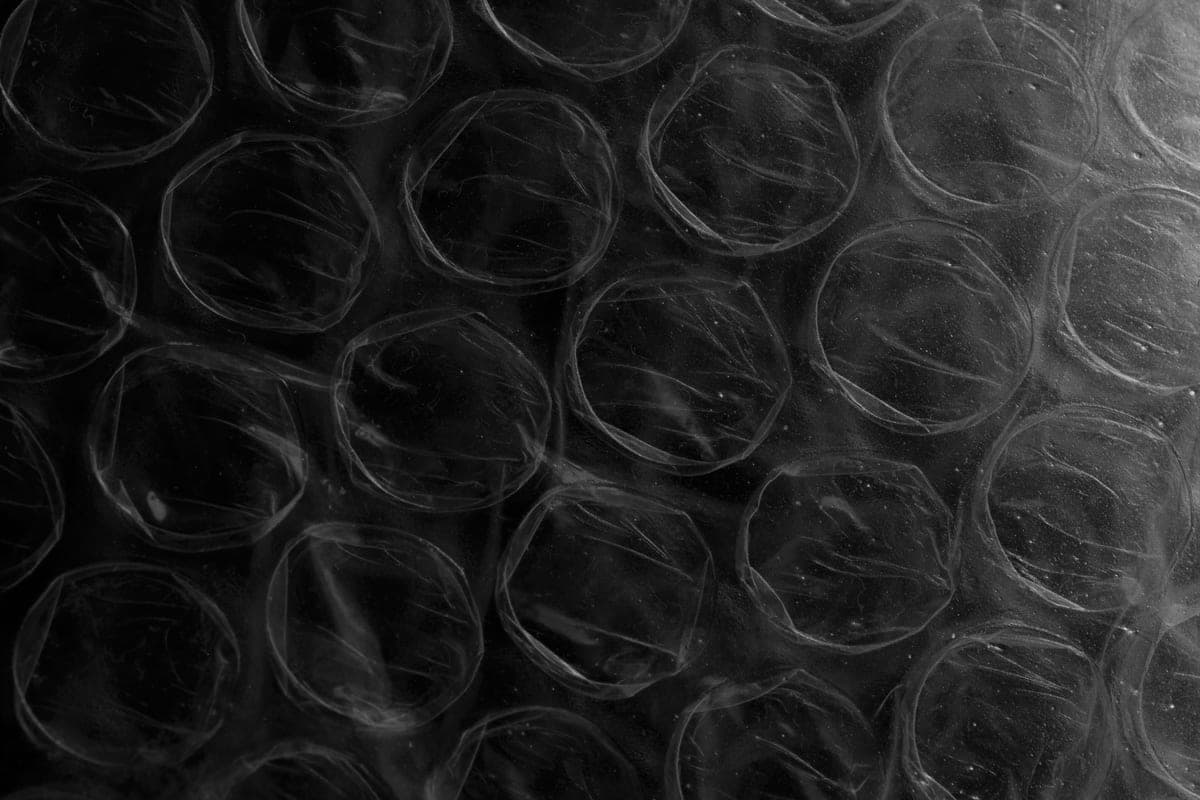
Bubbles down. The air pockets sit against the water surface and cut evaporation; facing them up wastes the insulation and collects debris.
By Scooter M. · Published · How we pick
How this page is funded: the buy buttons below are Amazon affiliate links. If you buy through one we earn a commission at no extra cost to you. It does not change what we recommend, and where the better answer is a retailer we earn nothing from, we say so. The full version.
Bubbles down. The bubble side faces the water. The air pockets sit against the surface, cutting evaporation and trapping a layer of warm air. Facing them up wastes the insulating layer and turns the blanket into a tray that collects debris.
That is the whole answer to the question most people arrive with. The rest of this page is about why a thermal blanket and a hard cover are not alternatives at all.
They solve different problems
| Job | Thermal blanket | Hard cover |
|---|---|---|
| Cuts evaporation from the water surface | Yes, directly | Partly, by enclosing the space |
| Insulates against ambient cold | Slightly | Yes, this is its main job |
| Keeps debris out | No | Yes |
| Acts as a safety barrier | No | Yes, when latched |
| Reduces chemical loss | Yes, less off-gassing | Partly |
| Structural, sheds snow | No | Yes |
Most of the heat a hot tub loses leaves as evaporation off the water surface, and a floating blanket addresses that directly by putting a physical barrier on the water. A hard cover addresses conduction and convection through the space above the water. Different mechanisms, which is why using both is better than either alone.
Can you use a blanket instead of a hard cover?
No. A thermal blanket has no structural strength, no latching, and no ability to bear a load. It is not a safety barrier and it will not shed snow. In a cold climate the hard cover is doing structural work as well as thermal work, which is covered on covers for cold climates and snow load.
Also worth saying plainly: the water underneath is held at spa temperature, commonly up to 104F.[source] A cover that latches is part of running a tub sensibly, and a floating sheet of bubble film is not a substitute for one.
Practical notes on using a blanket
- Trim it to the water line, not to the tub rim. It should float on the water, not wedge against the sides.
- Take it out before you get in. Left in place under a soak it wraps around people and jets, and it will get torn.
- Take it out when you shock. Shock by-products need to off-gas, and trapping them against plastic film degrades it fast. The same rule applies to the hard cover — see shocking a hot tub.
- Expect to replace it. Bubble film is consumable. A season or two is normal, and it is priced accordingly.
- Watch for it shedding. Degraded film breaks into fragments that go straight into the filter. If it is flaking, remove it.
Can you leave the hot tub cover off?
Briefly, and for specific reasons. After shocking, yes, for the time the label states. While you are in it, obviously. Otherwise no: an uncovered tub loses heat continuously, loses sanitizer to sunlight, collects debris, and is not enclosed.
The cost is not subtle. Heat loss from an open water surface is the largest single term in a hot tub’s running cost, which is why the cover is the biggest lever on the bill and why the arithmetic on running costs spends most of its time there.
If you are choosing where to spend
In order: a hard cover that seals, then a cover cap to stop the hard cover dying, then a thermal blanket. A blanket under a cover that no longer seals is treating a small loss while ignoring a large one.
If your cover is sagging or heavy, start with replace or repair. If it is sound, keep it that way with conditioning and cleaning, and then a blanket is a genuinely worthwhile addition.
What fixes it
The products for this job
Named because they do the specific job this page describes, not because they are the only options. Specifications are the manufacturer’s published figures.
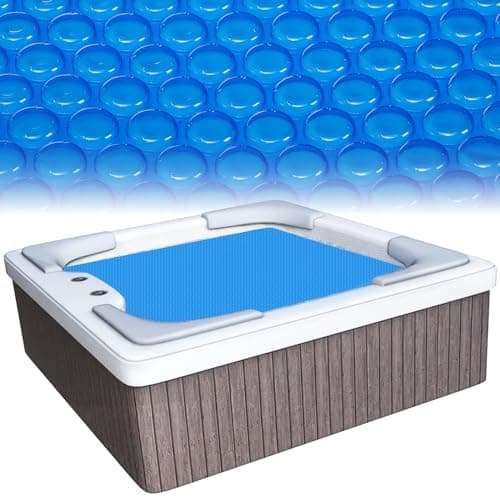
#1 · Best for cutting evaporation
Spa thermal blanket
Generic · scored 7.7/10
Bubbles down. It floats on the water under the hard cover and cuts evaporative loss.
Most of a hot tub's heat leaves as evaporation from the water surface, not through the cover. A floating blanket sits directly on the water and stops that, which is a different mechanism from the hard cover's insulation and is why the two work together rather than competing.
Trim it to the water line, not the tub rim, and pull it out before you get in. Left in place under a soak it wraps around people and jets.
What the maker states
- Type
- Floating bubble blanket
- Orientation
- Bubble side down, against the water
- Sizing
- Cut to fit the water surface
- Replaces
- Nothing. Used under the hard cover.
How it scored
- Heat retention
- 7.5
- Evaporation control
- 9.0
- Chemical saving
- 7.0
- Durability
- 6.0
- Value
- 9.0
Skip this one if: you think it replaces a hard cover. It does not: it has no structural strength and provides no safety barrier.
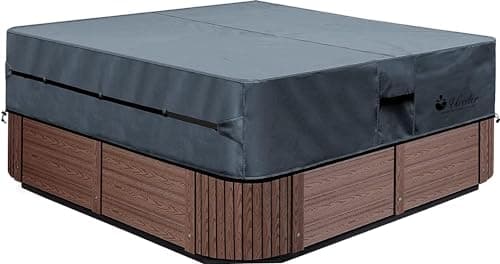
#2 · Best for extending a hard cover's life
Hot tub cover cap
Generic · scored 7.2/10
The cheapest thing on this page and, per dollar, the most effective.
Vinyl hard covers fail two ways: UV cracks the top skin, then water gets into the foam and the cover gets heavy. A cap addresses the first cause, which is what makes it cheap prevention against an expensive replacement.
It buys time; it does not reverse damage. A cover already saturated with water needs a new foam core or a new cover, and no cap will help.
What the maker states
- Type
- Slip-over cap for a hard cover
- Purpose
- Blocks UV and sheds standing water
- Fixing
- Elasticated skirt or straps
- Sizing
- By hard cover dimensions
How it scored
- Weather protection
- 8.0
- Heat retention
- 1.5
- Fit accuracy
- 7.0
- Durability
- 6.5
- Value
- 9.5
Skip this one if: you take the cover off daily. A cap that has to come off and go back on every evening will end up in the corner of the yard by March.
Questions people actually ask
Frequently asked questions
Should hot tub cover bubbles face up or down?
Down. The bubble side faces the water, so the air pockets sit against the surface and cut evaporation while trapping a layer of warm air. Facing them up wastes the insulating layer and turns the blanket into a tray that collects debris.
Can a thermal blanket replace a hot tub cover?
No. A blanket has no structural strength, does not latch, is not a safety barrier and will not shed snow. It works on evaporation while the hard cover works on insulation and enclosure, so they are used together rather than as alternatives.
Can you leave a hot tub cover off?
Only briefly and for a reason: while you are in it, or after shocking for the time the label states. Otherwise an uncovered tub loses heat continuously, loses sanitizer to sunlight and collects debris. Heat loss from an open water surface is the largest term in running cost.
How long does a hot tub thermal blanket last?
A season or two is normal. Bubble film is a consumable and it is priced as one. Watch for it flaking: degraded film breaks into fragments that go straight into the filter, and at that point it needs removing rather than keeping.
Where the numbers come from
Sources
Read next
Related on Float & Filter
- What hot tub maintenance actually costs
Heat retention is the biggest single lever, and this is the arithmetic.
- The best hot tub covers
The hard cover a blanket sits underneath.
- The best cover conditioners and cleaners
Keeping the cover that does the structural work.
- Shocking a hot tub
Why both the blanket and the cover come off when you shock.