Worth it?
Are Hot Tub Cover Caps Worth It?
Yes — more clearly than almost anything else we recommend. A cap costs a small fraction of a replacement cover and removes the two things that destroy covers.
By Scooter M. · Published · How we pick
How this page is funded: the buy buttons below are Amazon affiliate links. If you buy through one we earn a commission at no extra cost to you. It does not change what we recommend, and where the better answer is a retailer we earn nothing from, we say so. The full version.
The verdict, up front. Yes. A cover cap is a waterproof, UV-resistant jacket that goes over the hard cover you already own, and it costs a small fraction of what a replacement cover costs. It is the clearest value-for-money item on this entire site, and the reason is that it addresses the two things that actually kill hot tub covers rather than the thing people assume kills them.
The caveat is that a cap does nothing for a cover that is already finished, and it is not an insulating product. Buying one to fix a waterlogged cover is buying the wrong thing.
What actually kills a hot tub cover
Not age, and not use. Two mechanisms, both environmental:
- Water getting into the foam core. The vinyl skin is waterproof until it is not — a seam splits, a stitch line wicks, a screw hole opens up. From then on the foam absorbs water, the cover gains weight steadily, and its insulating value collapses. A saturated cover is the single largest avoidable line on a hot tub’s running costs.
- UV degrading the vinyl. Sunlight makes vinyl brittle. Brittle vinyl cracks at the fold line first, which is exactly where water then gets in, which starts mechanism one. The two failures are the same failure with a delay.
A cover cap intercepts both. It keeps standing water and snowmelt off the skin, and it takes the UV load that would otherwise fall on the vinyl. That is the entire argument, and it is a strong one.
The arithmetic
We do not publish prices from memory, so here is the shape rather than the numbers. A hard cover is one of the most expensive things you will buy for a hot tub — comparable to a year of chemicals and electricity combined on many tubs. A cover cap sits in the same bracket as a bottle of sanitizer.
So the break-even is not close. If a cap extends the cover’s life by even a single season, it has paid for itself several times over. If it does nothing at all, you have spent the price of a month’s chemicals. That asymmetry is why this is an easy recommendation and why we are comfortable being unequivocal about it, which we usually are not.
The running-cost side is covered properly on what hot tub maintenance actually costs, where the cover dominates the electricity line.
What a cap is not
| Job | Cover cap | Hard cover | Thermal blanket |
|---|---|---|---|
| Keeps rain and snow off | Yes, this is the job | Yes, until it leaks | No |
| Blocks UV | Yes | It is the thing being damaged | No |
| Insulates meaningfully | No | Yes, this is its job | Some, at the water surface |
| Takes a person’s weight | No | Rated covers only | No |
| Stops evaporation | No | Yes | Yes, directly |
| Replaces the hard cover | No | — | No |
The row that matters is the last one. A cap is a protector, not a cover. It goes on top of the hard cover and it is useless without one. If you are looking for something to reduce heat loss at the water surface, that is a different product — see thermal blanket vs hot tub cover.
When a cap is not worth it
- The cover is already waterlogged. Lift a corner. If it is noticeably heavier than it was, or one half is heavier than the other, the foam has taken on water and a cap cannot reverse that. Put the money toward replacing it.
- The tub is fully indoors. No rain, no UV, no mechanism for the cap to interrupt.
- The tub is under a solid roof or gazebo. Same reasoning, if the structure genuinely keeps sun and standing water off the cover.
- You will not put it back on. A cap adds a step to every soak. If that means it lives folded in the shed, it protects nothing — the same honest problem as wind straps.
Choosing one
- Measure the hard cover, not the tub. The cap goes over the cover, which overhangs, and a cap sized to the shell will not reach. Measure across the cover including any overhang, and check the skirt depth you need it to cover.
- Check it is breathable or vented. A fully sealed waterproof jacket over a damp cover traps moisture against the vinyl, which grows mildew and defeats the purpose. Vents are not a compromise; they are the design working.
- Look for tie-downs. A cap without a way to secure it is a sail, and it will leave the tub before the cover does.
- Shape matters for water. Anything that lets water pool in the middle is storing weight. A cap that sheds is doing the job; a cap that ponds is adding to the problem.
The measuring method is the same one on the cover size guide, which is worth reading before ordering anything cover-shaped.
The cheaper thing that does more
Honesty requires saying this: if you buy only one thing for your cover, a bottle of vinyl protectant used twice a year is a stronger claim on your money than a cap, because it addresses the UV mechanism directly at the surface and costs less. A cap and a protectant together is the complete answer; a protectant alone is the better single purchase for a tub that gets moderate sun.
We would rather point you at the cheaper option first. The routine is on hot tub cover care.
A note on weight and safety
Nothing on this page is a safety cover. A cap is fabric; it holds no weight at all, and adding one does not change what the cover underneath is rated for. Keep the latches fastened and treat the cover as a barrier that is only as good as its fixings. Public health guidance for hot tubs concerns the water and the people in it, and no cover accessory changes the supervision requirement around a tub a child can reach.
The honest summary
Buy one if your tub lives outdoors and the cover is still sound. The downside is a small cost and one extra step per soak; the upside is materially extending the life of the most expensive accessory you own. That is an unusually one-sided trade, and it is why this is one of the few places on this site where the answer to “is it worth it?” is simply yes.
What fixes it
The products for this job
Named because they do the specific job this page describes, not because they are the only options. Specifications are the manufacturer’s published figures.
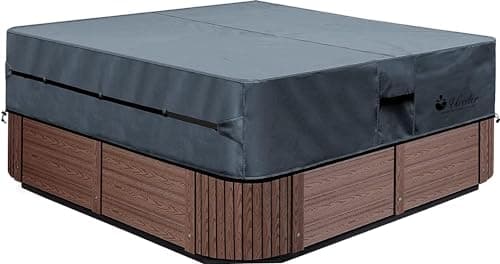
#1 · Best for extending a hard cover's life
Hot tub cover cap
Generic · scored 7.2/10
The cheapest thing on this page and, per dollar, the most effective.
Vinyl hard covers fail two ways: UV cracks the top skin, then water gets into the foam and the cover gets heavy. A cap addresses the first cause, which is what makes it cheap prevention against an expensive replacement.
It buys time; it does not reverse damage. A cover already saturated with water needs a new foam core or a new cover, and no cap will help.
What the maker states
- Type
- Slip-over cap for a hard cover
- Purpose
- Blocks UV and sheds standing water
- Fixing
- Elasticated skirt or straps
- Sizing
- By hard cover dimensions
How it scored
- Weather protection
- 8.0
- Heat retention
- 1.5
- Fit accuracy
- 7.0
- Durability
- 6.5
- Value
- 9.5
Skip this one if: you take the cover off daily. A cap that has to come off and go back on every evening will end up in the corner of the yard by March.
#2 · Best for protecting an existing cover
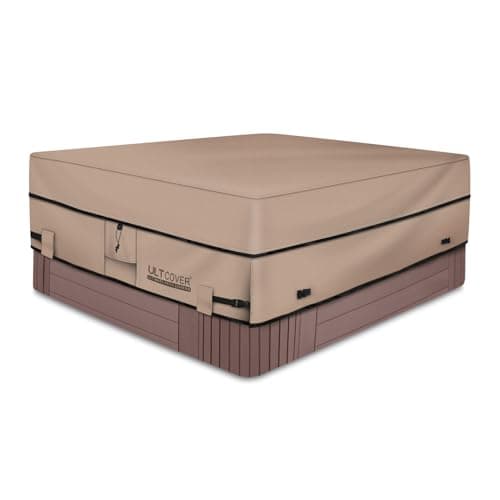
ULTCover waterproof hot tub cover
ULTCover · scored 7.4/10
A weather cover, not an insulating one. Very good at the job it is actually for.
The useful way to think about this is as a raincoat for the cover you already own. UV and standing water are what kill a vinyl hard cover, and a cheap outer cover addresses both for a fraction of what a replacement costs.
It is not insulation and the maker does not claim it is. If your energy bill is the problem, the answer is a properly fitted hard cover, not another layer of fabric over a failing one.
What the maker states
- Type
- Fitted outer weather cover
- Material
- Coated polyester, per the maker
- Sizing
- By square or round dimensions, several sizes
- Insulation value
- None claimed
How it scored
- Weather protection
- 8.5
- Heat retention
- 2.0
- Fit accuracy
- 7.0
- Durability
- 7.0
- Value
- 9.0
Skip this one if: you are replacing a waterlogged hard cover. This goes over a cover; it does not replace one, and nothing sold on a general marketplace will match a custom-fit foam cover for heat retention.
#3 · Best for uv protection on vinyl
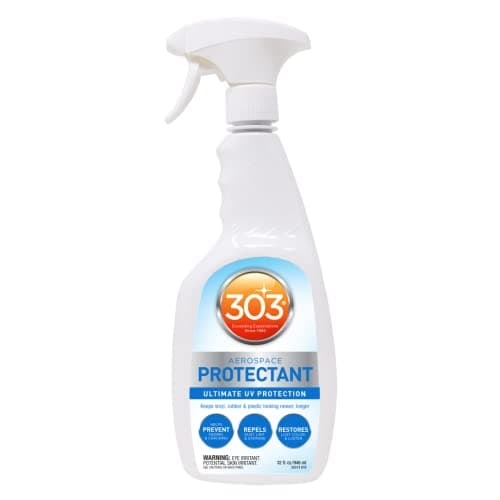
303 Aerospace Protectant
303 Products · scored 8.5/10
The one product on this page that meaningfully extends a cover's life. Use it quarterly.
Sunlight is what kills hot tub covers, and it kills them from the top surface down: the vinyl goes chalky, then it cracks, then water reaches the foam. A UV protectant applied a few times a year addresses the actual mechanism rather than the symptom.
Clean first. Applying protectant over dirt seals the dirt in, and you will spend longer removing it later than the cleaning step would have taken.
What the maker states
- Type
- UV protectant for vinyl, rubber and plastics
- Finish
- Matte, per the maker
- Application
- Onto a clean, dry surface
- Frequency
- Per the label, commonly every few months
How it scored
- UV protection
- 9.5
- Cleaning power
- 3.0
- Ease of use
- 9.0
- Coverage per bottle
- 8.0
- Availability
- 9.5
Skip this one if: the cover is already cracked. Protectant prevents UV damage; it does not repair a skin that has already failed.
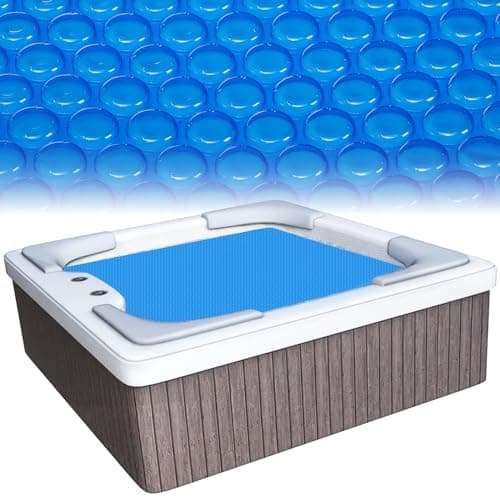
#4 · Best for cutting evaporation
Spa thermal blanket
Generic · scored 7.7/10
Bubbles down. It floats on the water under the hard cover and cuts evaporative loss.
Most of a hot tub's heat leaves as evaporation from the water surface, not through the cover. A floating blanket sits directly on the water and stops that, which is a different mechanism from the hard cover's insulation and is why the two work together rather than competing.
Trim it to the water line, not the tub rim, and pull it out before you get in. Left in place under a soak it wraps around people and jets.
What the maker states
- Type
- Floating bubble blanket
- Orientation
- Bubble side down, against the water
- Sizing
- Cut to fit the water surface
- Replaces
- Nothing. Used under the hard cover.
How it scored
- Heat retention
- 7.5
- Evaporation control
- 9.0
- Chemical saving
- 7.0
- Durability
- 6.0
- Value
- 9.0
Skip this one if: you think it replaces a hard cover. It does not: it has no structural strength and provides no safety barrier.
Questions people actually ask
Frequently asked questions
Are hot tub cover caps worth it?
For an outdoor tub with a sound cover, yes. A cap costs a small fraction of a replacement cover and blocks the two things that actually destroy covers: water reaching the foam core and UV making the vinyl brittle. If it buys even one extra season it has paid for itself several times.
Does a hot tub cover cap help with heat loss?
Not directly. A cap is a waterproof, UV-blocking jacket rather than an insulator. It helps indirectly by keeping the hard cover dry, and a dry cover insulates enormously better than a saturated one — but it adds little insulation of its own.
What size cover cap do I need?
Measure the hard cover, including its overhang, rather than the tub shell. Check the skirt depth too. A cap sized from the shell dimensions will be too small, because the cover it goes over is larger than the tub.
Can a cover cap cause mildew?
A fully sealed one over a damp cover can, by trapping moisture against the vinyl. Choose a cap that is vented or breathable, and let the cover dry before putting the cap back on after heavy rain.
Is a cover cap better than a vinyl protectant?
For a single purchase on a moderately sunny site, protectant is arguably the better value because it tackles UV at the vinyl surface for less money. A cap plus protectant is the complete answer; the cap alone leaves the fold line unconditioned.
Where the numbers come from
Sources
Read next
Related on Float & Filter
- Hot tub cover care
The cheaper intervention that does more of the same job.
- Replace or repair a hot tub cover
What to do when a cap is already too late.
- Thermal blanket vs hot tub cover
The product people confuse a cap with.
- Hot tub cover size guide
How to measure before ordering anything cover-shaped.