Roundup
The Best Inflatable Hot Tub Covers and Lids
An inflatable tub's lid is a consumable, not a fixture. When it stops holding air it stops insulating, your heater runs harder, and most people blame the heater.
By Scooter M. · Published · How we pick

How this page is funded: the buy buttons below are Amazon affiliate links. If you buy through one we earn a commission at no extra cost to you. It does not change what we recommend, and where the better answer is a retailer we earn nothing from, we say so. The full version.
The short answer
Top pick
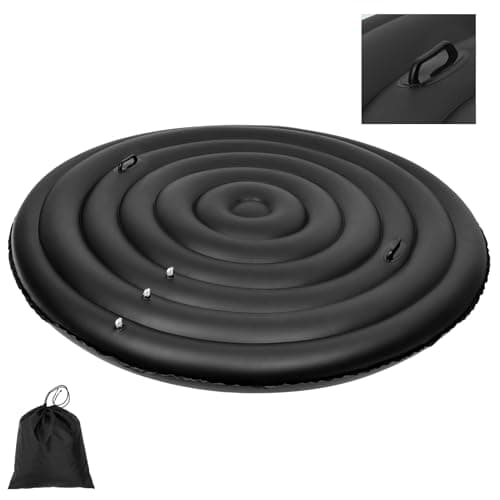
Puzau inflatable spa cover, round
A straight replacement lid with double handles and a storage bag, for when the one that came with the tub gave up.
Quick picks
Tap a row to jump to the full write-up. Prices come from the live price layer, never from memory.
| # | Product | Best for | Score | Price |
|---|---|---|---|---|
| 1 | Puzau inflatable spa cover, roundA straight replacement lid with double handles and a storage bag, for when the one that came with the tub gave up. | Replacing a split original lid | 7.4out of 10 | $45.99 · View on Amazon#ad how this is funded · price as of October 17, 2026 |
| 2 | 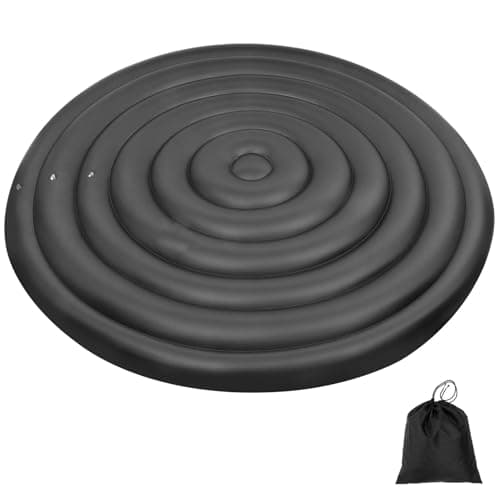 Puzau inflatable cover, 4 to 6 ftA lid listed across the 4 to 6 ft range, which is the size band most bundled inflatable tubs land in. Puzau inflatable cover, 4 to 6 ftA lid listed across the 4 to 6 ft range, which is the size band most bundled inflatable tubs land in. | Covering a range of tub sizes | 7.3out of 10 | $44.99 · View on Amazon#ad how this is funded · price as of October 17, 2026 |
| 3 | 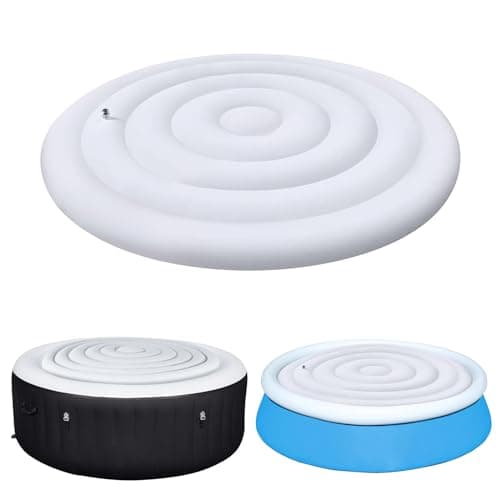 Huaerle 4.5 ft inflatable spa lidThe cheapest way to get a lid back on a small inflatable tub, with an anti-leak air valve. Huaerle 4.5 ft inflatable spa lidThe cheapest way to get a lid back on a small inflatable tub, with an anti-leak air valve. | Small 4 to 5 ft tubs on a budget | 7.3out of 10 | $29.99 · View on Amazon#ad how this is funded · price as of October 17, 2026 |
| 4 | 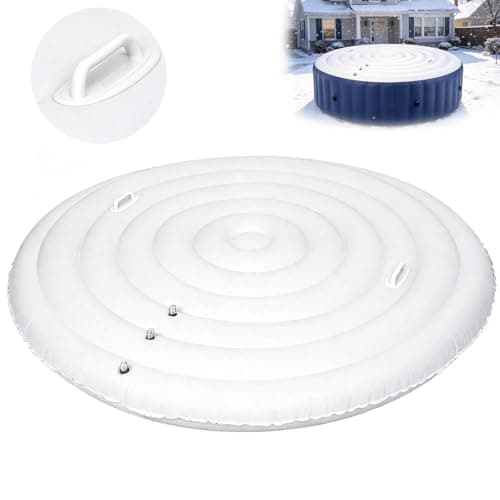 Adjustable 4 to 6 ft inflatable cover insertAdjustable across the common inflatable diameters, with handles, which is what this listing actually states. Adjustable 4 to 6 ft inflatable cover insertAdjustable across the common inflatable diameters, with handles, which is what this listing actually states. | One insert across several tub sizes | 7.2out of 10 | $45.99 · View on Amazon#ad how this is funded · price as of October 17, 2026 |
Scores are our own, from the published scoring method on how we pick. They are an editorial judgment of published specifications, not a test result, and they are deliberately kept out of the page’s structured data.
The verdict, up front. The inflatable lid that came with your tub is the part most likely to fail first, usually at a seam or around the valve, and it fails quietly. It still looks like a cover. It just stops being one, because an inflatable lid insulates with trapped air and a lid that will not hold air is a sheet of vinyl.
The symptom is a tub that takes longer to come back up to temperature and costs more to run, which almost everybody attributes to the heater or the weather. Before you replace anything expensive, check whether the lid is still firm in the morning.
These are not rigid foam covers and this page does not pretend otherwise. If you have a hard-shell tub, you want our main covers roundup instead.
How we judged these
| Criterion | Why it matters | What we looked at |
|---|---|---|
| Fit certainty | Diameter decides everything. A lid slightly too small drops inside the rim and vents heat around the whole edge; slightly too large and the wind gets under it. | Stated diameter or size range against real tub sizes |
| Heat retention | The only job. Thickness and the number of air chambers are the two published numbers that bear on it. | Stated thickness and chamber count |
| Build quality | These fail at seams, valves and handles. Reinforcement at those three points is what separates a two-season lid from a one-season one. | Stated material and reinforcement |
| Value | A lid is a recurring cost on an inflatable tub. What matters is price against how many seasons it survives. | Live price against build |
| Availability | A tub without a working lid loses heat every night it waits, so a part you can get quickly is worth more than a better one that takes a month. | Whether the size is reliably stocked |
Measure the tub, not the model name
Inflatable tubs are marketed by person count, and person count tells you nothing useful about diameter. Two “four person” tubs can be several inches apart across the top rim, and several inches is the difference between a lid that seals and one that sits down inside.
Take a tape across the outside of the top rim at its widest point, and write the number down before you shop. Most listings are scoped either to a single size, such as 4.5 ft, or to a range such as 4 to 6 ft, which is 48 to 72 inches. A single-size lid cut for your diameter will always seal better than a range-fit one; a range-fit one is the safer order if you are not certain of your measurement.
Why one chamber is a worse design than three
Most bundled lids are a single inflated bladder. One pinhole anywhere in it and the entire lid goes flat overnight, taking all of its insulation with it. Lids built as several separate chambers fail gracefully instead: a puncture costs you one section until you patch it, and the rest keeps working.
For a tub used through cold weather that is the difference between noticing a leak at your leisure and discovering it as a heating bill. It is the single design feature worth paying extra for in this category — with one practical caveat: chamber counts have largely stopped appearing on these listings, so it is currently very hard to shop for deliberately, and we will not infer a count that a listing does not state.
What an inflatable lid can and cannot do
Be realistic about the ceiling here. An inflatable lid is air and vinyl. A rigid foam cover on a hard-shell tub is a tapered slab of closed-cell foam in a sealed vinyl skin, and it retains heat far better than anything on this page can. If you are comparing running costs against a hard-shell tub, the cover is a large part of the gap — see what a hot tub costs to run.
What you can do is stack the cheap wins. A floating thermal blanket under the lid cuts evaporative loss, which is where most of the heat goes, and it costs very little. On an inflatable tub the blanket plus a sound lid is a meaningfully better setup than a lid alone.
The safety point, stated plainly
An inflatable lid is not a safety cover. It typically clips or straps down rather than locking, it will not support weight, and none of these products is a substitute for supervision around a tub that children can reach. Hard-shell owners have lockable latch options; inflatable owners largely do not, and pretending otherwise would be dishonest.
Nor does a lid of any kind change the water side of safety. Hot tub guidance is built around holding a measurable sanitizer residual at a controlled pH, and covered tubs need that as much as open ones.[source] The dosing side for these tubs specifically is in chemicals for inflatable hot tubs.
Making a lid last longer
- Do not over-inflate. A drum-tight lid in cool morning air is over-pressured by the afternoon, and seams fail from pressure more often than from wear.
- Keep it off the ground. Grit pressed into vinyl is how pinholes start. Set it on a chair or the supplied bag rather than a patio.
- Rinse the underside. Chemical-laden condensation sits on the inner face and degrades vinyl over time. The routine in cover care applies here too.
- Patch small holes immediately. Vinyl repair patches cost almost nothing and a pinhole only grows.
On prices, and on what these scores are
Replacement inflatable lids are among the cheapest products on this site, and the spread between the budget and better options is small in absolute terms. Every button reads the live price where our price layer has one; anything we cannot verify, we do not print — the reasoning is on how we pick.
The scores are an editorial judgment of stated fit, thickness, chamber count and construction detail, against our published method. We have not tested these lids, we make no performance claims on their behalf, and there is no rating markup in this page’s structured data.
The honest summary
Measure the top rim, then buy the lid whose stated size matches it. If you use the tub in cold weather, favour the lid with the most material and the firmest valve you can confirm, and check it is still hard in the morning. None of the lids listed here currently publishes a chamber count, so the multi-chamber advantage above is not something you can reliably order today. If it is a summer tub in the yard, the cheapest lid that fits is a perfectly rational purchase, and you will probably replace it in two seasons either way.
Whatever you buy, add a floating thermal blanket underneath. On an inflatable tub it is the best few dollars available for heat retention, and it works with every lid on this page.
Every pick, in full
The picks in detail
Specifications below are the manufacturer’s own published figures, attributed as such. We have not tested these units and the scores are an editorial judgment of published data against the published method, not a test result.
#1 · Best for replacing a split original lid
Puzau inflatable spa cover, round
Puzau · scored 7.4/10
A straight replacement lid with double handles and a storage bag, for when the one that came with the tub gave up.
The original lid is the first part of an inflatable tub to fail, usually where the seam meets the valve, and once it will not hold air it stops insulating almost entirely. A replacement lid is a cheap way to get a working tub back rather than replacing the whole thing.
Measure your tub's actual diameter at the top rim before ordering, not the model's advertised person count. A lid that is slightly too small sits down inside the rim and vents heat continuously around the edge, which is the failure people mistake for a broken heater.
What the maker states
- Type
- Inflatable lid, round
- Handles
- Double handles, per the listing
- Valves
- Double-layer inflation nozzles, per the listing
- Included
- Storage bag, per the listing
How it scored
- Fit certainty
- 7.5
- Heat retention
- 6.5
- Build quality
- 7.0
- Value
- 8.0
- Availability
- 8.0
Skip this one if: your tub is square or oval. These lids are cut round and a shape mismatch leaks heat at the corners.
#2 · Best for covering a range of tub sizes
Puzau inflatable cover, 4 to 6 ft
Puzau · scored 7.3/10
A lid listed across the 4 to 6 ft range, which is the size band most bundled inflatable tubs land in.
A range-fit lid covers the sizes that most bundled inflatable tubs use, which makes it a safe order if your tub's exact model number is long gone and you only have a tape measure.
The honest downside is inherent to range fitting. At the small end of the band the lid overhangs and catches wind; at the large end it sits down into the rim. Neither is fatal, but a lid cut for your exact diameter will always seal better than one cut for a range.
What the maker states
- Fits
- 4 to 6 ft tubs, per the listing
- Type
- Inflatable lid
- Use
- Replacement for bundled covers
- Note
- Measure the top rim before ordering
How it scored
- Fit certainty
- 7.0
- Heat retention
- 7.0
- Build quality
- 7.0
- Value
- 8.0
- Availability
- 7.5
Skip this one if: you want a precise fit. A range-fit lid is a compromise at both ends of the range.
#3 · Best for small 4 to 5 ft tubs on a budget
Huaerle 4.5 ft inflatable spa lid
Huaerle · scored 7.3/10
The cheapest way to get a lid back on a small inflatable tub, with an anti-leak air valve.
Included because price matters in this category more than anywhere else on the site. An inflatable tub's lid is a consumable, and a cheaper one you replace every couple of seasons is a perfectly rational way to own one.
It is the thinnest option here and it shows in cold weather. On a tub used through winter, spend more; on a summer-only tub in the yard, this does the job for what it costs.
What the maker states
- Size
- 4.5 ft, per the listing
- Material
- Heavy-duty PVC, per the listing
- Valve
- Anti-leak air hole, per the listing
- Handles
- Reinforced, per the listing
How it scored
- Fit certainty
- 7.0
- Heat retention
- 6.0
- Build quality
- 6.5
- Value
- 9.0
- Availability
- 8.0
Skip this one if: your tub is larger than about 5 ft. This one is cut for 4.5 ft and there is no adjusting it.
#4 · Best for one insert across several tub sizes
Adjustable 4 to 6 ft inflatable cover insert
Generic · scored 7.2/10
Adjustable across the common inflatable diameters, with handles, which is what this listing actually states.
A range-fit lid is the safer order when you are unsure of your measurement and the weaker seal when you are not. This one states 4 to 6 ft and names the tub ranges it is sold against, which is more than most listings in this category manage.
What it does not state is a thickness figure or a chamber count, and we are not going to supply either on its behalf. Treat ultra thick as marketing until a number appears, and keep expectations calibrated: an inflatable lid is air and vinyl, and it will never approach a rigid foam cover's insulation.
What the maker states
- Fits
- 4 to 6 ft round tubs, adjustable, per the listing
- Listed for
- Coleman, SaluSpa and Intex, per the listing
- Handles
- Yes, per the listing
- Thickness
- Described as ultra thick; no figure stated
How it scored
- Fit certainty
- 7.5
- Heat retention
- 7.0
- Build quality
- 7.0
- Value
- 7.0
- Availability
- 7.5
Skip this one if: your tub is over 6 ft across. The listing scopes it to 4 to 6 ft, and a stretched fit does not seal.
Questions people actually ask
Frequently asked questions
Can you buy a replacement lid for an inflatable hot tub?
Yes, replacement inflatable lids are sold separately in single sizes and in ranges such as 4 to 6 ft. Measure across the outside of your tub’s top rim and match that number, since person count is not a reliable guide to diameter.
How much heat does an inflatable hot tub cover save?
We do not publish a figure, because it depends on your climate, water temperature and how often the tub is open. What is certain is the direction: an inflatable lid insulates by trapping air, so a lid that has gone soft is doing very little, and a firm lid plus a floating thermal blanket is the cheapest improvement available.
Why does my inflatable hot tub cover keep going flat?
Usually a pinhole at a seam or a leaking valve, both of which are repairable with a vinyl patch kit. Over-inflation is the most common cause: a lid inflated hard in cool morning air is over-pressured once the sun is on it.
Is an inflatable hot tub cover as good as a rigid one?
No. A rigid foam cover retains heat considerably better, which is part of why hard-shell tubs cost less to run. An inflatable lid is air and vinyl, and the realistic goal is keeping the one you have firm and adding a thermal blanket underneath.
Are inflatable hot tub covers safe for children?
They are not safety covers. They do not lock, they will not support weight, and no lid replaces supervision around a tub a child can reach. Treat an inflatable lid as insulation and debris protection only.
Where the numbers come from
Sources
Read next
Related on Float & Filter
- The best hot tub covers
Rigid foam covers, for hard-shell tubs rather than inflatables.
- Thermal blanket vs cover
The cheap addition that works under an inflatable lid.
- Chemicals for inflatable hot tubs
The water side of owning one of these tubs.
- Inflatable hot tub filters
The other consumable an inflatable tub goes through quickly.
- Hot tub cover care
Cleaning and protecting vinyl, which applies to lids too.