Problem to product
Filling a Hot Tub From a Well
Brown water minutes after you shock a fresh fill is iron, not dirt. It is predictable, it is preventable, and the prevention happens at the hose.
By Scooter M. · Published · How we pick
How this page is funded: the buy buttons below are Amazon affiliate links. If you buy through one we earn a commission at no extra cost to you. It does not change what we recommend, and where the better answer is a retailer we earn nothing from, we say so. The full version.
The verdict, up front. If your fill water comes off a well, the tub will stain unless you do something about it, and the thing to do happens before the water is in the tub. Filter at the hose, then sequester what gets through, then balance. In that order.
The classic symptom is unmistakable: you fill the tub, the water looks perfectly clear, you shock it, and within minutes it goes brown, orange or green. Nothing has gone wrong. What has happened is that your sanitizer oxidized dissolved metals that were invisible until they were oxidized.
What is actually in the water
| What you see | What it is | Where it came from |
|---|---|---|
| Brown or orange water after shocking | Oxidized iron | Dissolved in the well water |
| Rust-colored staining on the shell | Iron, deposited | Same, having come out of solution |
| Purple or black specks and streaks | Manganese | Common alongside iron in groundwater |
| Blue-green marks | Copper | Usually the tub’s own plumbing, dissolved by acidic water |
| Chalky white crust | Calcium scale | Hard water, a separate problem |
| Cloudy from the first fill | Suspended sediment | Particulate the well carries |
Note the copper row. On well water that is soft or acidic, the metal staining the shell is often being dissolved out of your own pipework rather than arriving from the ground. That is a calcium hardness problem wearing a metals costume, and adding a sequestrant without correcting the water chemistry treats the symptom forever.
Step one: test the fill water before it is a tub full
Run the hose into a bucket and test that, not the tub. You want to know four things about the water you are about to put in:
- Total alkalinity and pH — well water is frequently low on both, which is what dissolves copper out of plumbing.
- Calcium hardness — wells run to both extremes. Very hard water scales; very soft water is aggressive to metal.
- Iron — the one that causes the brown fill. Most spa strips do not read it; a dedicated iron test or a metals test does.
- Whether it is clear when drawn — visible sediment means a sediment filter is doing useful work before anything chemical is needed.
Testing the source takes one bucket and tells you which of the products below you actually need. Guessing means buying all of them.
Step two: filter at the hose
An in-line hose filter is the highest-leverage purchase here because it removes the problem rather than managing it. There are two grades and they are not interchangeable:
- Sediment pre-filters catch particulate. Cheap, fast, and the right choice if your water is gritty but not stained.
- Metals-targeted filters use media aimed specifically at iron and heavy metals. Slower to fill through, more expensive, and the only kind that addresses brown well water.
Buying a basic sediment cartridge for iron-bearing water is the most common wasted purchase in this category. The cartridge is doing exactly what it says; it simply is not a metals filter.
Expect the fill to take noticeably longer through a metals cartridge. That is the media doing its job, and rushing it by removing the filter for the last third defeats the entire exercise.
Step three: sequester what gets through
No hose filter removes everything, and on a genuinely bad supply you should expect to use both a filter and a sequestrant. A sequestrant binds dissolved metals so they stay in solution instead of dropping out onto the shell when they meet your sanitizer.
Two distinctions worth being clear about, because the products get bought interchangeably:
- A start-up metal remover is dosed once, on the fresh fill, to grab what came in with the water.
- A weekly stain-and-scale product keeps calcium and metals suspended over the following months as the water concentrates.
On well water you want both, in that order. Sequestrants also degrade over time, which is why the weekly one exists — a single start-up dose does not hold for three months.
The fill sequence that avoids staining
- Fit the hose filter and fill through it, through the filter housing rather than over the side, to avoid an airlock. See draining and refilling.
- Add the start-up sequestrant before any sanitizer. This is the step order that matters most on this page. Shock first and you oxidize the iron before anything has bound it, which is exactly the brown-water outcome you are trying to avoid.
- Circulate for a while with the jets running so the sequestrant distributes before you add anything else.
- Correct alkalinity, then pH. In that order — pH and total alkalinity.
- Correct calcium hardness if the source test said so.
- Then establish the sanitizer, then shock. The full sequence is on start-up after a refill.
If it has already stained
Do not attack the mark with an abrasive — scratched acrylic holds stains far more tightly than smooth acrylic does. Instead treat it as a chemistry problem:
- Test and correct pH and alkalinity first. Metal chemistry is pH-driven.
- Dose a sequestrant and circulate; a fresh stain will often lift back into solution.
- Run the filter continuously and clean the cartridge afterwards, because that is where the material ends up — how to clean a filter.
- If the stain is old and set, the honest answer is that a drain, a careful shell clean and a properly filtered refill is the reliable fix — see the best surface cleaners.
The broader diagnosis of deposits by color is on hot tub scale.
Well water and sanitation
Metals staining is a cosmetic and equipment problem. It is separate from whether the water is safe, and one does not excuse the other. A tub filled from a well still needs the same residual as any other — at least 3 ppm free chlorine or 4 to 8 ppm bromine, pH 7.2 to 7.8.[source][source]
One practical consequence: iron consumes sanitizer as it oxidizes, so an unfiltered well fill can burn through a surprising amount of shock before the residual will hold at all. If a fresh fill seems to eat chlorine, metals are a likely explanation.
What will not fix this
- Clarifier. It clumps suspended particles for the filter to catch. Dissolved iron is not suspended until it oxidizes, and by then it is on your shell.
- More shock. Shock is what triggers the staining. More of it makes brown water browner.
- A tub-side cartridge filter. Your spa filter is sized for organics, not for metals removal at fill rate.
- Draining and refilling from the same well, unfiltered. You get the same water and the same result.
On prices, and on what these scores are
Hose filters and sequestrants are a modest cost against a stained shell or a scaled heater. Every button reads the live price where our price layer has one; anything we cannot verify, we do not print. The reasoning is on how we pick.
The scores are an editorial judgment of published media type, stated capacity and current availability, against our published method. We have not tested these filters, the gallon ratings are the seller’s own published claims rather than independently verified figures, and there is no rating markup in this page’s structured data.
The honest summary
Test the source water once so you know whether you have an iron problem, a hardness problem or both. Buy the right grade of hose filter for the answer. Sequester before you sanitize on every fill. And accept that well water means a slightly longer fill and one extra bottle in the cupboard — which is a much better trade than a permanently stained shell.
What fixes it
The products for this job
Named because they do the specific job this page describes, not because they are the only options. Specifications are the manufacturer’s published figures.
#1 · Best for well water that stains
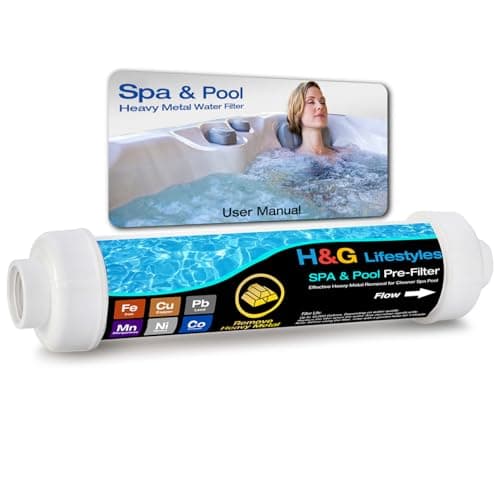
H&G Lifestyles heavy metal iron filter for garden hose
H&G Lifestyles · scored 7.7/10
The one aimed specifically at iron rather than grit. This is the relevant product for brown well water.
Iron is the specific problem with well water in a hot tub: it oxidizes once it meets your sanitizer and drops out as the brown staining people mistake for dirt. Catching it before it enters the tub is far easier than chasing it afterwards.
Two caveats. Metals-targeted cartridges restrict flow more than plain sediment filters, so a fill takes noticeably longer. And no hose filter is a substitute for a sequestrant on a genuinely bad supply; on well water, expect to use both.
What the maker states
- Type
- In-line hose filter, metals-targeted
- Rated for
- Up to 10,000 gallons, per the listing
- Targets
- Iron and heavy metals, per the listing
- Fits
- Standard garden hose threads
How it scored
- Sediment removal
- 7.5
- Metals removal
- 8.5
- Flow rate
- 6.5
- Cost
- 7.0
- Availability
- 7.5
Skip this one if: you are on treated municipal water. You are paying for metals capacity you do not need.
#2 · Best for filling from well or hard water
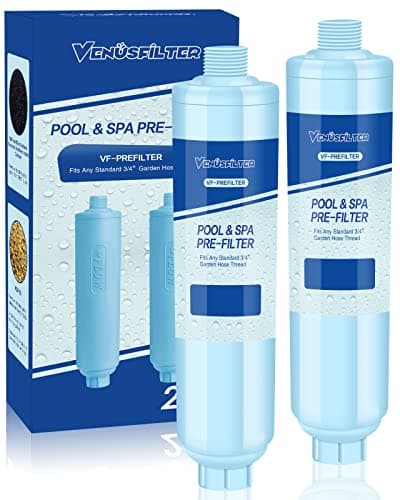
Garden hose pre-filter
Generic · scored 7.7/10
Filters the water going in, which is much easier than treating it once it is in.
Every problem you keep out of the tub at fill time is one you do not have to chase with chemistry for the next four months. On well water in particular, a pre-filter is the cheapest single improvement to water quality available.
It slows the fill noticeably. On a 400-gallon tub that is a real cost in time, and it is the main reason people stop using one.
What the maker states
- Type
- In-line hose filter
- Targets
- Sediment and metals, per the maker
- Fits
- Standard garden hose thread
- Life
- Rated by gallons, per the maker
How it scored
- Metal removal
- 8.0
- Sediment removal
- 8.5
- Fill speed impact
- 5.5
- Value on hard water
- 8.5
- Availability
- 8.5
Skip this one if: your municipal water is soft and metal-free. Then it is a cartridge cost for no measurable benefit.
#3 · Best for the fresh fill on well water
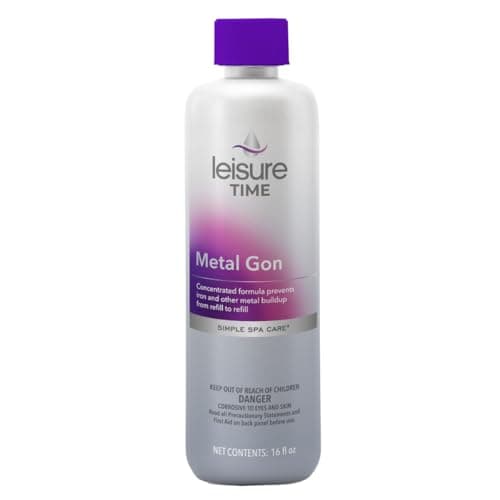
Leisure Time Metal Gon
Leisure Time · scored 7.4/10
A start-up metal sequestrant. Does one job at one moment, and nothing the rest of the time.
This and a weekly stain-and-scale product get bought interchangeably and are two different tools. Metal Gon is a start-up dose that grabs dissolved metals as the tub fills; the weekly product keeps calcium and metals suspended over the months that follow.
If your fill water runs through iron pipework or comes off a well, brown or rust-colored marks on the shell are metals rather than dirt, and this is what prevents them. On soft municipal water it addresses nothing you have.
What the maker states
- Job
- Sequesters iron, copper and other metals, per the maker
- Added
- At every fresh fill, per the maker
- Prevents
- Metal staining of the shell
- Not a
- Week-to-week scale controller
How it scored
- Metal stain prevention
- 8.5
- Scale control
- 4.0
- Ease of dosing
- 9.0
- Value on well water
- 8.5
- Value on soft water
- 2.5
Skip this one if: your fill water carries no metals. On clean municipal water this is a bottle you will not finish and did not need.
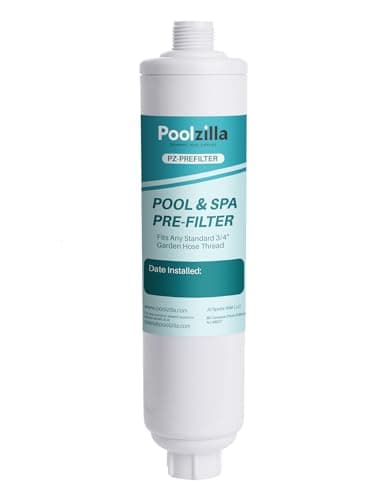
#4 · Best for the cheapest way to try one
Poolzilla garden hose pre-filter
Poolzilla · scored 7.6/10
A basic in-line hose filter at a low price. Fine for sediment and a first experiment.
If you have never used a hose filter and want to find out whether it changes anything for your water, start here rather than with a forty-dollar unit. On municipal water with visible sediment, the difference in how the first fill looks is obvious.
Be clear about what a cheap cartridge does and does not do. It catches particulate. It is not a heavy-metals filter, so if your well water runs brown or stains the shell, this is not the product that fixes it.
What the maker states
- Type
- In-line garden hose pre-filter
- Fits
- Standard garden hose threads
- Targets
- Sediment and particulate
- Life
- Per-fill consumable, per the listing
How it scored
- Sediment removal
- 8.0
- Metals removal
- 5.0
- Flow rate
- 7.5
- Cost
- 9.5
- Availability
- 8.0
Skip this one if: your fill water is heavy with iron. A basic cartridge is not a metals filter and will not stop brown staining.
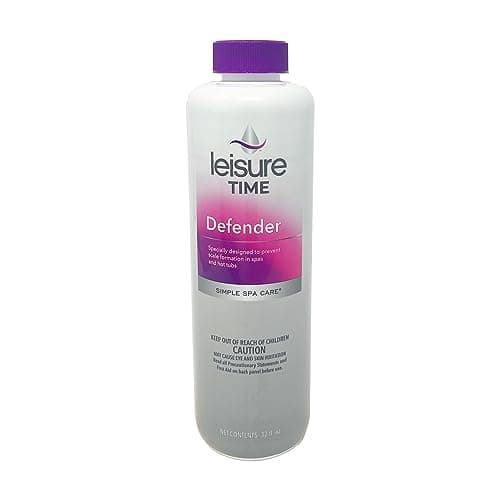
#5 · Best for hard or metal-bearing fill water
Leisure Time Defender
Leisure Time · scored 7.6/10
A sequestrant, not a cleaner. Genuinely useful on well water, pointless on soft municipal water.
Sequestrants hold dissolved metals and hardness minerals in solution so they cannot deposit on the shell and the heater. On a tub filled from a well, or from a supply with visible hardness, that is worth doing at every fill.
On soft municipal water it does nothing you need. This is the clearest example on the site of a product that is either essential or a waste depending entirely on a number you can measure for a few cents.
What the maker states
- Job
- Sequesters metals and scale-forming minerals
- Best added
- At fill, before the water heats
- Re-dose
- Per the label, typically monthly
- Not a
- Sanitizer, clarifier or stain remover
How it scored
- Predictability
- 7.5
- Ease of dosing
- 9.0
- Value on hard water
- 8.5
- Value on soft water
- 3.0
- Availability
- 8.5
Skip this one if: your calcium hardness is already in range and your fill water carries no metals. You would be paying for a problem you do not have.
Questions people actually ask
Frequently asked questions
Why does my hot tub turn brown when I fill it from a well?
Dissolved iron. It is invisible in the water as drawn, and your sanitizer oxidizes it within minutes of being added, which is when it turns brown or orange. Nothing has gone wrong with the tub — the iron was always there, it just was not visible until it was oxidized.
Can you fill a hot tub with well water?
Yes, with two precautions: fill through a metals-targeted hose filter, and add a start-up sequestrant before any sanitizer goes in. Test the source water first so you know whether you are dealing with iron, hardness, or both.
Do hose filters remove iron from hot tub fill water?
Metals-targeted ones do, substantially. Basic sediment pre-filters do not — they catch particulate, which is a different job. Buying a sediment cartridge for iron-bearing water is the most common wasted purchase here.
What order do you add chemicals when filling from a well?
Sequestrant first, before any sanitizer, then circulate. Then alkalinity, then pH, then calcium hardness if needed, then the sanitizer and shock last. Shocking before the sequestrant is what produces brown water on a fresh fill.
Why does my hot tub use so much chlorine on a fresh well fill?
Iron consumes sanitizer as it oxidizes, so an unfiltered well fill can absorb a great deal of shock before any residual will hold. If a fresh fill seems to eat chlorine with no bather load to explain it, metals are a likely cause.
Where the numbers come from
Sources
Read next
Related on Float & Filter
- Hot tub scale and deposits
Diagnosing deposits by color, including the metal ones.
- Hot tub calcium hardness
Why soft well water dissolves copper out of your own plumbing.
- Start-up after a refill
The full balancing sequence this page slots into.
- Draining and refilling a hot tub
Filling through the filter housing, and the rest of the procedure.
- The best calcium hardness increasers
Correcting soft fill water once the metals are dealt with.