Comparison
Vinegar vs Bleach vs the Dishwasher
One of these has a narrow legitimate use, one damages the media, and one ruins the cartridge outright. Here is which is which.
By Scooter M. · Published · How we pick
How this page is funded: the buy buttons below are Amazon affiliate links. If you buy through one we earn a commission at no extra cost to you. It does not change what we recommend, and where the better answer is a retailer we earn nothing from, we say so. The full version.
The verdict, up front. Vinegar works on mineral scale and does nothing for the oils that are the actual problem on most cartridges. Bleach damages pleated media and should not be used. The dishwasher is a firm no on any pleated cartridge, and the fact that a few ceramic filters are dishwasher-safe is what makes this myth so persistent.
Side by side
| Method | Removes oil? | Removes scale? | Damages media? | Verdict |
|---|---|---|---|---|
| Vinegar soak | No | Yes, mildly | No | Use for scale only |
| Bleach soak | Poorly | No | Yes | Do not |
| Dishwasher | Partially | Partially | Yes, badly | Do not, on pleated media |
| Dedicated cartridge cleaner | Yes | Some formulations | No | The right answer |
| Enzyme soak | Yes, thoroughly | No | No | Best for heavy oil |
Vinegar: yes, but only for the problem it solves
Vinegar is a mild acid, and acids dissolve calcium scale. If your cartridge has a chalky white crust and feels gritty, a vinegar soak will genuinely soften and remove some of it, and it will not harm the media or the end caps.
What it will not do is touch body oils, and body oils are what is actually clogging most cartridges. This is why so many people report that vinegar "did not work": they diagnosed an oil problem and treated it as a scale problem. Gray and tacky is oil. Chalky and white is scale. The two need opposite products, which is the whole argument on the filter cleaner roundup.
If you use vinegar, rinse thoroughly afterwards. Acid residue carried back into a tub nudges pH down, and pH belongs in the 7.2 to 7.8 range for good reasons.[source]
Bleach: no
Two problems, and only one of them is obvious. The obvious one is that sodium hypochlorite attacks the polyester fibers in the media, and the damage is cumulative and invisible until the pleats start shedding. Cartridges that have been bleached tend to fail suddenly.
The less obvious problem is what bleach leaves behind. A cartridge soaked in bleach and imperfectly rinsed carries chlorine back into the tub in an uncontrolled quantity, which is precisely the opposite of having a measured sanitizer level. It is also a good way to end up with a strong chloramine smell, which people then misread as too much chlorine.
There is a related and different question — whether a heavy chlorine shock is appropriate for a genuinely contaminated cartridge — and the honest answer is that a cartridge which has been through a contamination event should be replaced rather than rescued. Filters are cheap relative to the alternative.
The dishwasher: no, and here is why the myth survives
Three things go wrong. The heat of a dishwasher cycle softens the plastic end caps enough to deform them, and a deformed cap stops sealing against the housing. Dishwasher detergent is aggressive toward the media and is difficult to rinse out of pleats. And the jets in a dishwasher are directed at plates, not into folded media, so the cleaning that does happen is superficial.
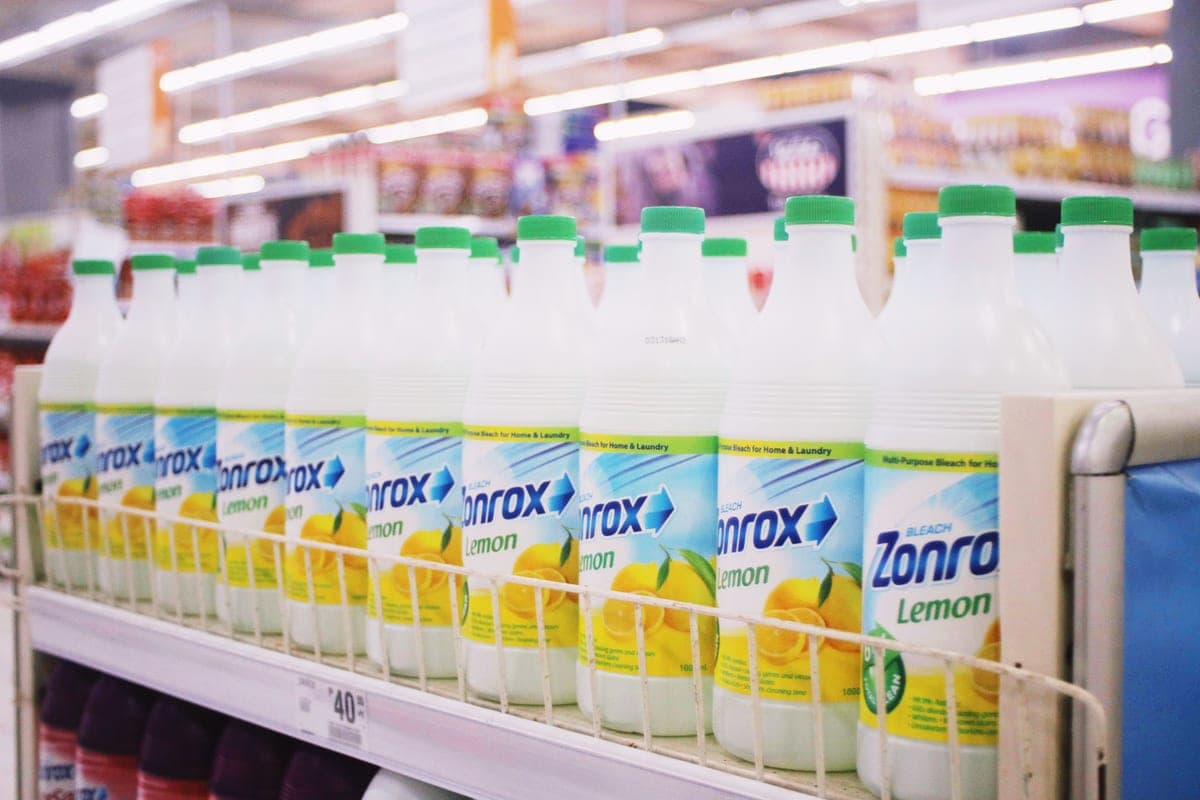
The myth survives because it is true of exactly one format. Ceramic filters fitted to some spa models are sold as reusable and dishwasher-safe by their manufacturer, and that is a genuine exception for a genuinely different material. It does not generalize to pleated polyester, and someone repeating the advice without the caveat is how cartridges get ruined.
What actually works
- Rinse weekly with a fan-jet wand, working down into the folds rather than across the surface.
- Soak monthly in a dedicated cartridge cleaner, or an enzyme cleaner if the pleats are heavily greased.
- Acid-soak occasionally, and only if you actually have scale.
- Rinse until the run-off is completely clear, then rinse again. Cleaner left in the pleats is a very common cause of foaming.
The full routine is on how to clean a hot tub filter, and if a cartridge has already been bleached or dishwashed, check it against when to replace a filter rather than assuming another clean will bring it back.
Why any of this matters
A filter that is passing less water means less of your water is meeting the sanitizer, and maintaining an effective sanitizer residual is the core of the CDC’s guidance on controlling Legionella in hot tubs.[source] A cleaning method that quietly damages the cartridge is not a saving.
What fixes it
The products for this job
Named because they do the specific job this page describes, not because they are the only options. Specifications are the manufacturer’s published figures.
#1 · Best for the monthly deep clean
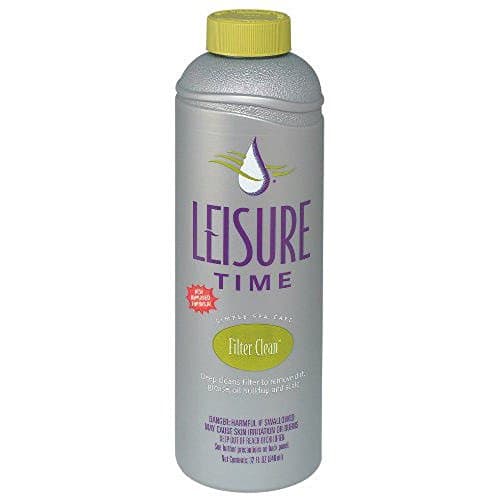
Leisure Time Filter Clean
Leisure Time · scored 8.4/10
A proper cartridge cleaner, which is a different product from a rinse.
The reason a rinsed filter still restricts flow is that the load is oil, not grit, and water does not remove oil. A dedicated cartridge cleaner is a surfactant designed to release exactly that, and the difference in flow after a proper soak is obvious at the jets.
Rinse harder afterwards than you think you need to. Cleaner left in the pleats goes straight into your water and is a very common cause of foaming that owners then blame on the tub.
What the maker states
- Format
- Concentrate for soaking
- Targets
- Body oils, lotions, light scale
- Soak time
- Per the label, commonly overnight
- Rinse
- Thoroughly, before refitting
How it scored
- Oil removal
- 9.0
- Scale removal
- 7.5
- Ease of use
- 8.0
- Cost per clean
- 8.0
- Availability
- 9.0
Skip this one if: your filter is only ever lightly loaded. A hose rinse handles surface debris; this is for the oils a rinse cannot shift.
#2 · Best for heavy oil loading
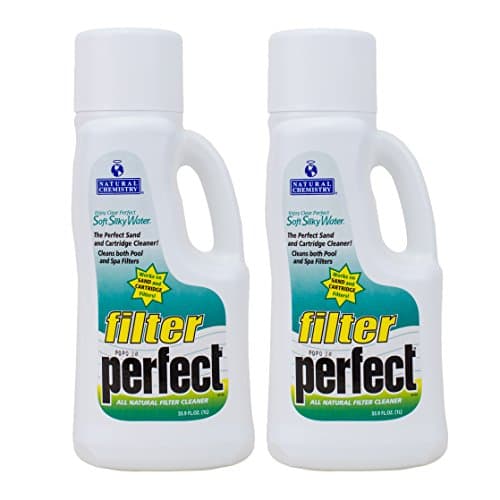
Natural Chemistry Filter Perfect
Natural Chemistry · scored 8.0/10
Enzyme-based rather than surfactant-based, and better on a badly greased cartridge.
Enzymes digest organics rather than dissolving them, which makes this the better choice for a cartridge gone tacky from lotions and sunscreen. The trade is that it does nothing at all for a white mineral crust.
Diagnose before you buy: greasy and gray is an oil problem, chalky and white is a scale problem, and they need opposite products.
What the maker states
- Format
- Enzyme concentrate for soaking
- Targets
- Body oils, lotions, organic residue
- Soak time
- Per the label
- Not for
- Mineral scale
How it scored
- Oil removal
- 9.3
- Scale removal
- 4.0
- Ease of use
- 8.5
- Cost per clean
- 7.5
- Availability
- 8.0
Skip this one if: your filter is scaled rather than greasy. Enzymes work on organics; scale needs an acid step.
Questions people actually ask
Frequently asked questions
Can you clean a hot tub filter with vinegar?
Yes, for mineral scale. Vinegar is a mild acid and will soften chalky white deposits without harming the media or end caps. It will not remove body oils, which are what clog most cartridges, so if the pleats are gray and tacky rather than crusty, vinegar is the wrong product.
Can you soak a hot tub filter in bleach?
No. Sodium hypochlorite attacks the polyester fibers in the media, the damage is cumulative and invisible until the pleats start shedding, and bleach residue carried back into the tub adds chlorine in an uncontrolled amount.
Can you put a hot tub filter in the dishwasher?
Not a pleated cartridge. Dishwasher heat deforms the plastic end caps so they stop sealing, the detergent is aggressive toward the media and hard to rinse out, and the jets are aimed at plates rather than into folded pleats. Some ceramic spa filters are sold as dishwasher-safe by their manufacturer, which is a genuine exception for a different material.
What is the best homemade hot tub filter cleaner?
For scale, a vinegar soak followed by a thorough rinse. For oils, there is no good home substitute: the surfactants and enzymes in a dedicated cartridge cleaner do a job that household products either cannot do or do while damaging the media.
Where the numbers come from
Sources
Read next
Related on Float & Filter
- The best hot tub filter cleaners
The products that do what vinegar cannot.
- How to clean a hot tub filter
The routine, including the rinse most people cut short.
- When to replace a hot tub filter
If a cartridge has been bleached or dishwashed, start here.
- Why your hot tub foams
Cleaner residue in the pleats is a leading cause.