Comparison
Clarifier vs Flocculant vs Shock
Shock burns the load off. Clarifier sends it to the filter. Flocculant drops it to the floor for you to vacuum out. Only one of those is usually right.
By Scooter M. · Published · How we pick

How this page is funded: the buy buttons below are Amazon affiliate links. If you buy through one we earn a commission at no extra cost to you. It does not change what we recommend, and where the better answer is a retailer we earn nothing from, we say so. The full version.
The verdict, up front. Shock first in almost every case, because it removes the organic load rather than relocating it. Clarifier second, if a haze remains after the filter is clean. Flocculant almost never, because it drops everything to the floor of the tub and expects you to vacuum it out before it redissolves.
Three different mechanisms
| Product | Mechanism | Where the contamination ends up | What you must do next |
|---|---|---|---|
| Shock | Oxidizes organics chemically | Broken down and gone | Wait the label time, then retest |
| Clarifier | Clumps fine particles | In the filter cartridge | Clean the filter afterwards |
| Flocculant | Drops particles out of suspension | On the floor of the tub | Vacuum to waste, promptly |
Shock: the default
Most cloudy hot tub water is cloudy because of organic load, and shock is the product that removes organic load rather than moving it somewhere else. Non-chlorine shock handles the routine case; a chlorine shock is what you want if the sanitizer reading is low or the water smells.
Shock also needs balanced water to work efficiently, which is why testing comes before dosing. pH belongs in the 7.2 to 7.8 range,[source] and shocking outside it wastes product. The full detail is on shocking a hot tub.
Clarifier: only after the filter is clean
A clarifier deliberately sends more work to the cartridge, so a loaded cartridge makes it pointless. Clean the filter, then clarify, then expect to clean the filter again shortly afterwards because it is now holding what the clarifier collected.
It is the right product when the chemistry is right, the filter is clean, the tub has been shocked, and there is still a faint haze. It is the wrong product as a first response to any cloudiness at all.
Flocculant: rarely the right answer in a hot tub
Flocculant is a pool product, and the mismatch is structural. In a pool you drop the contamination to the floor and vacuum to waste through a multiport valve. A hot tub usually has no vacuum-to-waste option, so whatever settles has to be lifted out with a handheld vacuum before it redissolves, and a hot tub floor is a shape that makes that awkward.
There is a narrow case: severe cloudiness where you intend to drain anyway and want the suspended material out before you refill. Even then, a plumbing purge and a straightforward drain is usually simpler — see draining and refilling a hot tub.
Choose shock if...
- The water has had heavy use recently.
- It smells, particularly of chlorine.
- Total chlorine reads well above free chlorine.
- You have not shocked in the past week.
Choose clarifier if...
- Chemistry is in range and confirmed by a test.
- The filter is genuinely clean.
- You have already shocked and waited.
- A faint haze remains that will not clear on its own.
Skip flocculant unless...
- The water is severely cloudy and you plan to drain regardless.
- You own a handheld spa vacuum and are prepared to use it immediately.
The sequence that resolves most cases
- Test. Correct sanitizer, then pH, then alkalinity.
- Clean the filter chemically, not just a rinse.
- Shock, and wait the label time with the cover off and jets running.
- Retest. In most cases the water is clear at this point.
- If a haze remains, clarify, then clean the filter again.
- If it is still cloudy after all of that, the water is finished, or the problem is in the plumbing rather than the water.
Step six is the one people skip for months. Water has a service life, and a tub that fights you every week usually has old water in it rather than a chemistry problem. And if the water is fine but the tub still smells, that points at the pipework: maintaining a residual is the CDC ’s core guidance,[source] and a tub that consumes sanitizer for no visible reason is usually feeding something you cannot see.
What fixes it
The products for this job
Named because they do the specific job this page describes, not because they are the only options. Specifications are the manufacturer’s published figures.
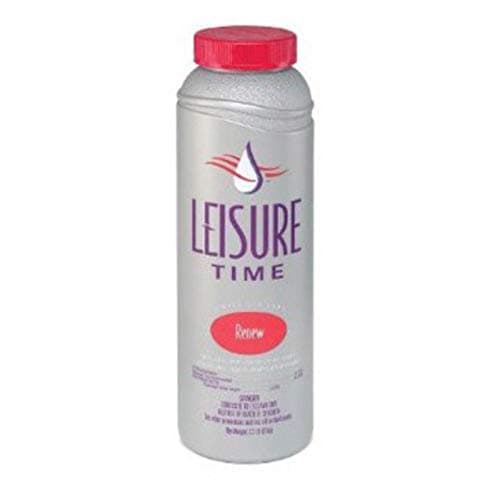
#1 · Best for the weekly oxidize
Leisure Time Renew Non-Chlorine Shock
Leisure Time · scored 8.6/10
The shock you can use and get back in the water quickly. Oxidizes; does not sanitize.
Non-chlorine shock does one job well: it oxidizes the organic load a soak leaves behind, which is what turns water dull and gives it that flat, used smell. On a bromine tub it does a second job for free, converting spent bromide back into active bromine.
Understand what it is not. MPS is an oxidizer, not a sanitizer. If the problem is biological rather than organic, this will not fix it and the tub will stay exactly as cloudy as it was.
What the maker states
- Chemistry
- Potassium monopersulfate (MPS)
- Job
- Oxidizes body oils, lotions and sweat
- Reactivates bromine
- Yes, on a bromine tub
- Wait before soaking
- Per the label, typically about 15 minutes
How it scored
- Oxidizing power
- 8.0
- Ease of dosing
- 9.5
- Odor and skin feel
- 9.0
- Cost per month
- 8.0
- Availability
- 9.0
Skip this one if: you are dealing with an actual contamination event. MPS burns off organics, it does not kill what a chlorine shock kills, and reaching for it instead is a common reason a cloudy tub stays cloudy.
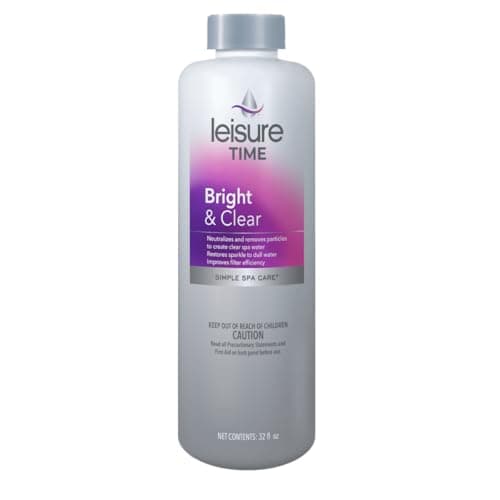
#2 · Best for fine particles the filter is missing
Leisure Time Bright and Clear
Leisure Time · scored 8.1/10
A clarifier clumps fine solids so the filter can catch them. It does not fix chemistry.
Clarifiers work by making small particles stick to each other until they are big enough for a cartridge to trap. That means the cartridge has to be clean and the pump has to run, or the clarified particles just circulate.
It is a finisher, not a fix. Balance the water and sort the sanitizer first, then use a clarifier to clear the last of the haze. Used in the other order it is money spent on a symptom.
What the maker states
- Type
- Polymer clarifier
- Job
- Agglomerates fine particles for the filter
- Filter must be
- Clean, or the clarifier has nowhere to put anything
- Dose
- By tub volume, per the label
How it scored
- Clarity gain
- 8.5
- Speed
- 8.0
- Filter load
- 6.0
- Value
- 8.5
- Availability
- 9.0
Skip this one if: your water is cloudy because your sanitizer is low. Clarifier on unsanitized water buys you a day and costs you a filter clean.
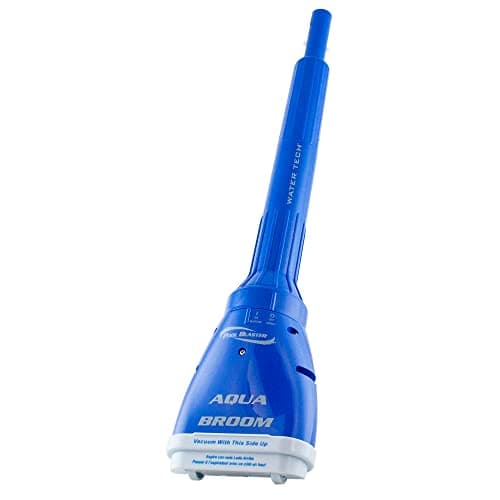
#3 · Best for grit in the footwell
POOL BLASTER Aqua Broom
Water Tech · scored 7.4/10
Removes what the filter never will, because it is sitting on the bottom.
Circulation moves suspended particles to the filter, but grit that has settled into a footwell stays there until something lifts it. If you get out of the tub and feel sand underfoot, that is what this is for.
Expect modest suction. These are small battery devices, and the honest comparison is against a net and a cloth rather than against a pool vacuum.
What the maker states
- Type
- Battery handheld vacuum
- Job
- Lifts settled grit and hair from the shell
- Run time
- Rated by the maker
- Not a
- Substitute for filtration
How it scored
- Debris removal
- 8.0
- Suction
- 6.5
- Battery life
- 6.5
- Value
- 7.5
- Availability
- 8.5
Skip this one if: your tub is under a cover in a clean spot and never gets debris. Then the filter genuinely is enough.
Questions people actually ask
Frequently asked questions
Should I use clarifier or shock for cloudy hot tub water?
Shock first in almost every case, because it removes the organic load rather than relocating it. Use clarifier afterwards, and only if the chemistry is right, the filter is clean and a faint haze still remains.
Can you use pool flocculant in a hot tub?
You can, but it is rarely the right choice. Flocculant drops contamination to the floor expecting a vacuum-to-waste, which most hot tubs do not have. Anything that settles has to be lifted out with a handheld vacuum before it redissolves.
Can you use clarifier and shock at the same time?
Do not add them together. Shock first, give it the wait time on the label, retest, and only then clarify if a haze remains. Adding both at once means you cannot tell which one did anything.
How long does it take for clarifier to work?
Hours rather than minutes, with the pump running the whole time, and the result depends entirely on the filter having somewhere to put what it collects. Expect to clean the cartridge shortly afterwards.
Where the numbers come from
Sources
Read next
Related on Float & Filter
- Why your hot tub water is cloudy
Diagnose the branch you are in before choosing a product.
- Shocking a hot tub
The default first move, and which of the two shocks to use.
- The best hot tub clarifiers and defoamers
The specific products, once you know which kind you need.
- How often to change hot tub water
When the honest answer is that no product will fix it.