Roundup
The Best Hot Tub Vacuums
Your filter cannot lift what has already settled. That is the entire job of a spa vacuum, and it is a smaller job than the marketing suggests.
By Scooter M. · Published · How we pick
How this page is funded: the buy buttons below are Amazon affiliate links. If you buy through one we earn a commission at no extra cost to you. It does not change what we recommend, and where the better answer is a retailer we earn nothing from, we say so. The full version.
The short answer
Top pick
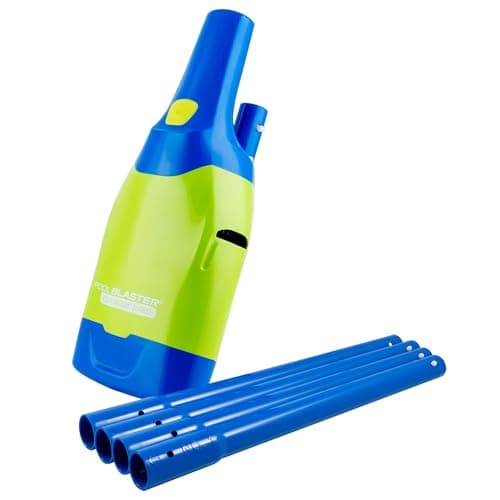
POOL BLASTER Aqua Broom Turbo
The Aqua Broom with a lithium battery and two heads. Costs more once, then costs nothing.
Quick picks
Tap a row to jump to the full write-up. Prices come from the live price layer, never from memory.
| # | Product | Best for | Score | Price |
|---|---|---|---|---|
| 1 | POOL BLASTER Aqua Broom TurboThe Aqua Broom with a lithium battery and two heads. Costs more once, then costs nothing. | Weekly use | 8.5out of 10 | $104.99 · View on Amazon#ad how this is funded · price as of October 18, 2026 |
| 2 | 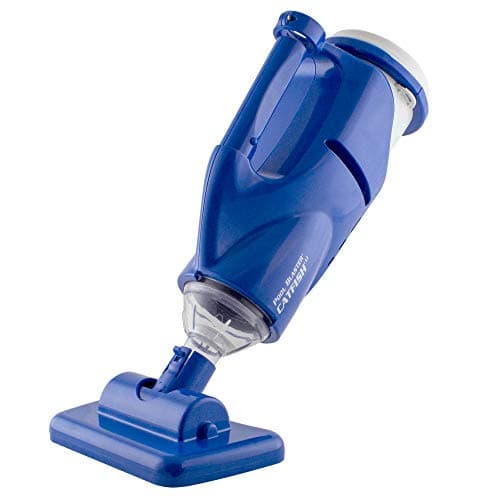 POOL BLASTER CatfishThe best-selling handheld in the category, and genuinely dual-purpose rather than nominally so. POOL BLASTER CatfishThe best-selling handheld in the category, and genuinely dual-purpose rather than nominally so. | A tub and a pool | 8.2out of 10 | $114.99 · View on Amazon#ad how this is funded · price as of October 18, 2026 |
| 3 | 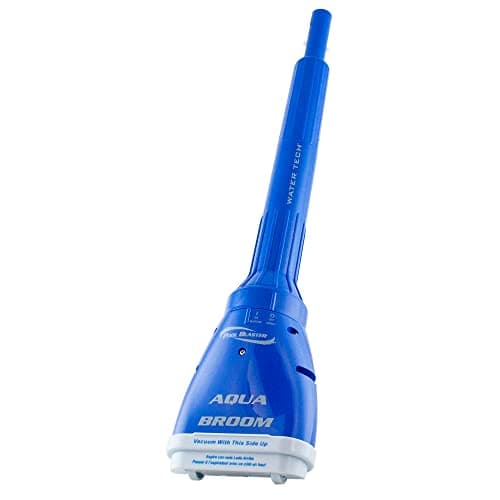 POOL BLASTER Aqua BroomBuilt for a spa rather than shrunk down from a pool vacuum, and it shows in the shape. POOL BLASTER Aqua BroomBuilt for a spa rather than shrunk down from a pool vacuum, and it shows in the shape. | Most hot tubs | 8.0out of 10 | $39.99 · View on Amazon#ad how this is funded · price as of October 18, 2026 |
| 4 | 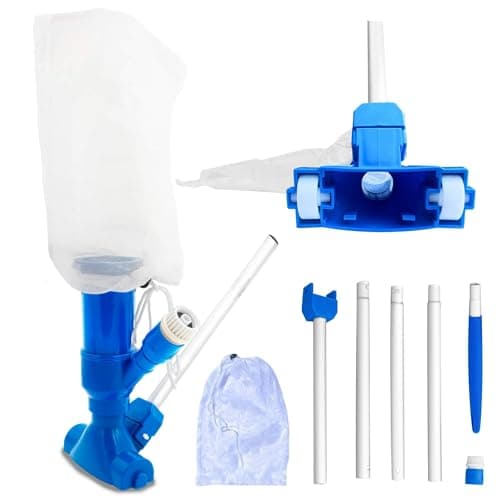 Swimline HydroTools Venturi Jet VacuumRuns on garden-hose pressure. Nothing to charge, nothing to fail, and it adds water to the tub. Swimline HydroTools Venturi Jet VacuumRuns on garden-hose pressure. Nothing to charge, nothing to fail, and it adds water to the tub. | No batteries, ever | 7.6out of 10 | $24.46 · View on Amazon#ad how this is funded · price as of October 18, 2026 |
| 5 | 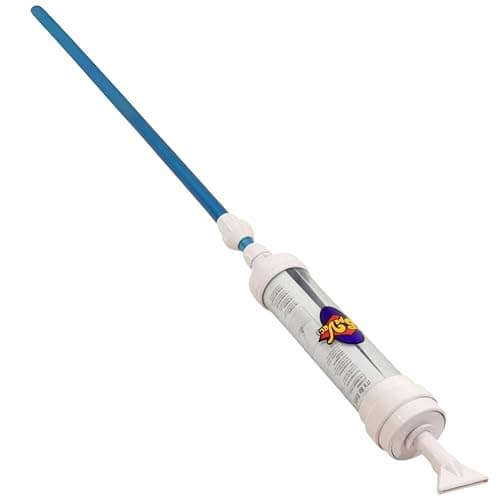 Rola-Chem Paradise Power manual spa vacuumThe venturi idea with the pole and bag included, which is how most people should buy it. Rola-Chem Paradise Power manual spa vacuumThe venturi idea with the pole and bag included, which is how most people should buy it. | Buying a pole with it | 7.4out of 10 | $59.99 · View on Amazon#ad how this is funded · price as of October 18, 2026 |
| 6 | 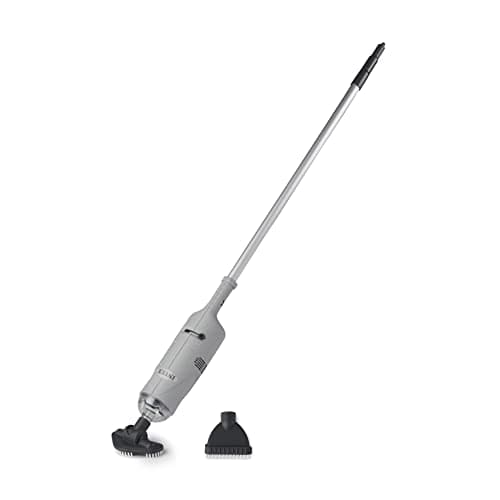 Intex rechargeable handheld vacuumMade by the company that made your inflatable tub, which mostly matters for the head shapes. Intex rechargeable handheld vacuumMade by the company that made your inflatable tub, which mostly matters for the head shapes. | Inflatable spas | 7.3out of 10 | $74.59 · View on Amazon#ad how this is funded · price as of October 18, 2026 |
Scores are our own, from the published scoring method on how we pick. They are an editorial judgment of published specifications, not a test result, and they are deliberately kept out of the page’s structured data.
A hot tub vacuum does one thing: it lifts debris that has already settled on the shell. Your filter cannot do that, because filtration only ever sees what is moving in the water. Sand underfoot, hair in the footwell, grit in the corner of a seat — all of it stays exactly where it landed until something physically removes it.
That is a real job, and it is a much smaller job than most listings in this category imply. Before the picks, the honest version of the buying advice: plenty of hot tubs do not need one at all.
Do you actually need one?
Buy a spa vacuum if you can answer yes to any of these:
- You get out and feel grit underfoot.
- The tub sits under trees, or near a lawn that gets mown.
- People get in without rinsing off, and the footwell shows it.
- You have pets, or long hair in the household.
- The tub is uncovered for long stretches.
If none of those are true — a covered tub on a clean deck, used by people who rinse first — a net and a cloth at each water change genuinely is enough, and the money is better spent on a second filter cartridge so you can run a rinse-and-soak rotation. We would rather say that than sell you a device you will use twice.
The four things that actually decide this
Every product below was judged against these, in this order. They are the criteria, and they are why the ranking looks different from the bestseller lists.
| Criterion | Why it decides it | What to look for |
|---|---|---|
| Head shape | Hot tub debris collects in corners, under seats and in the footwell. A head sized for a flat pool floor cannot reach any of them. | Narrow heads, and a pivot if you can get one |
| Power source | Disposable batteries, rechargeable cell, or hose pressure. This decides your running cost and whether the thing is ready when you want it. | Rechargeable for weekly use, hose for occasional |
| Debris capacity | Small bags fill and stop picking up. In a spa this matters much less than in a pool, which is why pool-sized capacity is not worth paying for here. | Enough for one shell, not a season |
| Water displacement | Venturi models push hose water into the tub while they run. On a full, balanced hot tub that is a genuine problem. | Powered models add nothing; venturi models do |
What is deliberately not on that list is suction power. Every handheld in this class is a small battery device with modest suction, and the honest comparison is against a net and a cloth rather than against a pool vacuum. Anything claiming pool-grade suction in a spa-sized body is describing a marketing number rather than a measurement.
The three types, and who each suits
Rechargeable handheld
A lithium cell, a motor, and a mesh or cartridge bag. Costs the most up front and nothing thereafter. Ready whenever you are, provided you remember to charge it — which, given a hot tub needs about five minutes of vacuuming, means charging it roughly once a season rather than once a use.
This is the right default for most owners, and it is why the top two picks are both rechargeable.
Disposable-battery handheld
The same device with alkaline cells. Cheaper to buy, and the batteries are the cost people forget to count. If you vacuum a few times a year it never matters. If you vacuum weekly, the rechargeable version pays for itself inside a season.
Venturi, garden-hose powered
No motor, no battery. Hose water accelerating past an opening creates suction, and debris goes into a bag. Essentially nothing can break, which is why these outlast every powered option and why a lot of pool owners swear by them.
In a hot tub they carry one specific and often-unmentioned problem: they add water while they run. A pool absorbs a few gallons without noticing. A 400-gallon tub filled to the line will overflow, and the fresh water dilutes chemistry you have just balanced, so you will be retesting afterwards. Use one immediately before a partial drain and it is a non-issue. Use one on a full tub on a Friday night and you have made work for yourself.
How to actually use it
- Turn the jets off and let the water settle for a few minutes. Vacuuming while everything is in suspension achieves nothing; you want the debris on the floor where the vacuum can reach it.
- Work slowly. Fast passes push debris ahead of the head and back into suspension. Slow, overlapping passes lift it.
- Do the footwell and under the seats, which is where the grit is, rather than the visible flat areas, which is where the light shows it.
- Empty the bag before it looks full. Pickup falls off well before capacity is reached.
- Rinse the vacuum in clean water afterwards and let it dry. These live in a warm wet environment and are as capable of growing a film as anything else that stays damp — see hot tub biofilm.
- Check the filter afterwards. Vacuuming stirs up fines that the cartridge then has to catch, so a vacuum session is a good moment for a rinse.
Where vacuuming sits in the routine
It is a monthly job at most, and for many tubs a quarterly one done at the water change while you are cleaning the shell anyway. It is not part of the weekly rhythm, and it is nowhere near as consequential as testing or filter care — the maintenance schedule puts each job where it belongs.
The single best moment to vacuum is just before you drain and refill, because you can be as heavy-handed as you like with the water level and the chemistry, and anything you stir up leaves with the old water.
What a vacuum will not fix
Cloudy water. Cloudiness is suspended, not settled, so a vacuum passes straight through it. That is a chemistry or filtration problem and it is worked through branch by branch on why your hot tub water is cloudy.
A sanitizer problem. Removing debris reduces the organic load a little, which is genuinely useful, but it does not substitute for holding a residual. Maintaining disinfectant is the core of the CDC’s guidance on controlling Legionella in hot tubs,[source] and no amount of vacuuming changes that. The targets do not move either: pH 7.2 to 7.8 and at least 3 ppm free chlorine in a hot tub.[source]
Biofilm. That lives inside the plumbing where no vacuum reaches. It needs a purge, a drain and a wipe.
A scum line. That is oil on the waterline, and it comes off with a cloth and a spa-safe cleaner, not with suction.
A note on the flocculant case
The one situation where a spa vacuum becomes genuinely necessary rather than merely useful is if you have used a flocculant. Flocculant drops everything out of suspension onto the floor and expects you to remove it before it redissolves — and unlike a pool, a hot tub usually has no vacuum-to-waste option. Without a handheld vacuum you have no way to get it out.
That is also most of the reason we suggest skipping flocculant in a hot tub in the first place.
On prices, and on what these scores are
This category spans roughly from the price of a bag of chemicals at the manual end to a few times that for the rechargeable models. We are not publishing figures, because our live price layer is not switched on for this site yet and a remembered number is worse than no number — every button below reads “Check price” instead. The reasoning is on how we pick.
The scores are an editorial judgment of published specifications, head design, power source and current availability, made against that same published method. We have not tested these units, we do not own them, and there is no rating markup anywhere in this page’s structured data because a score derived from spec sheets is not a product review. Every specification below is the manufacturer’s own published figure, attributed as such. Where an industry consensus standard is the right reference for spa water, it is the water-quality standard for public pools and hot tubs.[source]
Every pick, in full
The picks in detail
Specifications below are the manufacturer’s own published figures, attributed as such. We have not tested these units and the scores are an editorial judgment of published data against the published method, not a test result.
#1 · Best for weekly use
POOL BLASTER Aqua Broom Turbo
Water Tech · scored 8.5/10
The Aqua Broom with a lithium battery and two heads. Costs more once, then costs nothing.
Forty-five minutes is far more than a hot tub needs. A 400-gallon shell is a five-minute job, so the practical read is that a single charge covers a whole season of vacuuming rather than a single session.
The pivoting head earns its place around seats and the step, which is where a fixed head stops being useful. Two heads means one wide for the floor and one narrower for corners.
What the maker states
- Type
- Rechargeable handheld spa vacuum
- Power
- Lithium battery
- Runtime
- Maker states up to 45 minutes per charge
- Heads
- Two, with a pivoting design and multi-directional wheels
How it scored
- Debris pickup
- 8.5
- Reach into footwells
- 9.0
- Filter bag capacity
- 7.0
- Running cost
- 9.0
- Availability
- 8.5
Skip this one if: you vacuum two or three times a year. At that frequency the disposable-battery version never catches up on price.
#2 · Best for a tub and a pool
POOL BLASTER Catfish
Water Tech · scored 8.2/10
The best-selling handheld in the category, and genuinely dual-purpose rather than nominally so.
If you own a pool as well as a tub, buying one device that does both is the sensible call, and this is the one most people land on. Larger debris capacity than the spa-specific vacuums, which matters far more in a pool than in a spa.
The trade is maneuverability. In a hot tub footwell, a bigger body is a worse body, and the spa-shaped heads on the Aqua Broom reach places this cannot.
What the maker states
- Type
- Cordless rechargeable handheld
- Runtime
- Maker states up to 45 minutes
- Made for
- Spot-cleaning pools, hot tubs, spas and steps
- Body
- Larger than a spa-only vacuum
How it scored
- Debris pickup
- 8.5
- Reach into footwells
- 6.5
- Filter bag capacity
- 8.5
- Running cost
- 9.0
- Availability
- 9.5
Skip this one if: the hot tub is all you own. It is bigger than a spa-specific vacuum and the extra body gets in the way in a small footwell.
#3 · Best for most hot tubs
POOL BLASTER Aqua Broom
Water Tech · scored 8.0/10
Built for a spa rather than shrunk down from a pool vacuum, and it shows in the shape.
The narrow head is the whole argument. Most handheld pool vacuums are sized for a pool floor and cannot get into the corner of a footwell or under a seat, which is exactly where hot tub grit collects. This one is shaped for the job.
It runs on disposable batteries, which is the cost people underestimate. If you vacuum monthly that is trivial; if you are in there every week it adds up and the rechargeable Turbo is the better buy.
What the maker states
- Type
- Battery-powered handheld spa vacuum
- Power
- Alkaline batteries, per the maker
- Runtime
- Maker states up to 3 hours on a set of batteries
- Made for
- Inflatable, above-ground and in-ground spas
How it scored
- Debris pickup
- 8.0
- Reach into footwells
- 8.5
- Filter bag capacity
- 7.0
- Running cost
- 6.0
- Availability
- 9.0
Skip this one if: you want to stop buying batteries. The standard Aqua Broom runs on disposable alkalines; the Turbo is the rechargeable version of the same idea.
#4 · Best for no batteries, ever
Swimline HydroTools Venturi Jet Vacuum
Swimline · scored 7.6/10
Runs on garden-hose pressure. Nothing to charge, nothing to fail, and it adds water to the tub.
A venturi vacuum has no motor and no battery: hose water accelerating past an opening creates the suction, and debris goes into a mesh bag. There is essentially nothing to break, which is why these outlast every powered option.
The catch is specific to hot tubs rather than pools. You are adding fresh water the whole time you vacuum, so a tub that is already full will overflow and a balanced tub will need retesting afterwards. Best used immediately before a partial drain.
What the maker states
- Type
- Venturi jet vacuum, hose-connected
- Power
- Garden hose pressure, no battery
- Made for
- Inflatable and above-ground units, hot tubs and spas
- Needs
- A pole, usually sold separately
How it scored
- Debris pickup
- 7.5
- Reach into footwells
- 7.0
- Filter bag capacity
- 7.5
- Running cost
- 9.5
- Availability
- 8.0
Skip this one if: your water level is already at the line. A venturi vacuum works by pushing hose water in, so every minute of use raises the level and dilutes your chemistry.
#5 · Best for buying a pole with it
Rola-Chem Paradise Power manual spa vacuum
Rola-Chem · scored 7.4/10
The venturi idea with the pole and bag included, which is how most people should buy it.
Bundling the pole is the reason to look at this over a bare venturi head. Pole compatibility is the single most annoying thing about buying pool tools piecemeal, and a kit removes the guesswork.
A sectional pole sized for a pool is longer than a hot tub ever needs, so expect to use it at its shortest setting and to have a lot of pole in your way.
What the maker states
- Type
- Manual venturi vacuum, garden-hose fed
- Includes
- Sectional pole and a mesh leaf bag, per the listing
- Power
- None required
- Same caveat
- Adds hose water while it runs
How it scored
- Debris pickup
- 7.0
- Reach into footwells
- 6.5
- Filter bag capacity
- 8.0
- Running cost
- 9.5
- Availability
- 8.5
Skip this one if: you already own a telescopic pole. Then you are paying for a second one you do not need.
#6 · Best for inflatable spas
Intex rechargeable handheld vacuum
Intex · scored 7.3/10
Made by the company that made your inflatable tub, which mostly matters for the head shapes.
Inflatable spa owners are badly served by this category, because most spa vacuums assume a hard shell with defined corners. A vacuum designed around a soft-sided liner is a genuinely different tool.
Suction is the weakest of the powered options here. On the fine silt an inflatable collects that is adequate; on heavier grit in a rigid tub it is not.
What the maker states
- Type
- Rechargeable handheld vacuum
- Made for
- Intex spas and above-ground pools, per the maker
- Includes
- Telescoping pole and two brush heads, per the listing
- Power
- Rechargeable battery
How it scored
- Debris pickup
- 7.0
- Reach into footwells
- 7.0
- Filter bag capacity
- 6.5
- Running cost
- 8.5
- Availability
- 8.5
Skip this one if: you have a rigid acrylic tub. The brush heads are aimed at soft-sided liners and there are better-shaped options for a molded shell.
Questions people actually ask
Frequently asked questions
Do you really need a hot tub vacuum?
Only if debris actually settles in your tub. If you get out and feel grit underfoot, or the tub sits under trees, or there are pets or long hair in the household, then yes. A covered tub on a clean deck used by people who rinse first does fine with a net and a cloth at each water change.
Can you use a pool vacuum in a hot tub?
A handheld one, yes; a pool-sized one, not usefully. The limitation is head shape rather than power: heads designed for a flat pool floor cannot reach into a footwell, under a seat or into a corner, which is exactly where hot tub debris collects.
Do garden hose spa vacuums add water to the tub?
Yes. A venturi vacuum works by pushing hose water past an opening to create suction, so it is adding fresh water the whole time it runs. On a full tub that means overflow, and on a balanced tub it means retesting afterwards. Use one immediately before a partial drain and neither matters.
Will vacuuming fix cloudy hot tub water?
No. Cloudiness is suspended material, and a vacuum only lifts what has already settled, so it passes straight through the problem. Cloudy water is a chemistry or filtration issue.
How often should you vacuum a hot tub?
Monthly at most, and for many tubs only at the quarterly water change while you are cleaning the shell anyway. It is not a weekly job and it matters far less than testing or filter care.
Where the numbers come from
Sources
- CDC, Model Aquatic Health Code (2023, 4th edition) - the source for the pH 7.2-7.8 range and the hot-tub disinfectant levels quoted on this site
- CDC, Controlling Legionella in Hot Tubs - the primary reference for the health and disinfection guidance quoted here
- PHTA, Find a Standard - the index confirming which ANSI standard actually covers water quality in public pools and hot tubs or spas
Read next
Related on Float & Filter
- The hot tub maintenance schedule
Where vacuuming sits against the jobs that matter more.
- Draining and refilling a hot tub
The best moment to vacuum, and the one where water level stops mattering.
- Clarifier vs flocculant vs shock
The one case where a spa vacuum stops being optional.
- How to clean a hot tub filter
Vacuuming stirs up fines the cartridge then has to catch.
- The best hot tub cleaning tools and kits
Nets, brushes and kits, for everything a vacuum is not for.